Enhancing infection prevention and control in behavioral health settings: barriers, facilitators, and tailored strategies
Isabelle V. Boullier, Kevin M. Gibas

TL;DR
This paper reviews challenges and solutions for infection control in mental health facilities, highlighting the need for customized approaches.
Contribution
The study identifies specific barriers and facilitators to infection prevention in behavioral health settings and emphasizes tailored strategies.
Findings
Environmental design and staffing limitations are major barriers to IPC in behavioral health settings.
Targeted training and adaptable policies are effective facilitators for IPC implementation.
Tailored interventions are needed to address unique challenges in these settings.
Abstract
This review examines barriers and facilitators to implementing infection prevention and control (IPC) practices in behavioral health settings. Among 63 studies identified, environmental design, staffing/training limitations, patient behaviors, and therapeutic conflicts were common barriers. Facilitators included targeted training, collaboration, and adaptable IPC policies, underscoring the need for tailored interventions.
Genes, proteins, chemicals, diseases, species, mutations and cell lines named across the full text — each resolved to its canonical identifier and authoritative record.
Click any figure to enlarge with its caption.
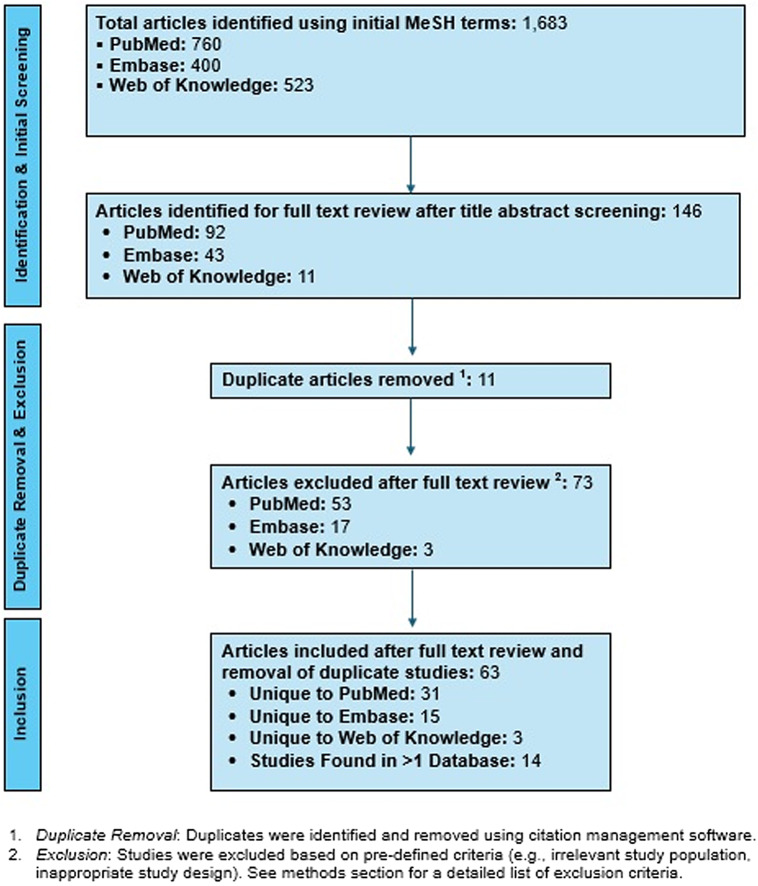 Figure 1
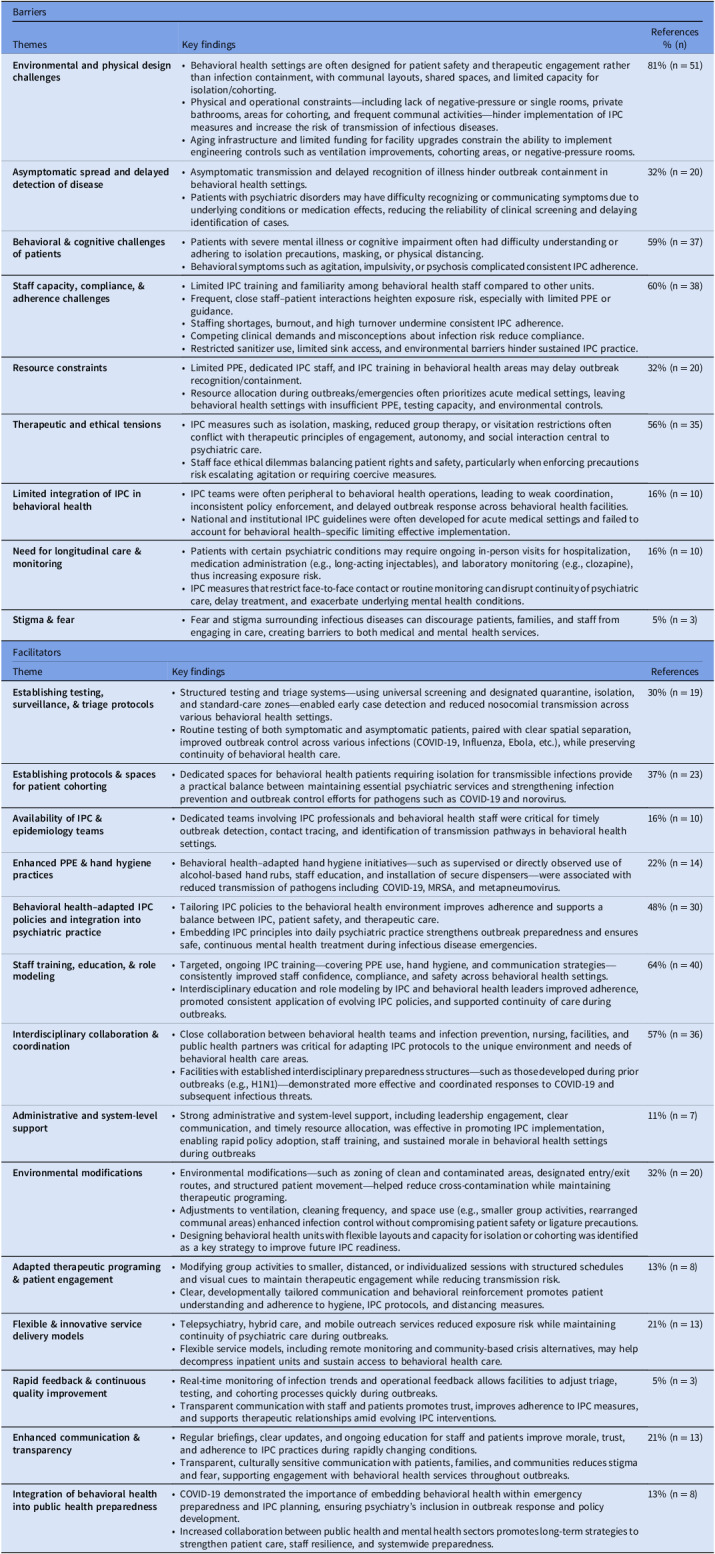 Figure 2
Peer Reviews
No public reviews on file for this paper yet. If you reviewed it on a platform where reviews are public (OpenReview, ICLR, NeurIPS, ICML), you can paste yours below so the community can read it here.
Videos
No videos yet. Explain this paper in a talk, walkthrough, or lecture? Add one.
Taxonomy
TopicsInfection Control in Healthcare · Surgical site infection prevention · Nosocomial Infections in ICU