Bicomponent Mapping of Cortical Bone Using a New Interleaved UTE Imaging Sequence
Soo Hyun Shin, Jiyo S. Athertya, Arya Suprana, James Lo, Jiaji Wang, Dina Moazamian, Fanny Chapelin, Yajun Ma

TL;DR
A new MRI technique improves the accuracy of measuring water in cortical bone by reducing scan inconsistencies.
Contribution
An interleaved UTE dual-echo sequence is introduced to enhance bicomponent T2* mapping in cortical bone.
Findings
The interleaved method reduced fitting errors and improved T2* quantification compared to conventional scans.
Interleaved scans showed more stable and homogeneous parameter distributions with lower variability.
Scan repeatability was significantly better with the interleaved sequence than with separate scans.
Abstract
Ultrashort echo time (UTE) MRI enables direct imaging of cortical bone and quantification of its water compartments via bicomponent T2* modeling. However, conventional approaches require multiple separate dual‐echo scans due to limitations in gradient power. This approach is prone to inter‐scan inconsistencies such as motion and signal drift, which degrade fitting accuracy. This study proposes an interleaved dual‐echo acquisition sequence that acquires multiple echo time (TE) images in a single scan to improve bicomponent T2* quantification in cortical bone. The proposed UTE sequence utilizes interleaved dual‐echo acquisitions with flexible TE spacings. This sequence was tested on five healthy subjects' tibial midshafts and compared to conventional separate dual‐echo scans with and without image registration. Bicomponent T2* modeling was performed, and fitting accuracy was evaluated…
Genes, proteins, chemicals, diseases, species, mutations and cell lines named across the full text — each resolved to its canonical identifier and authoritative record.
Click any figure to enlarge with its caption.
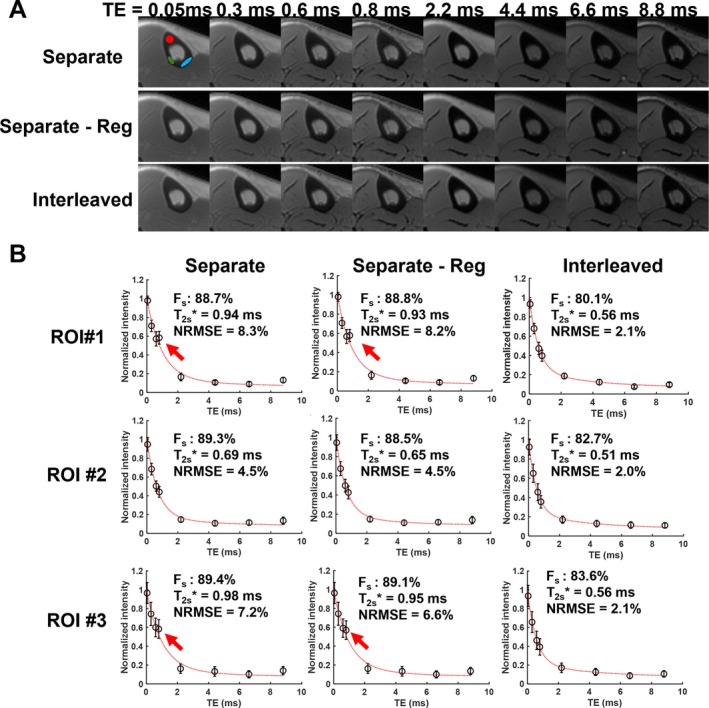 Figure 1
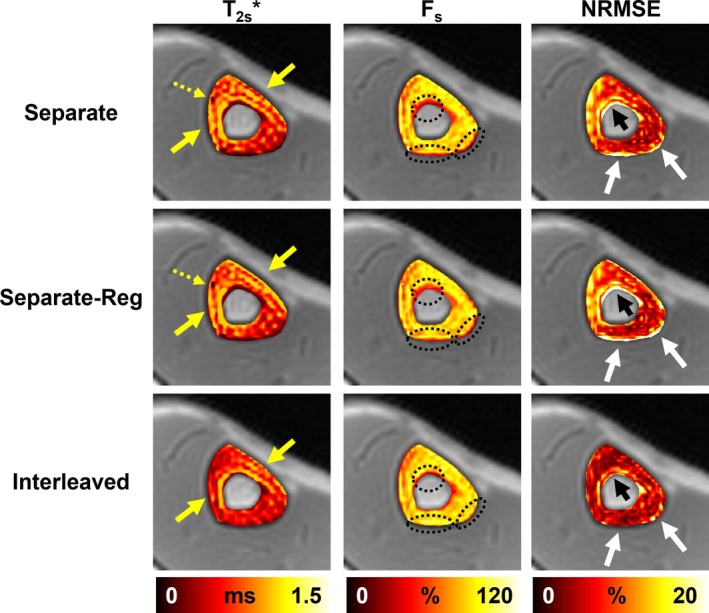 Figure 2
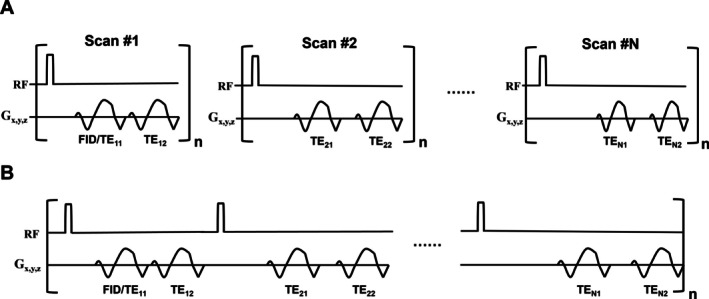 Figure 3
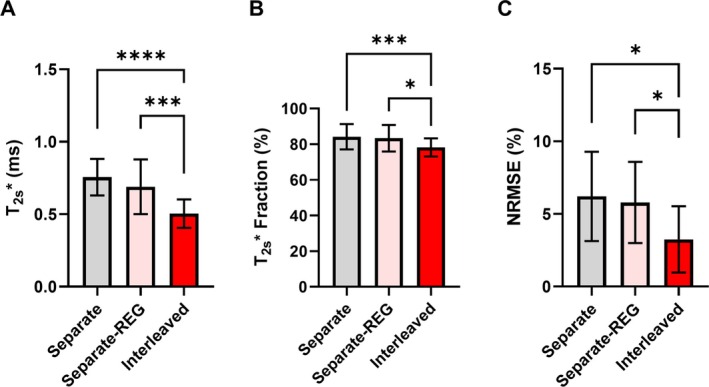 Figure 4
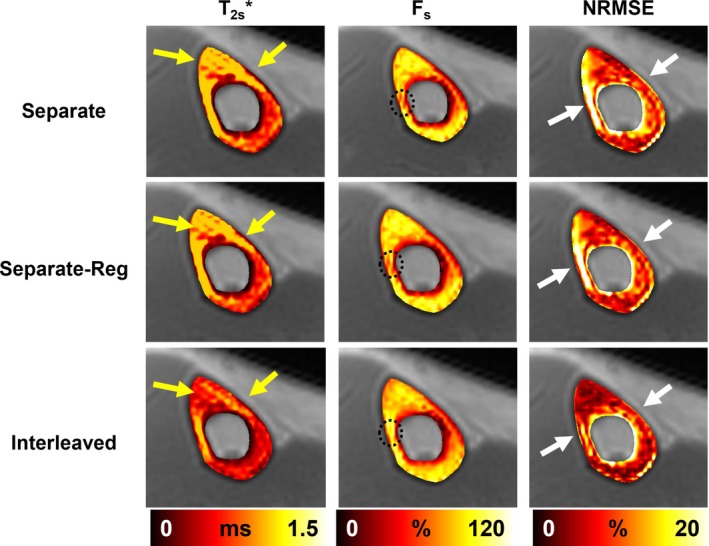 Figure 5
Peer Reviews
No public reviews on file for this paper yet. If you reviewed it on a platform where reviews are public (OpenReview, ICLR, NeurIPS, ICML), you can paste yours below so the community can read it here.
Videos
No videos yet. Explain this paper in a talk, walkthrough, or lecture? Add one.
Taxonomy
TopicsAdvanced MRI Techniques and Applications · Bone health and osteoporosis research · Advanced Neuroimaging Techniques and Applications