Neutral anion-detecting organic cages based on anion–π interactions
Yuyang Lu, Ping Zhou, Hua Tang, Yating Wu, Yueyan Kuang, Ze Cao, Jiyong Liu, Guangcheng Wu, Hongliang Chen, Hao Li

TL;DR
Scientists created molecular cages that detect neutral anions using anion–π interactions, with binding affinity influenced by substituents on the cage structure.
Contribution
The study introduces neutral tetrahedral cages with tunable anion-binding properties based on substituent effects and anion–π interactions.
Findings
Electron-withdrawing substituents enhance anion binding, while electron-donating ones reduce it.
Fluorine substituents near the binding pocket unexpectedly weaken anion binding due to repulsive field effects.
Encapsulation of anions alters intramolecular CH–π interactions, detectable via NMR signatures.
Abstract
A series of neutral tetrahedral molecular cages were self-assembled in relatively high yields by condensing a triamino linker with triangular tris-aldehyde precursors. Each tris-aldehyde features a central triazine core, which imparts an electron-deficient cavity that facilitates anion encapsulation through fourfold anion–π interactions. The anion binding affinity is significantly influenced by substituents on the tris-aldehyde precursors: electron-donating groups (e.g., Ph) diminish binding by compromising the electron-deficient nature of the cage, whereas more electron-withdrawing substituents (e.g., Cl, Br, and CF3-Ph) enhance it. Interestingly, the strongly electron-withdrawing fluorine (F) substituents, in close proximity to the binding pocket, unexpectedly diminish binding affinity due to a repulsive field effect. Within each corner of the tetrahedral framework, intramolecular…
Genes, proteins, chemicals, diseases, species, mutations and cell lines named across the full text — each resolved to its canonical identifier and authoritative record.
Click any figure to enlarge with its caption.
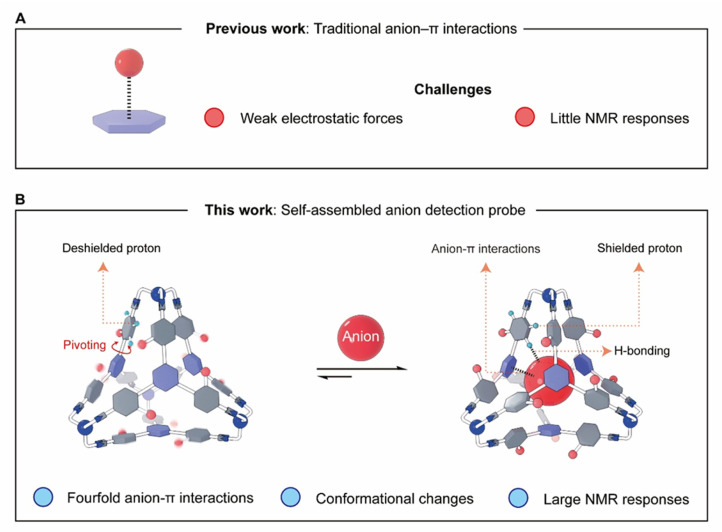 Figure 1
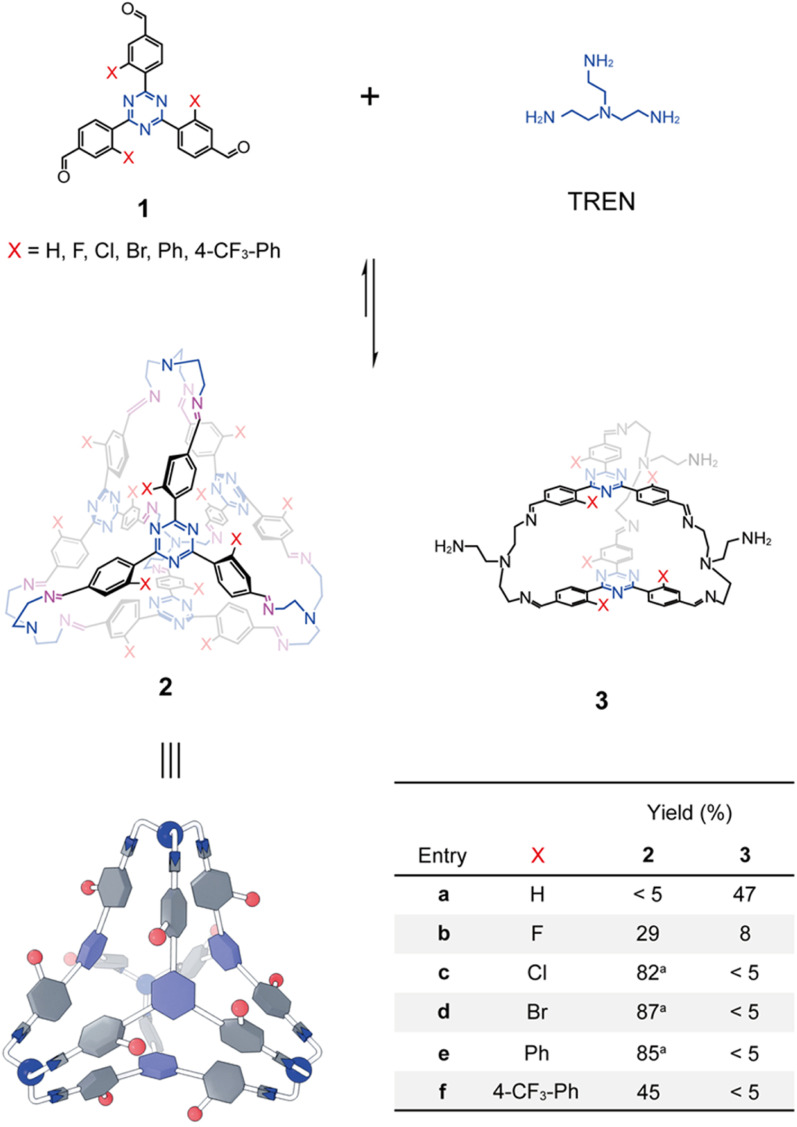 Figure 2
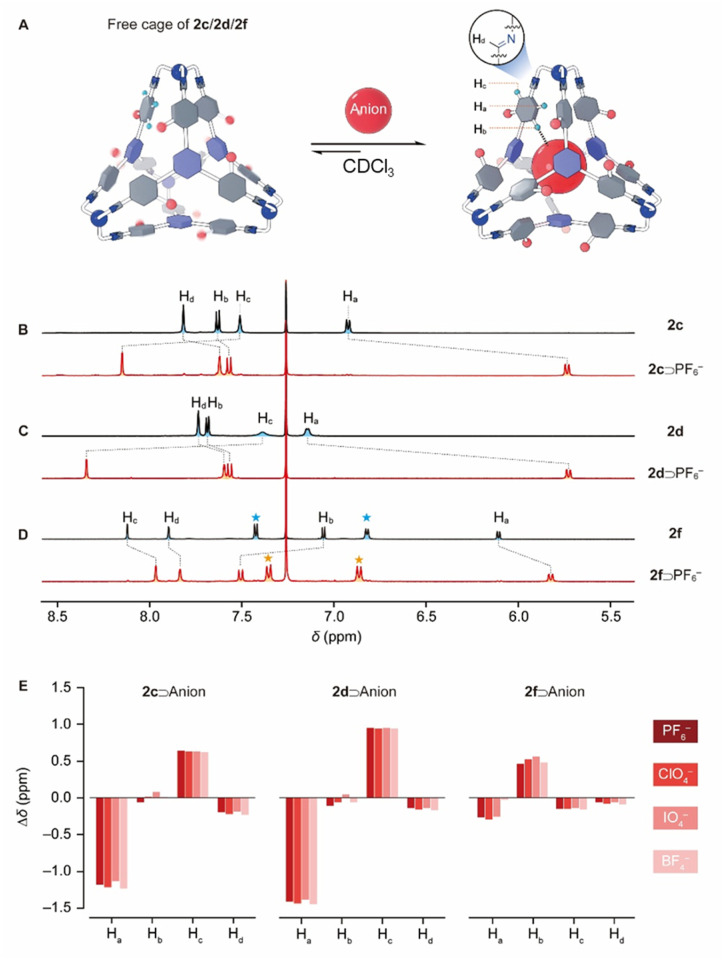 Figure 3
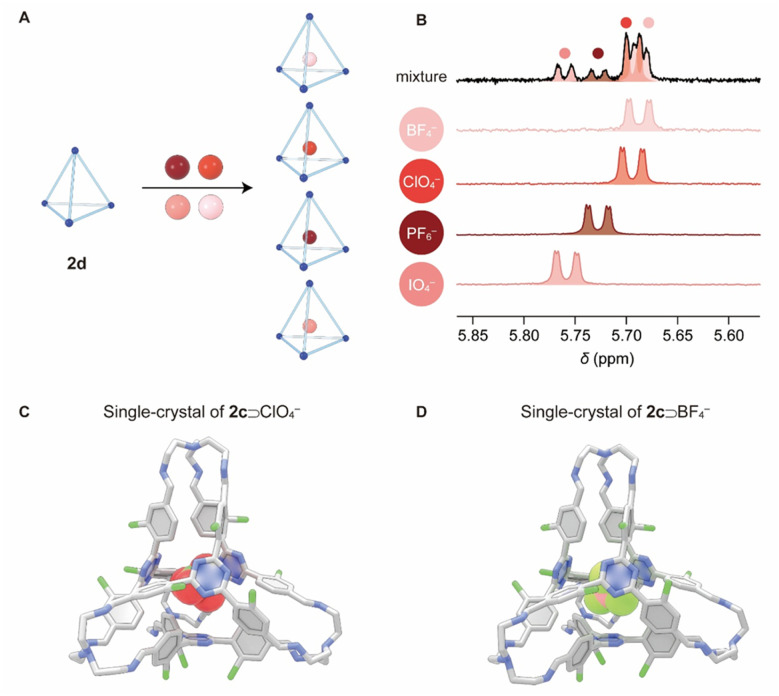 Figure 4
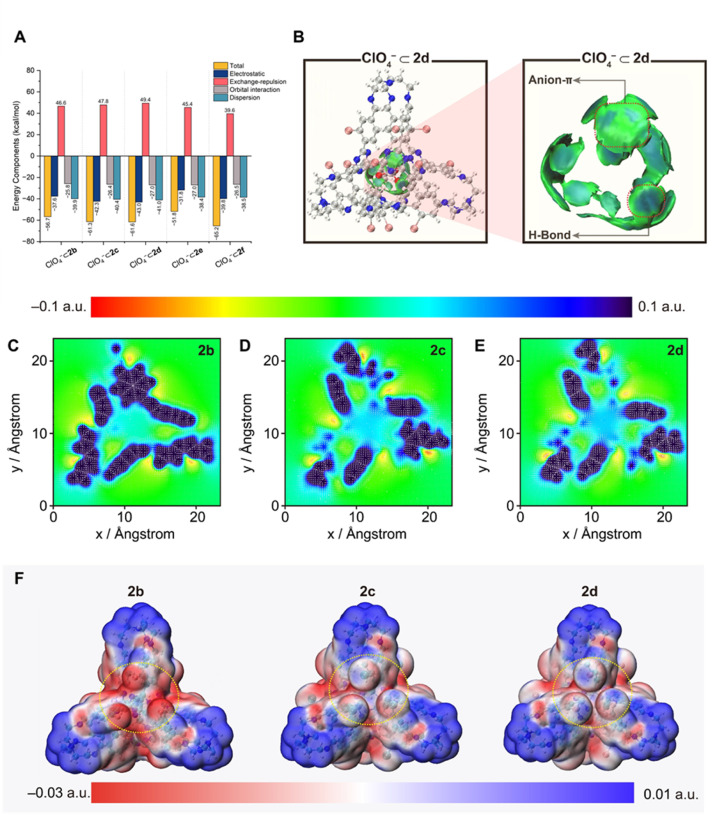 Figure 5
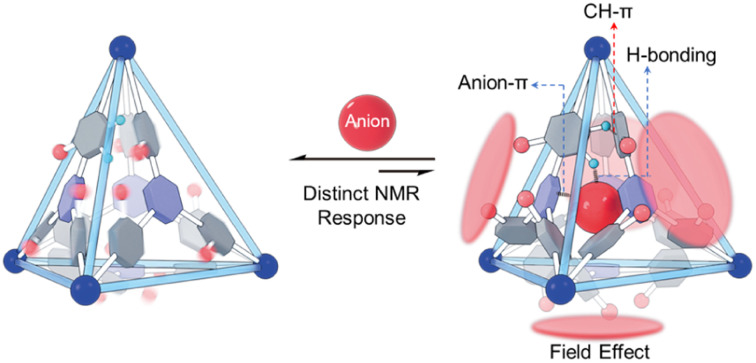 Figure 6
Peer Reviews
No public reviews on file for this paper yet. If you reviewed it on a platform where reviews are public (OpenReview, ICLR, NeurIPS, ICML), you can paste yours below so the community can read it here.
Videos
No videos yet. Explain this paper in a talk, walkthrough, or lecture? Add one.
Taxonomy
TopicsSupramolecular Chemistry and Complexes · Molecular Sensors and Ion Detection · Supramolecular Self-Assembly in Materials