“The Dose Makes the Poison”: Relevance of Paracelsus’s Principle for Modern Chemical Hazard Assessment with New Approach Methodologies
Beate I. Escher

TL;DR
Modern chemical hazard assessments using new methods should consider dose-response relationships and baseline toxicity to avoid misclassifying chemicals as non-toxic.
Contribution
The paper introduces the concept of 'persistent toxicity' as an integrative hazard metric for chemical substitution and safe-by-design approaches.
Findings
Dichotomizing NAMs results into toxic/nontoxic categories introduces uncertainty in hazard assessment.
Baseline toxicity predictions can fill data gaps for hard-to-test chemicals.
Combining persistence and toxicity into a 'persistent toxicity' metric improves hazard evaluation.
Abstract
New approach methodologies (NAMs) including in vitro assays and in silico prediction methods that are based on mechanistic understanding of the pathways of toxicity have changed how we nowadays assess the hazard and risk of chemicals in commerce. Quantitative dose–response relationships obtained from NAMs are often dichotomized into categorical outcomes (toxic/nontoxic), introducing uncertainty and potential misclassification in hazard characterization because the applicability domain of NAMs is currently constrained to the medium-hydrophobicity segment of the chemical universe. Until physicochemical limitations to the testability of (super)hydrophobic chemicals are overcome and hydrophilic and charged chemicals are tested at higher doses than is present practice, “no response” should not be equated with an absence of toxicity. Toxicity is not categoricalit is the dose that makes the…
Genes, proteins, chemicals, diseases, species, mutations and cell lines named across the full text — each resolved to its canonical identifier and authoritative record.
Click any figure to enlarge with its caption.
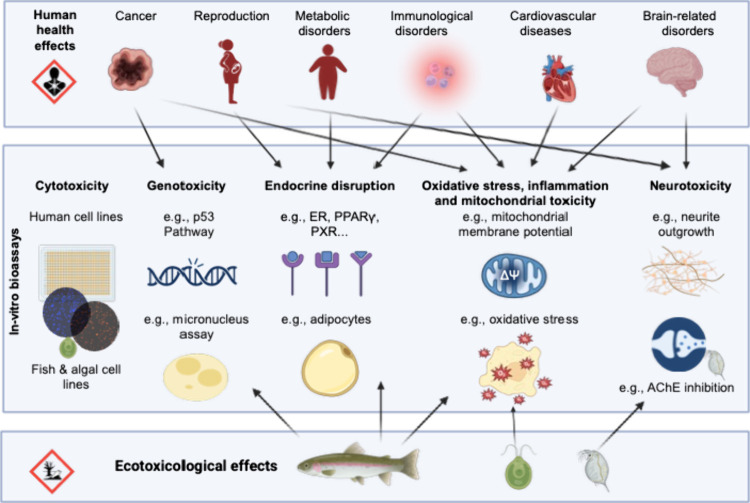 Figure 1
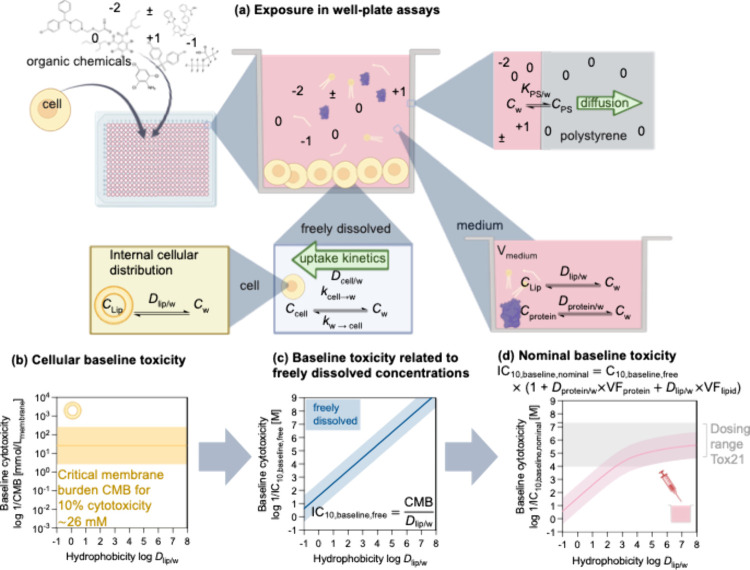 Figure 2
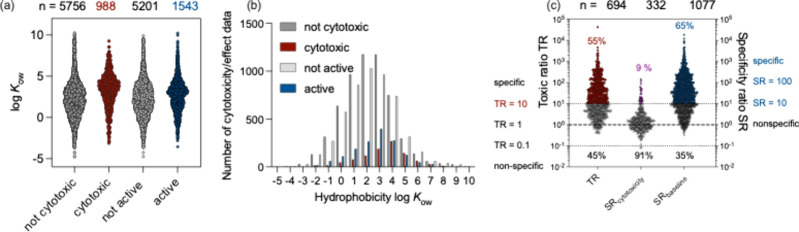 Figure 3
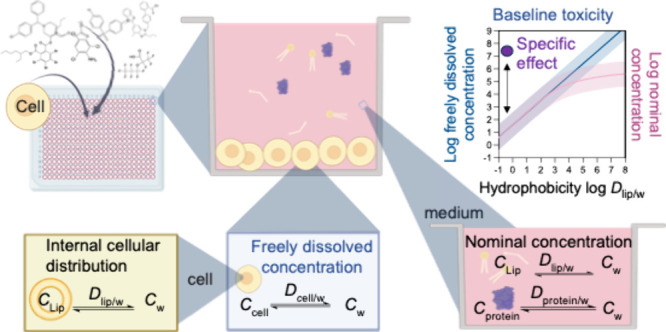 Figure 4
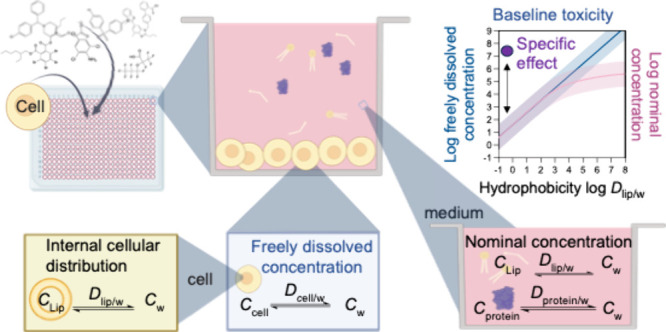 Figure 5
Peer Reviews
No public reviews on file for this paper yet. If you reviewed it on a platform where reviews are public (OpenReview, ICLR, NeurIPS, ICML), you can paste yours below so the community can read it here.
Videos
No videos yet. Explain this paper in a talk, walkthrough, or lecture? Add one.
Taxonomy
TopicsEffects and risks of endocrine disrupting chemicals · Animal testing and alternatives · Contact Dermatitis and Allergies