Inferring DNA Kinkability from Biased MD Simulations
Arianna Fassino, Enrico Carlon, Aderik Voorspoels

TL;DR
This paper uses simulations to study how DNA can form kinks under mechanical stress and identifies two distinct types of kinks based on their structural properties.
Contribution
The study introduces a novel method using biased MD simulations to infer DNA kinkability and identifies sequence-dependent kink formation.
Findings
Two types of DNA kinks are identified: twist-bend kinks and pure bend kinks.
Free energy landscapes reveal sequence-dependent effects on kink formation.
Twist-bend kinks are favored in negatively supercoiled DNA, while pure bend kinks occur in torsionally constrained DNA.
Abstract
In several biological processes, such as looping, supercoiling, and DNA–protein interactions, DNA is subject to very strong deformations. While coarse-grained models often approximate DNA as a smoothly bendable polymer, experimental and theoretical studies have demonstrated that mechanical stress can induce localized kinks. Here, we employ the Rigid Base Biasing of Nucleic Acids (RBB-NA) algorithm to systematically probe the properties of highly deformed DNA in all-atom simulations of short dodecamers. A simultaneous bias in bending (roll) and twist is applied locally to two consecutive base pairs in the center of the dodecamers. Using umbrella sampling, we construct free energy landscapes that reveal sequence-dependent effects for kink formation and quantify the energetic cost of kinking. We identify distinct features in the free energy profiles highlighting anharmonic effects, such as…
Genes, proteins, chemicals, diseases, species, mutations and cell lines named across the full text — each resolved to its canonical identifier and authoritative record.
Click any figure to enlarge with its caption.
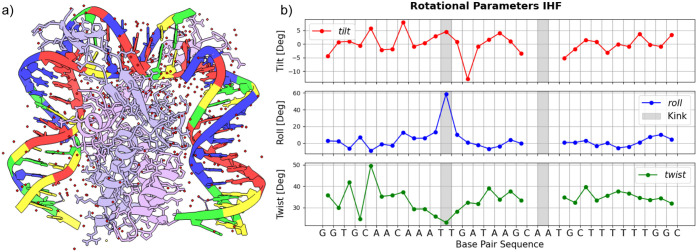 Figure 1
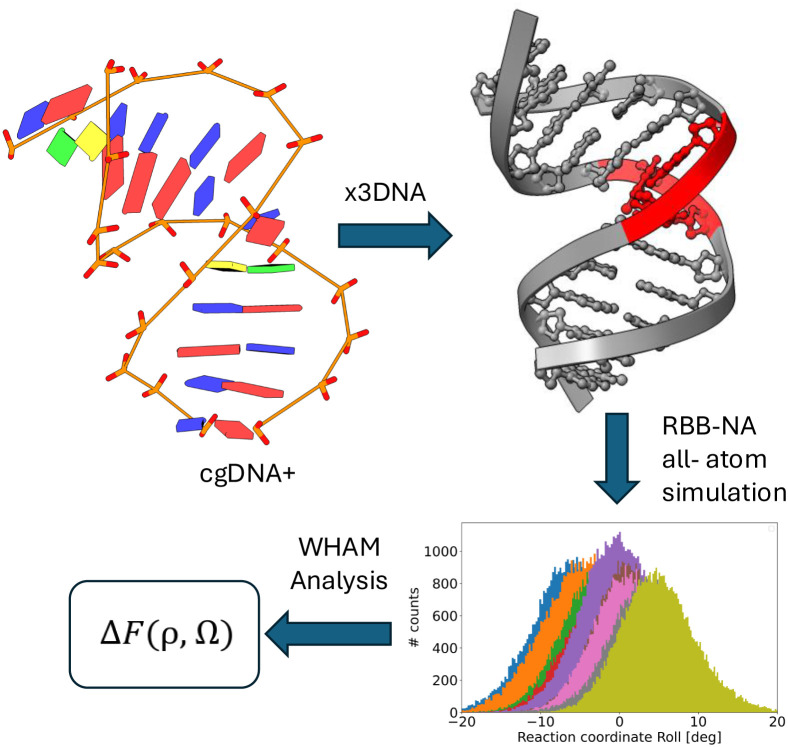 Figure 2
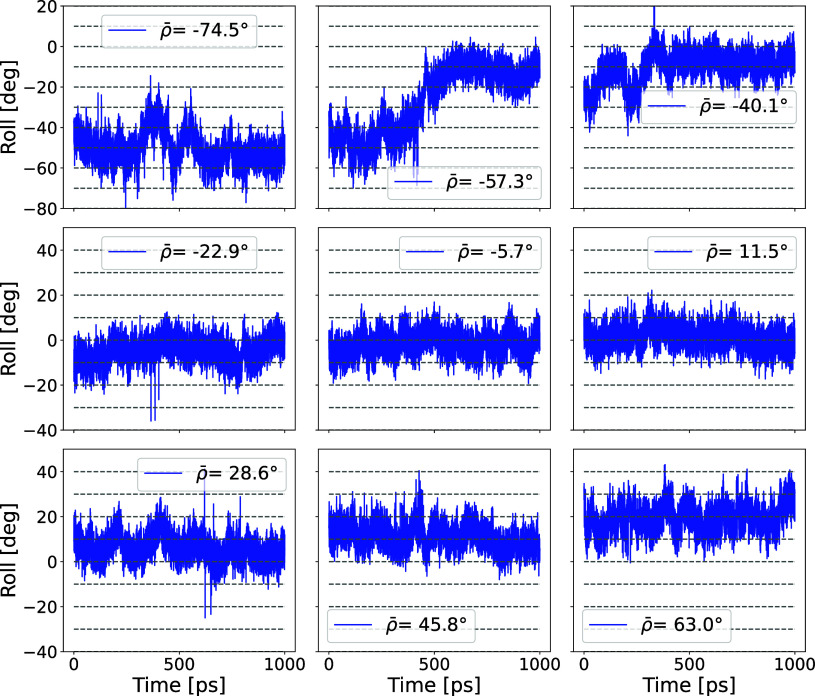 Figure 3
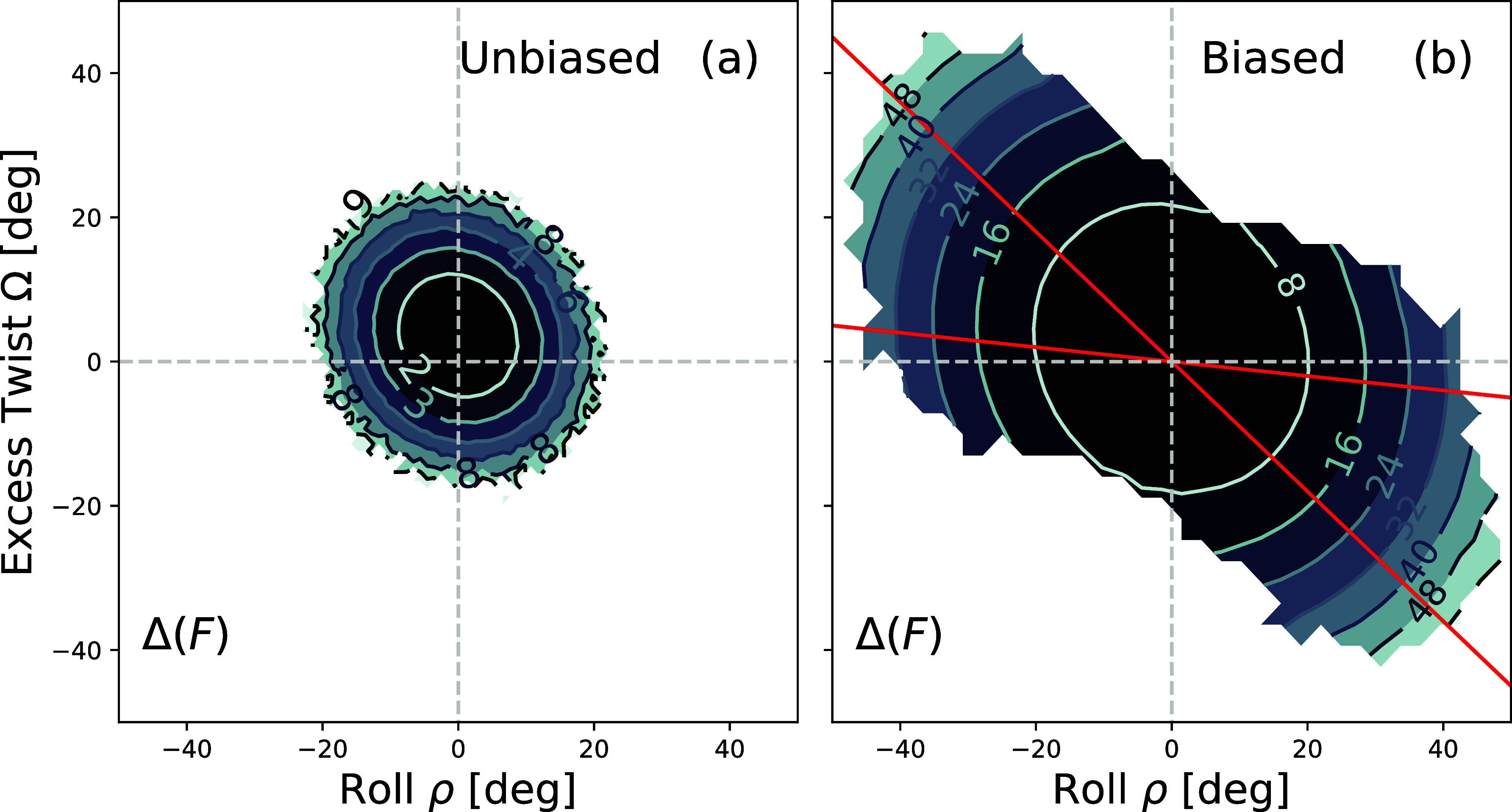 Figure 4
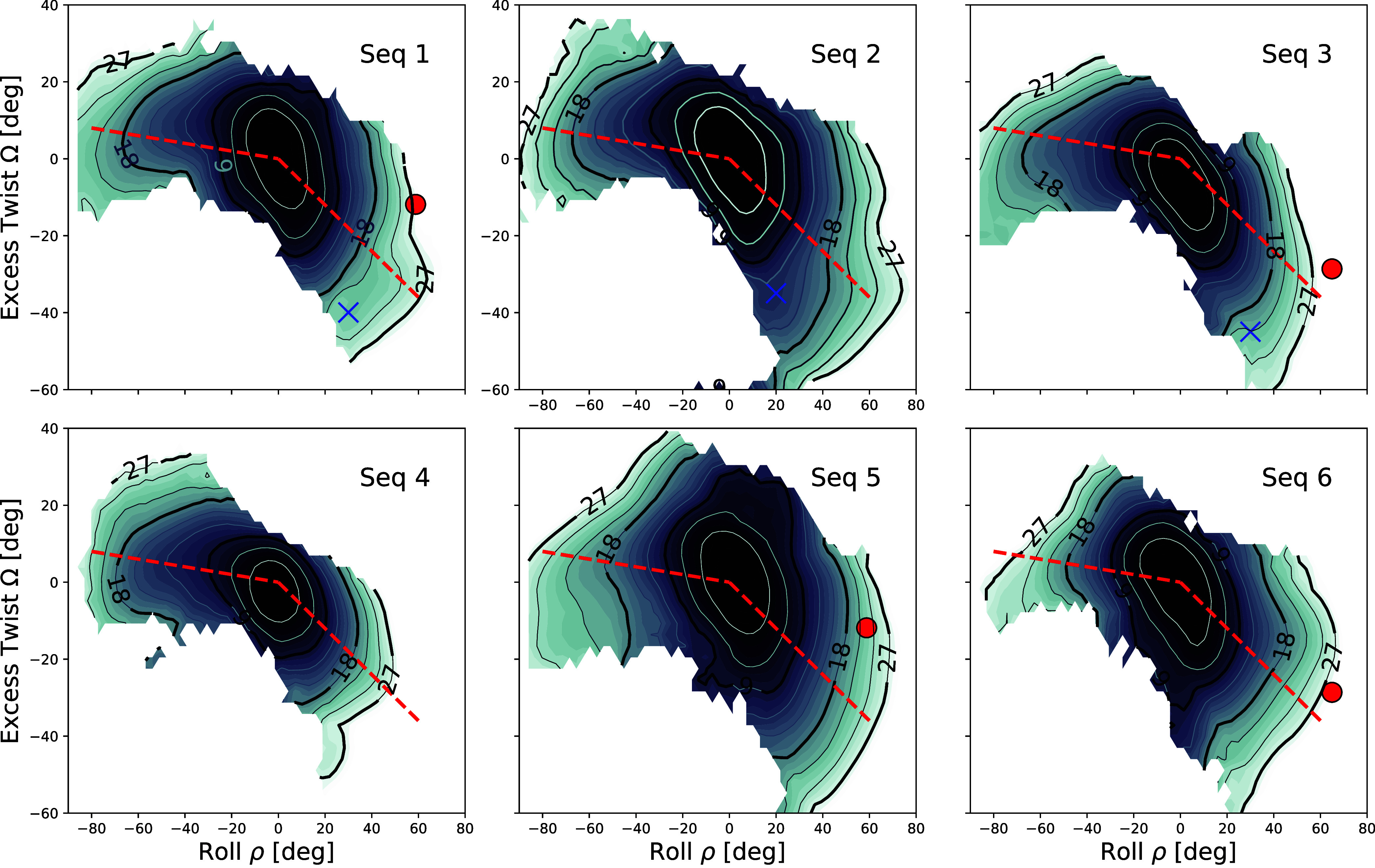 Figure 5
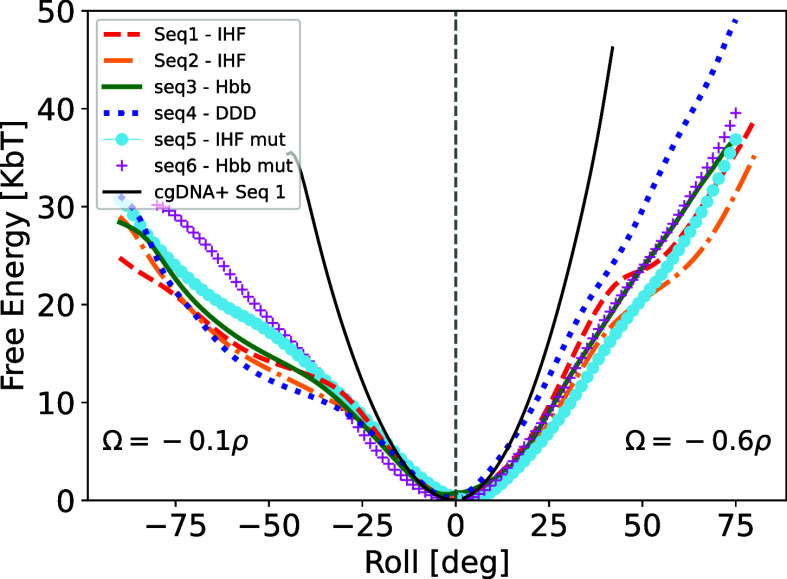 Figure 6
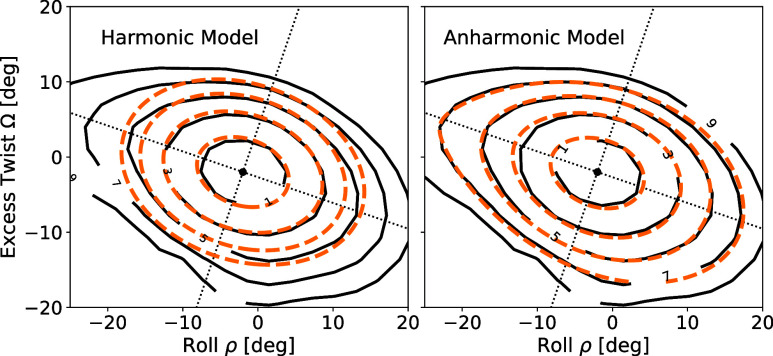 Figure 7
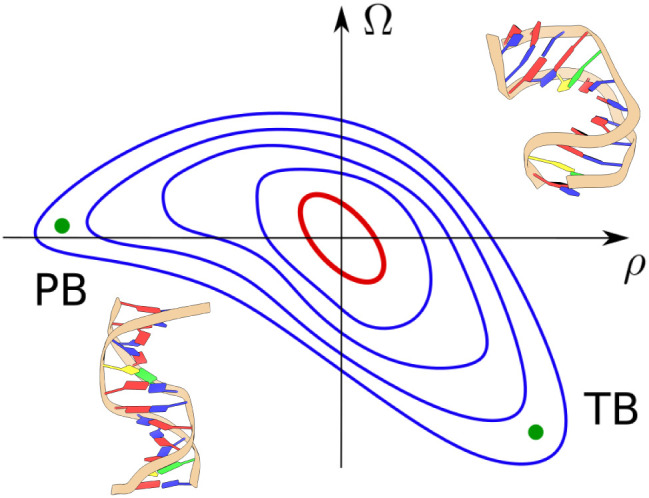 Figure 8
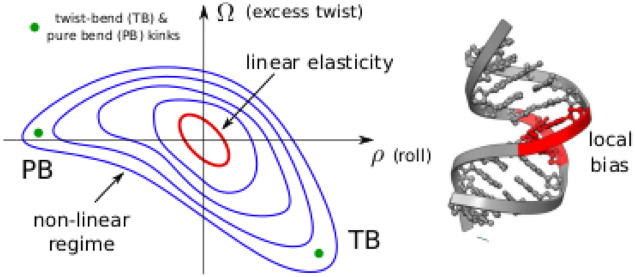 Figure 9
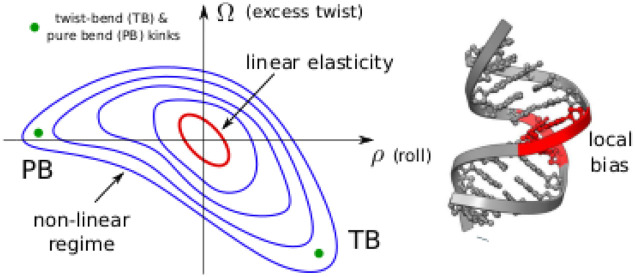 Figure 10
 Figure 11
 Figure 12
 Figure 13
 Figure 14
 Figure 15
 Figure 16
 Figure 17
 Figure 18
 Figure 19
 Figure 20
 Figure 21
 Figure 22
 Figure 23
 Figure 24
Peer Reviews
No public reviews on file for this paper yet. If you reviewed it on a platform where reviews are public (OpenReview, ICLR, NeurIPS, ICML), you can paste yours below so the community can read it here.
Videos
No videos yet. Explain this paper in a talk, walkthrough, or lecture? Add one.
Taxonomy
TopicsDNA and Nucleic Acid Chemistry · Advanced biosensing and bioanalysis techniques · Genomics and Chromatin Dynamics