Effect of Initiator Density, Catalyst Concentration, and Surface Curvature on the Uniformity of Polymers Grafted from Spherical Nanoparticles
Rongguan Yin, Hanshu Wu, Xiaolei Hu, Khidong Kim, Francesca Lorandi, Dagmar R. D’hooge, Edmondo M. Benetti, Michael R. Bockstaller, Krzysztof Matyjaszewski

TL;DR
This study explores how initiator density, catalyst concentration, and nanoparticle curvature affect the uniformity of polymer brushes grafted onto spherical nanoparticles.
Contribution
The paper reveals how steric hindrance and buried initiation sites influence polymer brush growth on curved surfaces.
Findings
Increased initiator crowding and smaller curvature reduce initiation efficiency and broaden molecular weight distributions.
Higher Cu catalyst concentrations enable uniform brush growth across different initiator densities.
Buried initiation sites are identified as a unique feature of surface-grafted polymer systems.
Abstract
Polymer-grafted nanoparticles (PGNPs) are versatile hybrid materials whose properties critically depend on brush dimensions, uniformity, and grafting density. Herein, we systematically investigated how initiator density, catalyst concentration, and nanoparticle curvature govern the growth of poly(methyl methacrylate) (PMMA) brushes grafted from spherical SiO2 nanoparticles via surface-initiated activators regenerated by electron transfer atom transfer radical polymerization (SI-ARGET ATRP). By tuning the initiator density through a combination of “active” and “dummy” silane initiators anchored on the nanoparticles’ surface and controlling the catalyst concentration, we reveal that increased initiator crowding and smaller surface curvature amplify steric hindrance, leading to decreased initiation efficiency and broader molecular weight distributions. Correlation with the corresponding…
Genes, proteins, chemicals, diseases, species, mutations and cell lines named across the full text — each resolved to its canonical identifier and authoritative record.
Click any figure to enlarge with its caption.
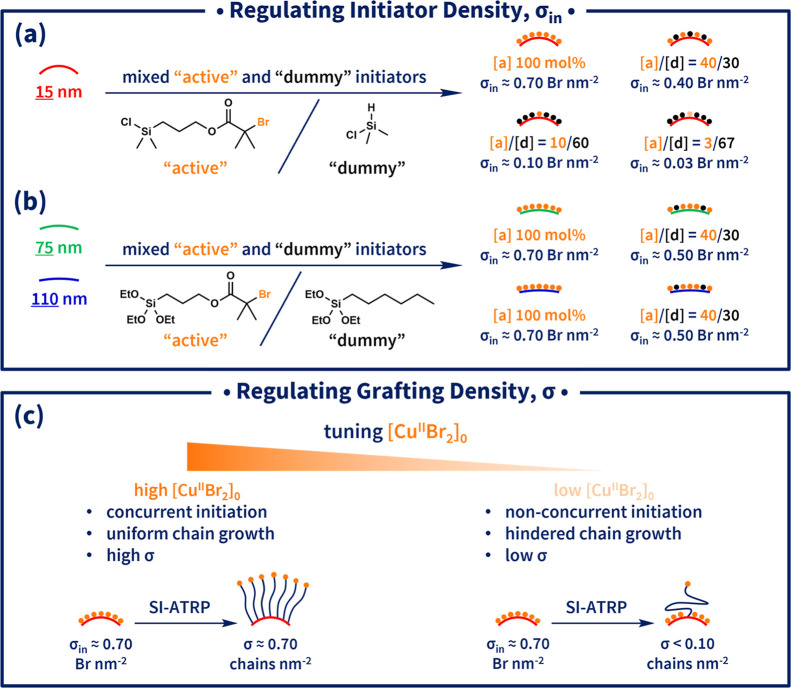 Figure 1
 Figure 2
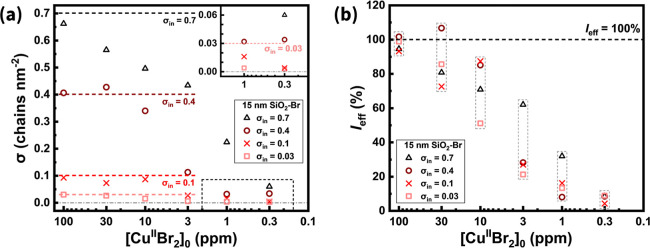 Figure 3
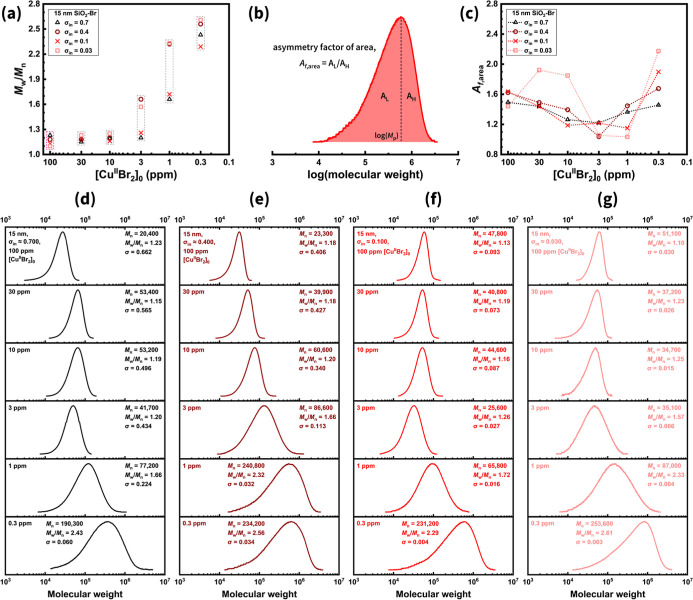 Figure 4
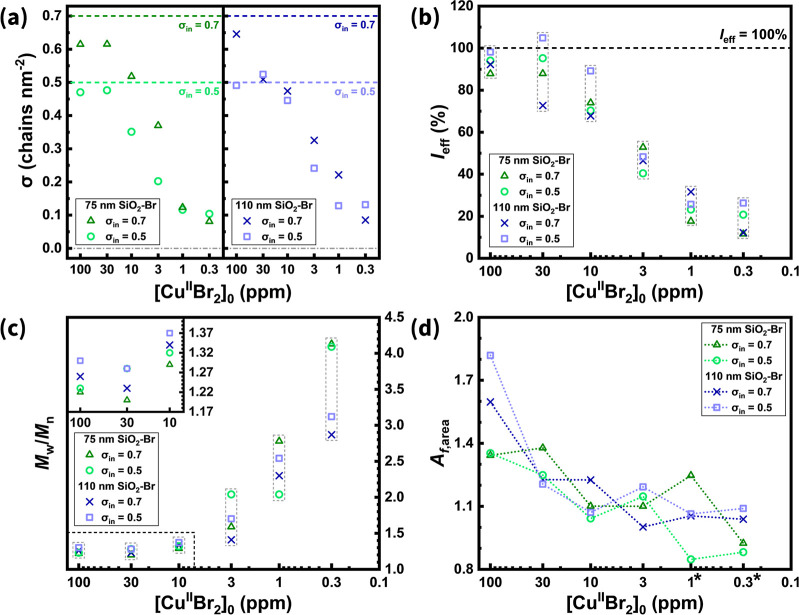 Figure 5
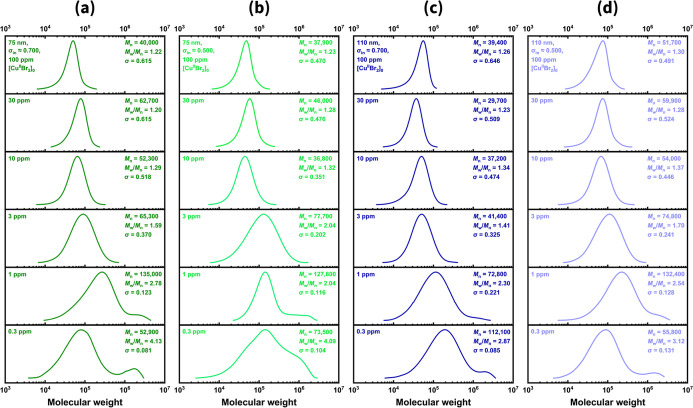 Figure 6
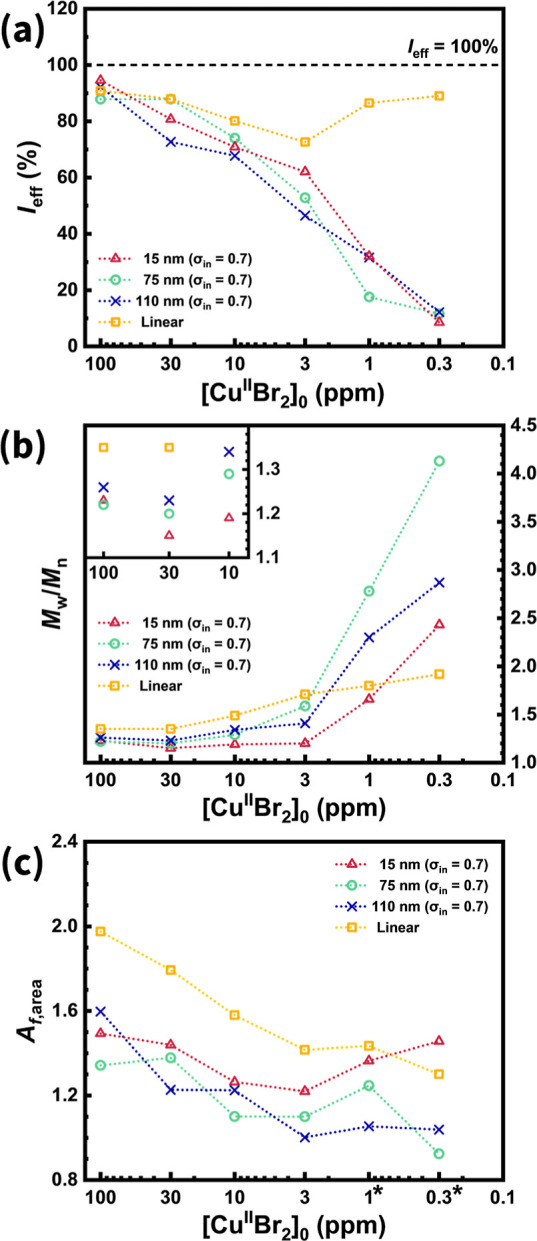 Figure 7
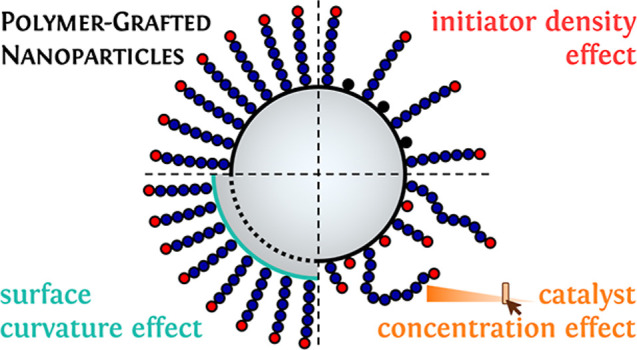 Figure 8
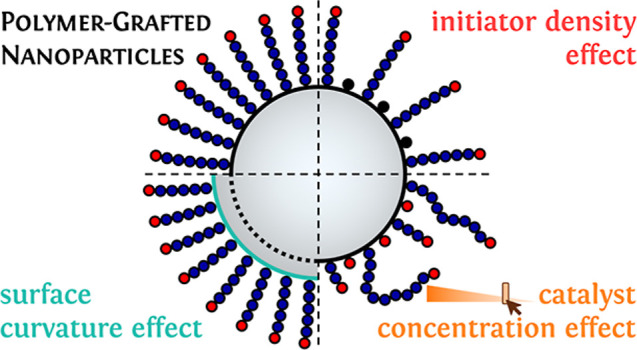 Figure 9
 Figure 10
 Figure 11
Peer Reviews
No public reviews on file for this paper yet. If you reviewed it on a platform where reviews are public (OpenReview, ICLR, NeurIPS, ICML), you can paste yours below so the community can read it here.
Videos
No videos yet. Explain this paper in a talk, walkthrough, or lecture? Add one.
Taxonomy
TopicsPolymer Surface Interaction Studies · Surface Modification and Superhydrophobicity · Advanced Polymer Synthesis and Characterization