Polymorphic Self-Poisoning in the Isothermal Crystallization of Thermoplastic Polyurethanes
Zakarya Baouch, Irene Guardincerri, Katalee Jariyavidyanont, Leire Sangroniz, Yunxiang Shi, Elmar Pöselt, Alejandro J. Müller, René Androsch, Dario Cavallo

TL;DR
This paper studies how different crystal structures form in thermoplastic polyurethanes during isothermal crystallization and how they affect material properties.
Contribution
The study reveals a nonmonotonic crystallization rate linked to polymorphic self-poisoning in TPUs with high hard segment content.
Findings
TPUs with low hard segment content crystallize exclusively in Form I with decreasing crystallization rates at higher temperatures.
TPUs with ≥50 wt% hard segments show nonmonotonic crystallization rates due to competition between two polymorphs.
Polymorphic self-poisoning is identified as a mechanism where Form I temporarily hinders the formation of Form II.
Abstract
Thermoplastic polyurethanes (TPUs) are multiblock copolymers whose properties are strongly influenced by the crystallization of the hard segments (HS). Crystallized HSs based on 4,4′-methylenediphenyl diisocyanate/1,4-butanediol can develop two distinct polymorphs: the thermodynamically stable triclinic Form II or the kinetically favored paracrystalline Form I, each associated with different mechanical responses. While the effect of cooling rate on polymorphic crystallization has been studied, the isothermal crystallization kinetics of TPUs with varying HS content are less explored. Here, we investigate the isothermal crystallization of TPUs containing 29–80 wt % HS using differential scanning calorimetry (DSC), wide-angle X-ray diffraction (WAXD), polarized light optical microscopy (PLOM), and fast scanning calorimetry (FSC). TPUs with low HS content (29 and 33 wt %) crystallize…
Genes, proteins, chemicals, diseases, species, mutations and cell lines named across the full text — each resolved to its canonical identifier and authoritative record.
Click any figure to enlarge with its caption.
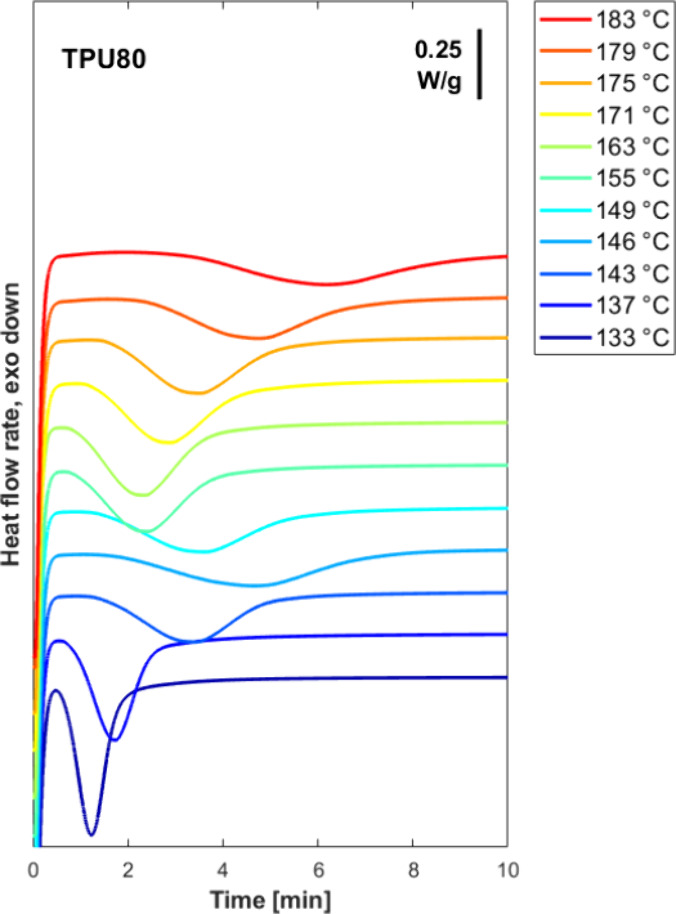 Figure 1
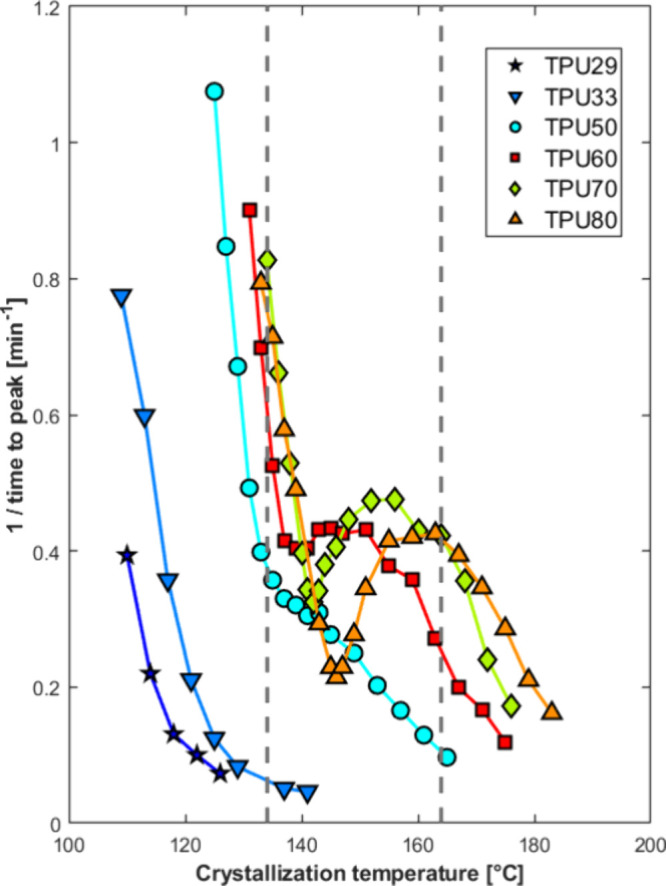 Figure 2
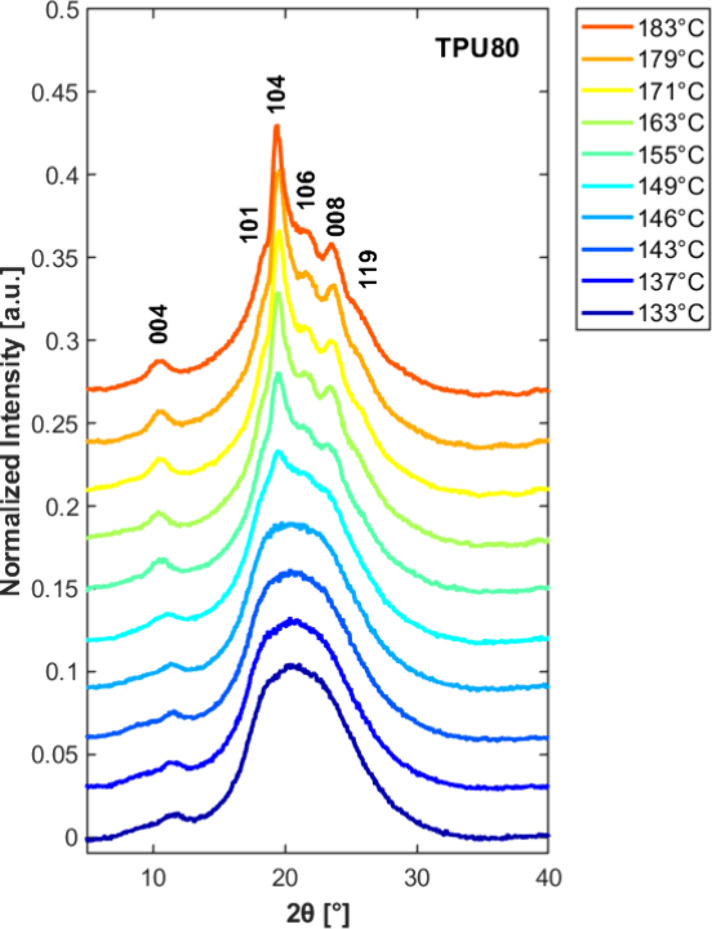 Figure 3
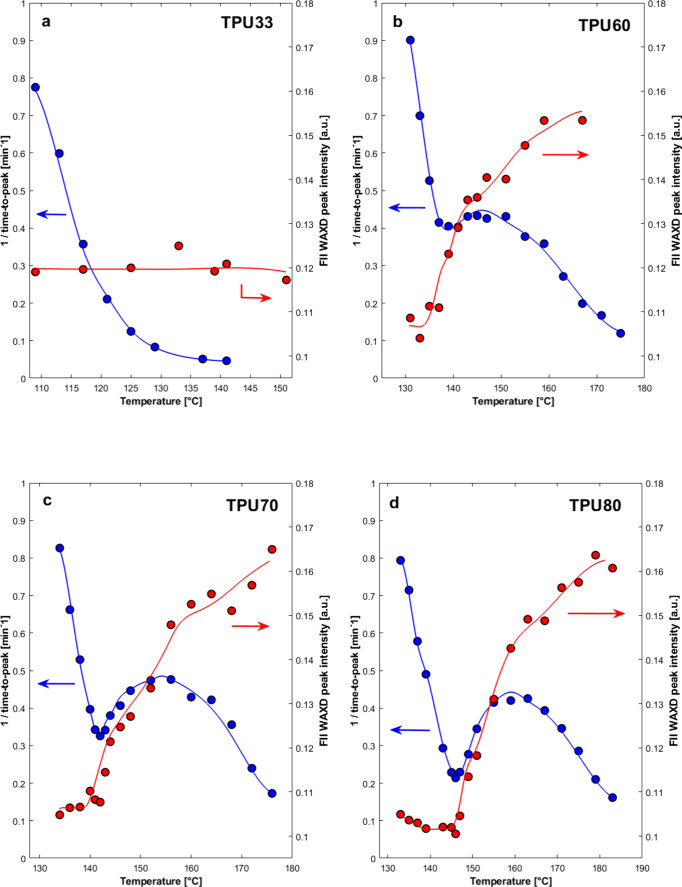 Figure 4
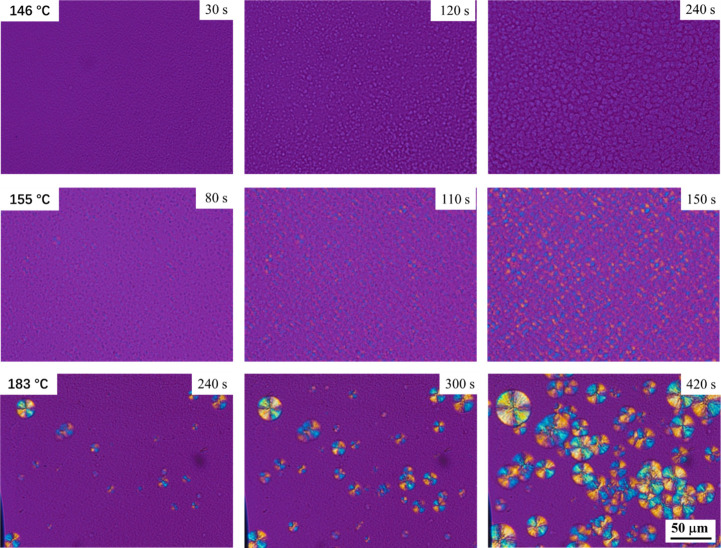 Figure 5
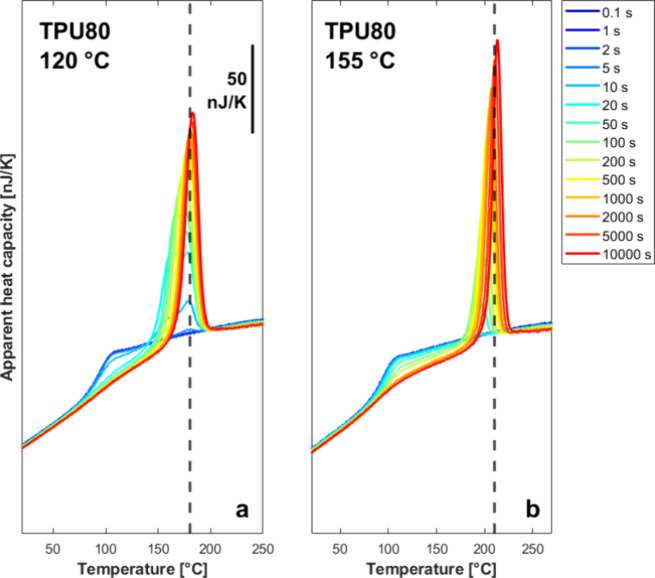 Figure 6
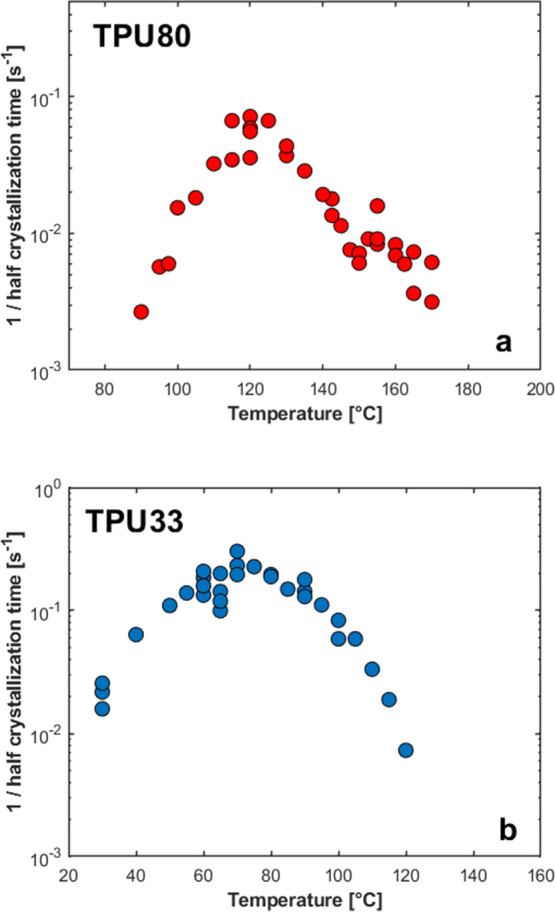 Figure 7
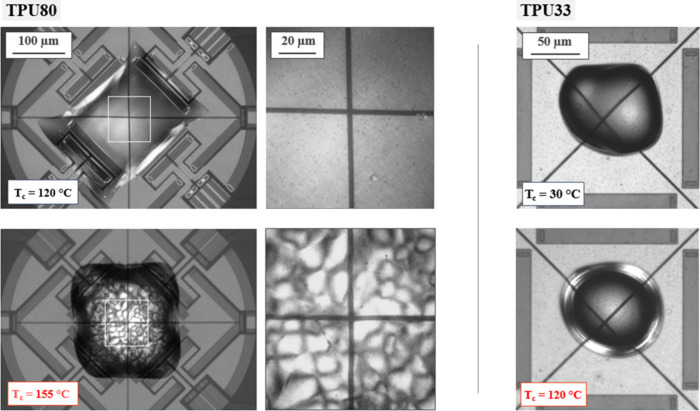 Figure 8
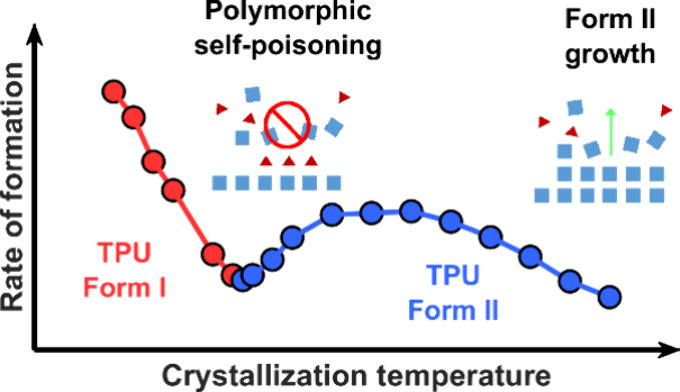 Figure 9
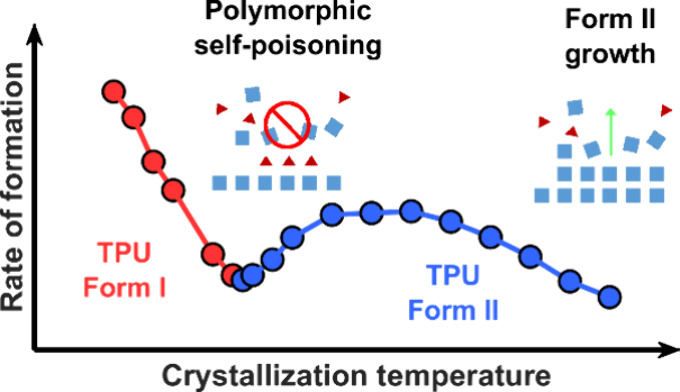 Figure 10
Peer Reviews
No public reviews on file for this paper yet. If you reviewed it on a platform where reviews are public (OpenReview, ICLR, NeurIPS, ICML), you can paste yours below so the community can read it here.
Videos
No videos yet. Explain this paper in a talk, walkthrough, or lecture? Add one.
Taxonomy
TopicsPolymer composites and self-healing · Polymer crystallization and properties · Carbon dioxide utilization in catalysis