What Causes Carbon-Centered Radicals to Pyramidalize? It Depends on the Type of Radical
Gary W. Breton

TL;DR
This paper explains how hyperconjugative interactions determine the geometry of carbon-centered radicals, revealing different effects in simple and bridgehead radicals.
Contribution
The study identifies hyperconjugative interactions as the primary factor governing radical geometries using natural bond orbital calculations.
Findings
Hyperconjugative interactions primarily dictate radical geometries.
Negative hyperconjugation is key in simple alkyl radicals.
Positive hyperconjugation dominates in bridgehead radicals.
Abstract
Carbon-centered radicals, with a single electron on the carbon atom, could potentially adopt a planar geometry similar to that of alkyl carbocations, a tetrahedral geometry similar to that of alkyl carbanions, or a geometry somewhere in between. Simple alkyl radicals are known to adopt a slightly pyramidalized geometry due to a combination of torsional and hyperconjugative interactions. Which of these interactions is primarily responsible for determining the final adopted geometries has, up until now, remained unknown. Harnessing the power of natural bond orbital calculations to perform geometry optimizations with specific donor–acceptor interactions deleted, it is now demonstrated that hyperconjugative interactions primarily dictate radical geometries. For simple alkyl radicals, negative hyperconjugative interactions are most important, while for bridgehead radicals, positive…
Genes, proteins, chemicals, diseases, species, mutations and cell lines named across the full text — each resolved to its canonical identifier and authoritative record.
Click any figure to enlarge with its caption.
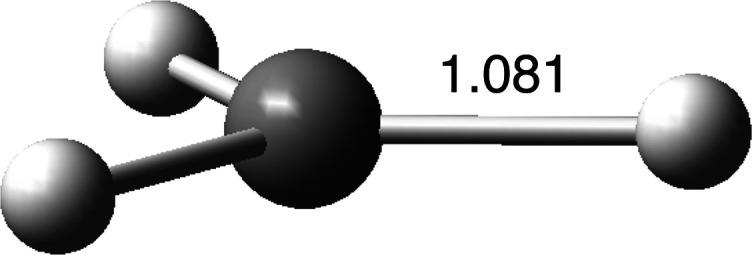 Figure 1
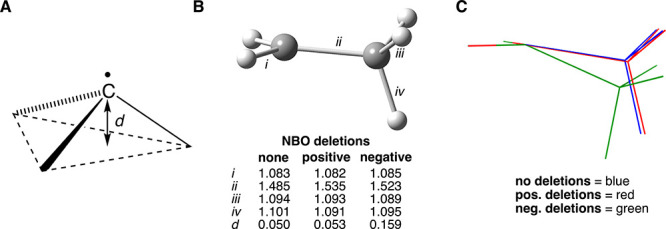 Figure 2
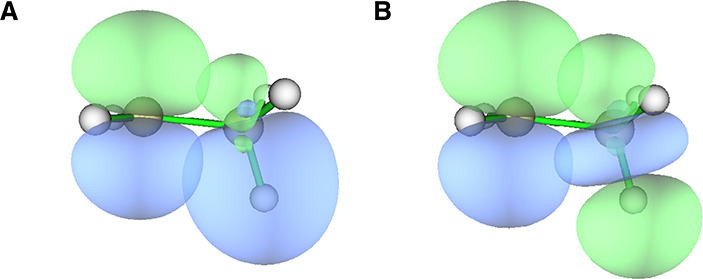 Figure 3
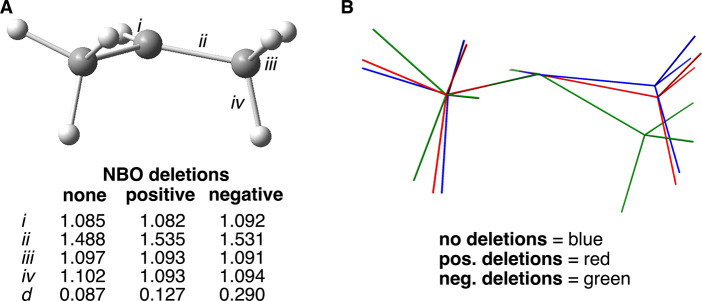 Figure 4
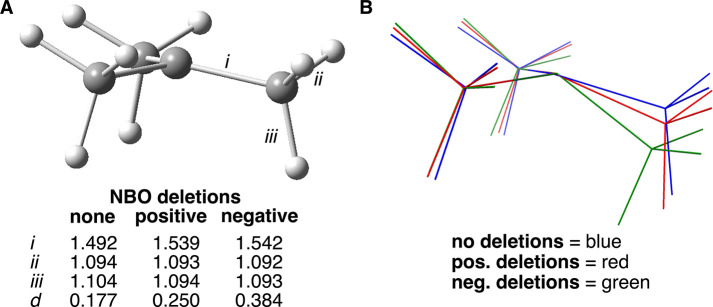 Figure 5
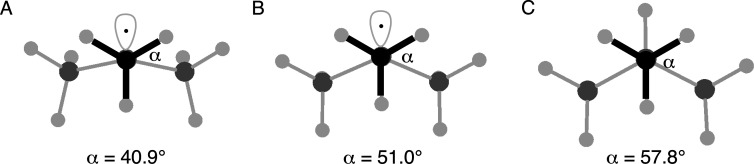 Figure 6
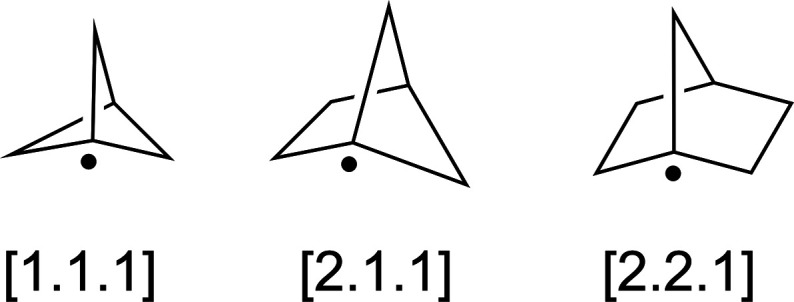 Figure 7
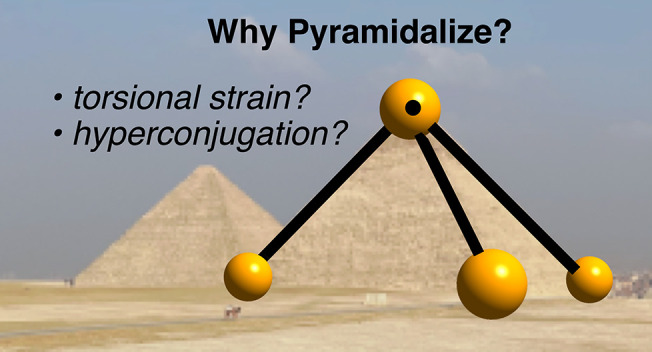 Figure 8
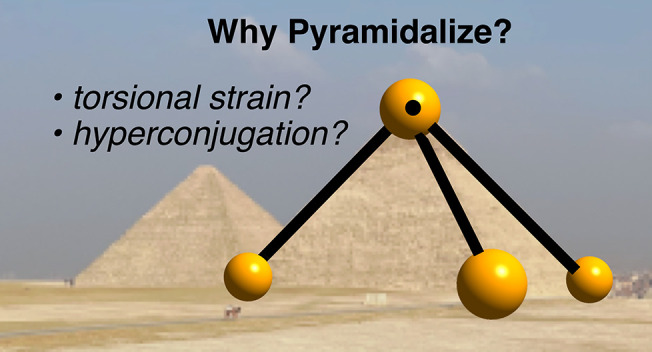 Figure 9
Peer Reviews
No public reviews on file for this paper yet. If you reviewed it on a platform where reviews are public (OpenReview, ICLR, NeurIPS, ICML), you can paste yours below so the community can read it here.
Videos
No videos yet. Explain this paper in a talk, walkthrough, or lecture? Add one.
Taxonomy
TopicsSynthesis and Properties of Aromatic Compounds · Radical Photochemical Reactions · Organoboron and organosilicon chemistry