Unraveling and Sliding of Polypeptide Strands Underlies the Exceptional Toughness of the Triple-Helix Collagen Molecule
Andreas Rohatschek, Bruno Zappone, Patrick Steinbauer, Manuel Rufin, Daniela A. Barrágan Rivera, Maria P. De Santo, Orestis G. Andriotis, Stefan Baudis, Philipp J. Thurner

TL;DR
Collagen's toughness comes from its triple-helix structure unraveling and sliding under stress, allowing it to stretch significantly without breaking.
Contribution
The study reveals a controlled slippage mechanism in collagen's triple-helix structure as the source of its exceptional toughness.
Findings
Individual tropocollagen molecules can stretch up to three times their native length without breaking.
Slippage of α-chains in the triple-helix occurs irreversibly before being stabilized by chain-end interactions.
Electrostatic interactions with mica prevent aggregation and support the stretching mechanism.
Abstract
Fibril-forming tropocollagens (TCs) play an essential role in tissue biomechanics. They are ubiquitous in mammals and other animal tissues, where they provide passive mechanical functions. While molecular dynamics simulations have targeted the mechanics of individual TCs, experimental data on their tensile mechanical properties remain scarce. As a consequence, the link between the unique triple-helix structure of the collagen molecule and macro-mechanical properties of collagenous tissues is not well understood. To close this gap, we have investigated isolated TCs grafted on the tip of atomic force microscopy (AFM) probes as well as adsorbed TC films using a surface force apparatus (SFA). AFM force spectroscopy showed that an individual TC can be stretched without failing to a contour length of up to 900 nmnearly three times its native lengthover thousands of stretching cycles. The…
Genes, proteins, chemicals, diseases, species, mutations and cell lines named across the full text — each resolved to its canonical identifier and authoritative record.
Click any figure to enlarge with its caption.
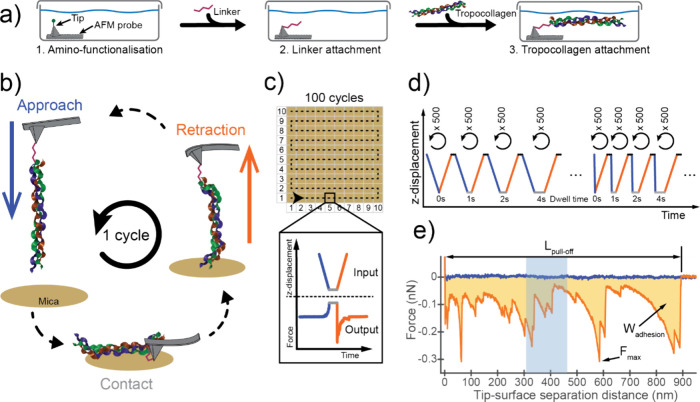 Figure 1
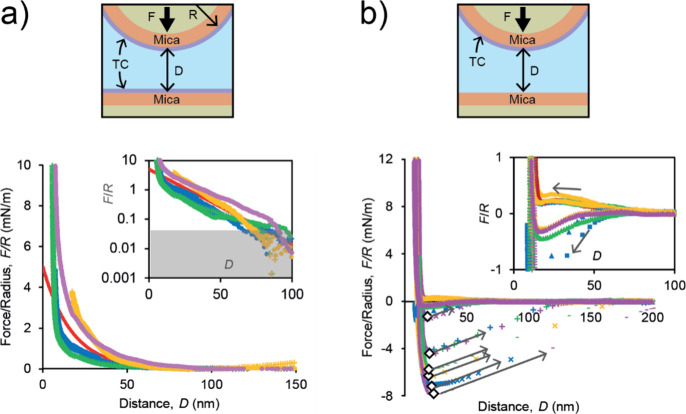 Figure 2
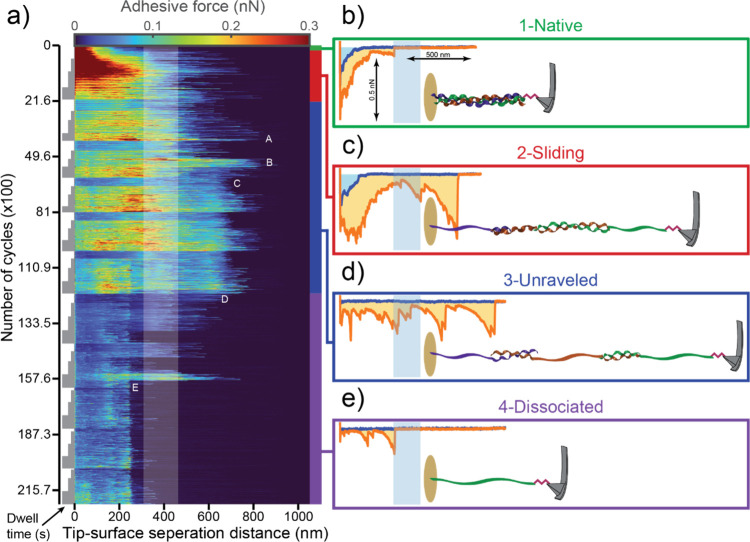 Figure 3
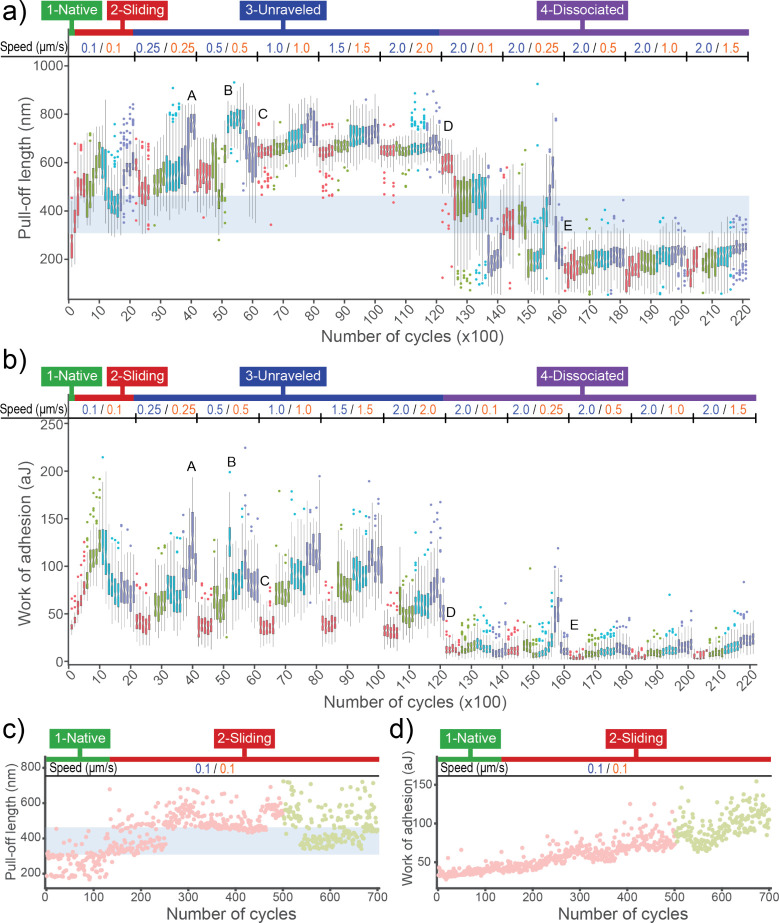 Figure 4
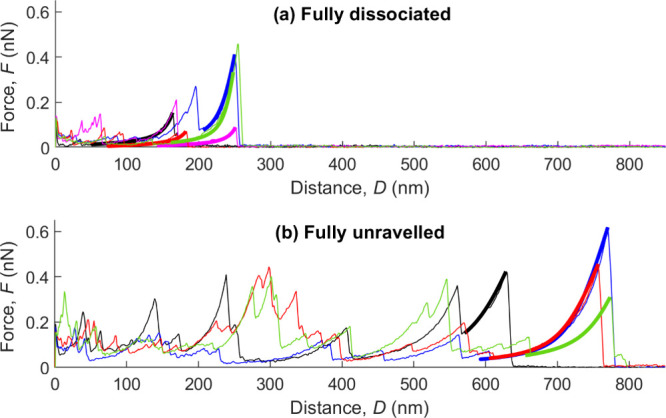 Figure 5
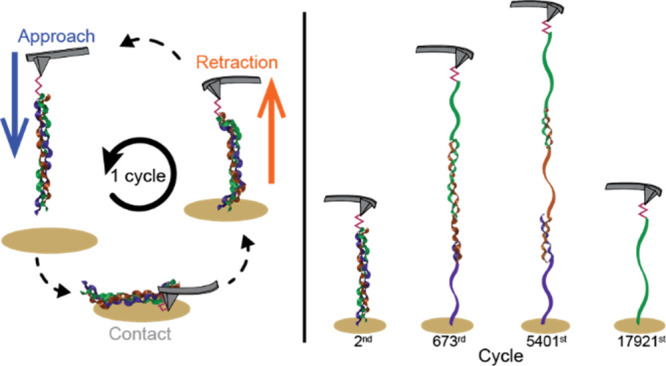 Figure 6
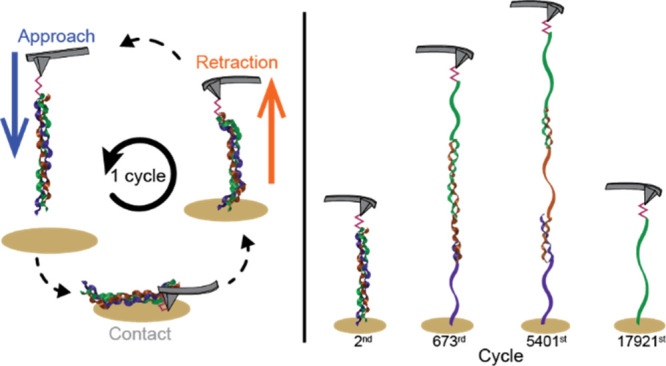 Figure 7
 Figure 8
Peer Reviews
No public reviews on file for this paper yet. If you reviewed it on a platform where reviews are public (OpenReview, ICLR, NeurIPS, ICML), you can paste yours below so the community can read it here.
Videos
No videos yet. Explain this paper in a talk, walkthrough, or lecture? Add one.
Taxonomy
TopicsCollagen: Extraction and Characterization · Polymer Surface Interaction Studies · Hydrogels: synthesis, properties, applications