Mechanistic Insights Into NFIX‐Mediated DNA Recognition and Transcriptional Regulation in Skeletal Muscle
Ci Zhu, Shuang Liu, Xi Chen, Chengxiao Qin, Yueyu Wang, Chunchun Xue, Lingxing Li, Wenlan Du, Xin Chen, Xiaofeng Li, Jie Shen, He Song

TL;DR
This study reveals how the NFIX protein recognizes DNA and regulates genes in skeletal muscle, offering insights into muscle development and disease.
Contribution
The study provides the first high-resolution structural and mechanistic understanding of NFIX's DNA recognition and transcriptional regulation in skeletal muscle.
Findings
NFIX binds DNA as a monomer and recognizes the TGGCA motif through base-specific interactions.
Disrupting NFIX's DNA-binding residues impairs its transcriptional activation in reporter assays.
NFIX regulates genes involved in muscle metabolism, stress responses, and inflammation.
Abstract
Skeletal muscle is essential for voluntary movement and exhibits a remarkable capacity for regeneration following injury. NFIX, a member of the Nuclear Factor I (NFI) family of transcription factors, plays a critical role in both skeletal muscle development and regeneration. Despite its emerging importance, the molecular basis of NFIX‐mediated DNA recognition and transcriptional regulation in skeletal muscle remains poorly defined. Here, we demonstrate that NFIX promotes key cellular processes in skeletal muscle cells, as siRNA‐mediated knockdown of NFIX significantly reduces cell proliferation, increases apoptosis, and impairs differentiation. Transcriptomic analysis revealed that NFIX regulates a network of genes involved in muscle metabolism, stress responses, and immune inflammatory responses. Biophysical characterization showed that NFIX exists as a monomer in solution and binds…
Genes, proteins, chemicals, diseases, species, mutations and cell lines named across the full text — each resolved to its canonical identifier and authoritative record.
Click any figure to enlarge with its caption.
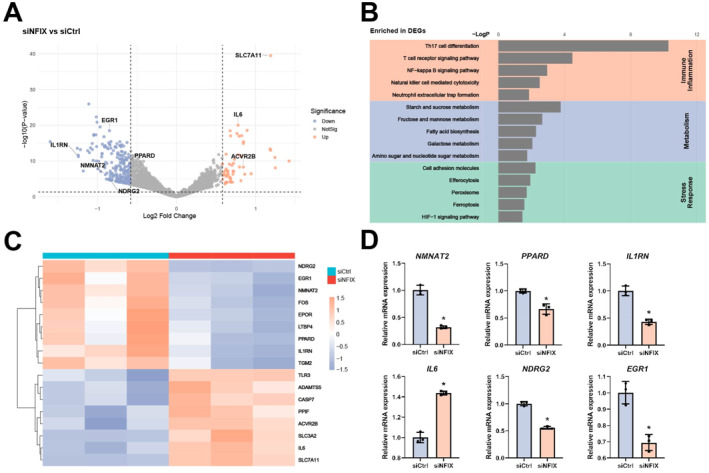 Figure 1
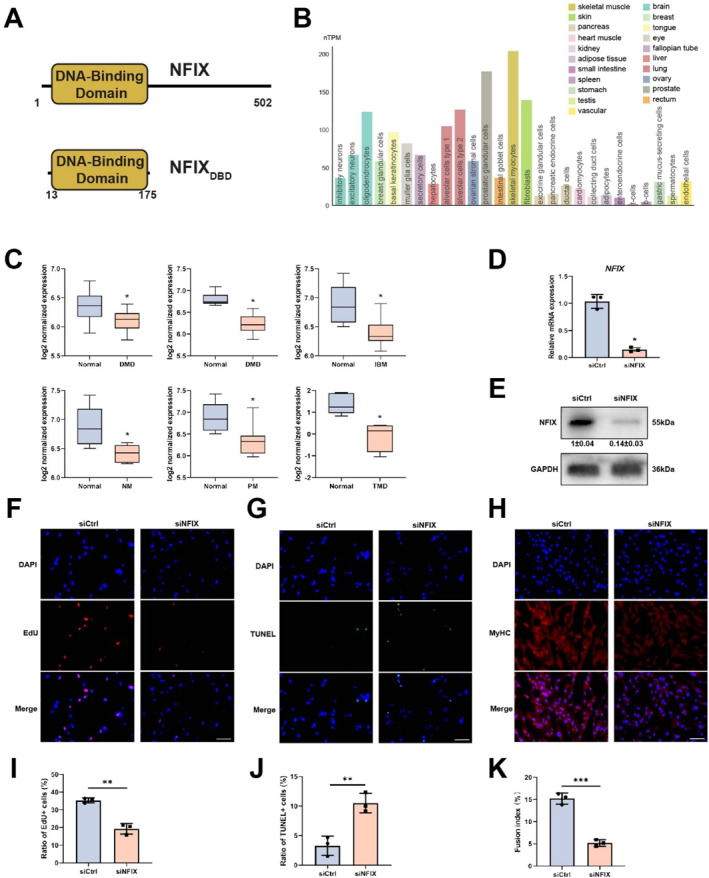 Figure 2
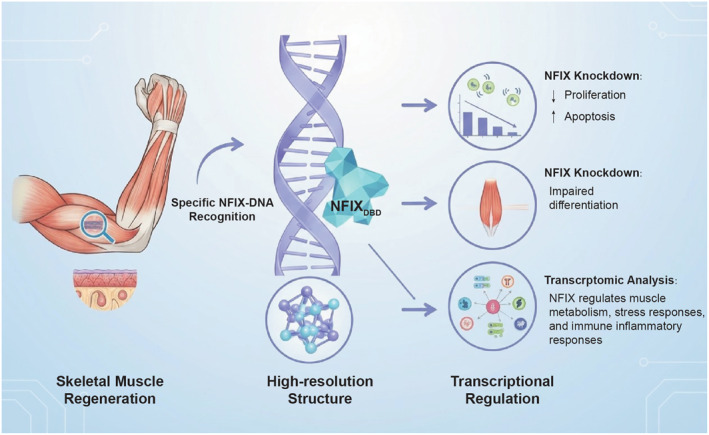 Figure 3
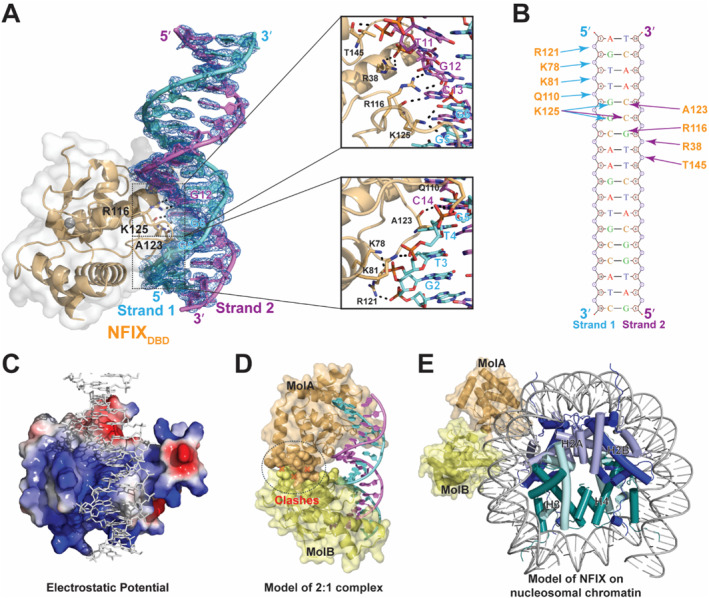 Figure 4
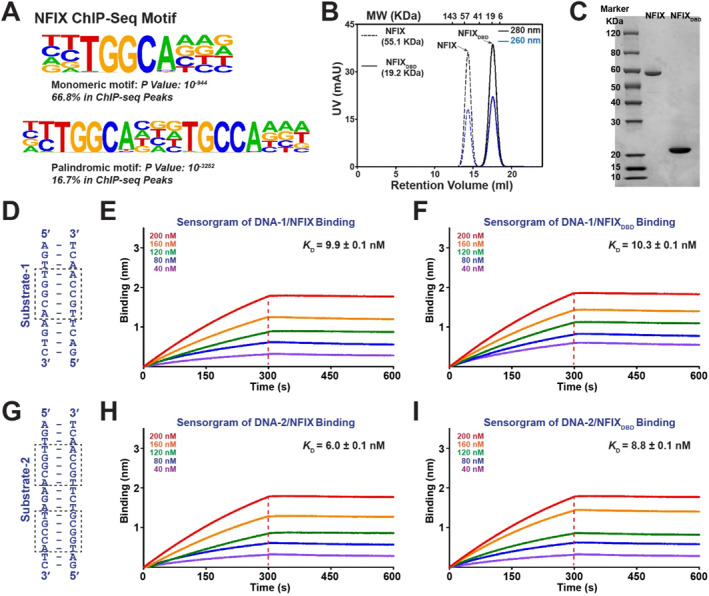 Figure 5
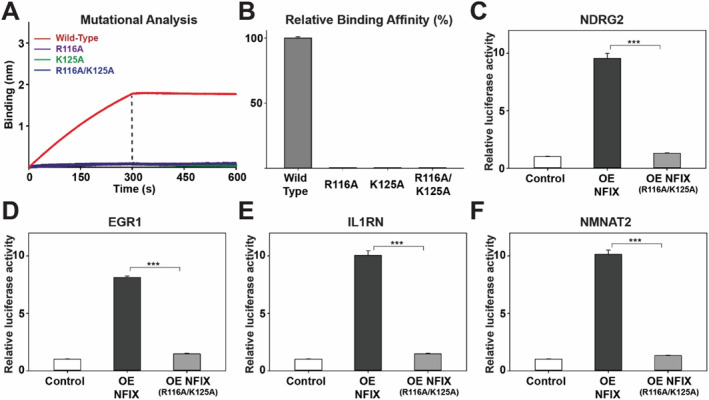 Figure 6
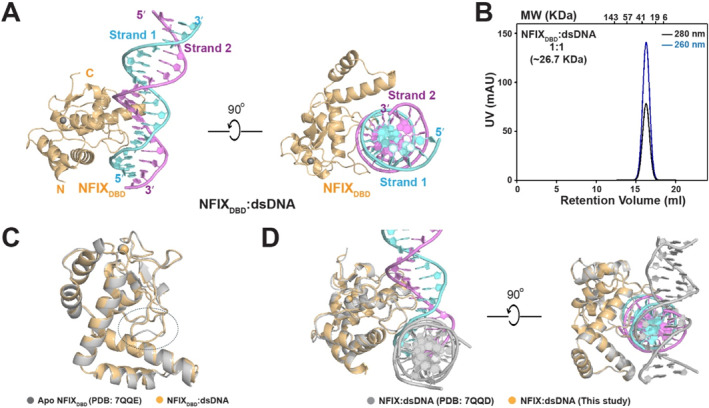 Figure 7
Peer Reviews
No public reviews on file for this paper yet. If you reviewed it on a platform where reviews are public (OpenReview, ICLR, NeurIPS, ICML), you can paste yours below so the community can read it here.
Videos
No videos yet. Explain this paper in a talk, walkthrough, or lecture? Add one.
Taxonomy
TopicsMuscle Physiology and Disorders · Wnt/β-catenin signaling in development and cancer · FOXO transcription factor regulation