Detection of Antithrombotic-Related Bleeding in Older Inpatients: Multicenter Retrospective Study Using Structured and Unstructured Electronic Health Record Data
Claire Coumau, Frederic Gaspar, Mehdi Zayene, Elliott Bertrand, Lorenzo Alberio, Christian Lovis, Patrick E Beeler, Fabio Rinaldi, Monika Lutters, Marie-Annick Le Pogam, Chantal Csajka, Bernard Burnand

TL;DR
This study developed and tested algorithms to detect bleeding events in older patients using electronic health records, combining structured data and natural language processing for better accuracy.
Contribution
The novel contribution is an integrated algorithm combining structured data rules and NLP for improved detection of antithrombotic-related bleeding in older inpatients.
Findings
Structured data algorithms detected 8.26% major and 15.04% clinically relevant nonmajor bleeding cases.
Combining structured data with NLP improved detection to 12.2% major and 27.4% clinically relevant nonmajor bleeding cases.
The combined model achieved a sensitivity of 0.84 and F1-score of 0.64, showing strong performance and generalizability.
Abstract
Bleeding complications are a major contributor to adverse drug events among older inpatients, particularly in those treated with antithrombotic agents. Timely and accurate detection of bleeding events is essential for improving drug safety surveillance and clinical risk management. The study aimed to develop and validate automated algorithms for detecting major bleeding (MB) and clinically relevant nonmajor bleeding (CRNMB) events from electronic medical records (EMRs) by combining structured data-based rule models and a natural language processing (NLP) approach, and to evaluate their performance and generalizability against a manually reviewed gold standard and an external dataset. We conducted a multicenter retrospective study using routinely collected EMR data from 3 Swiss university hospitals. Patients 65 years or older who received at least one antithrombotic agent and were…
Genes, proteins, chemicals, diseases, species, mutations and cell lines named across the full text — each resolved to its canonical identifier and authoritative record.
Click any figure to enlarge with its caption.
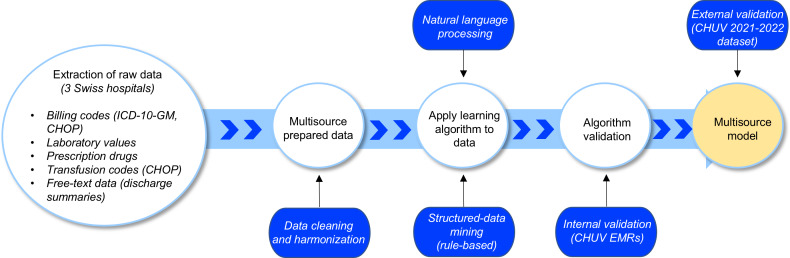 Figure 1
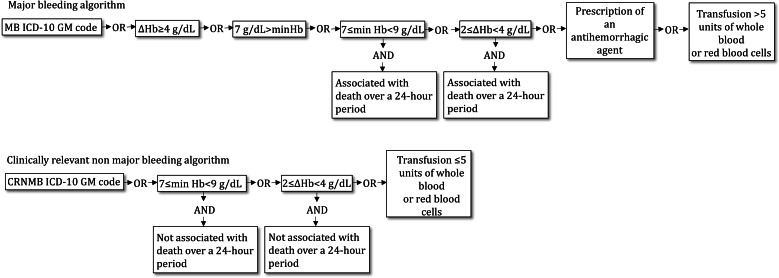 Figure 2
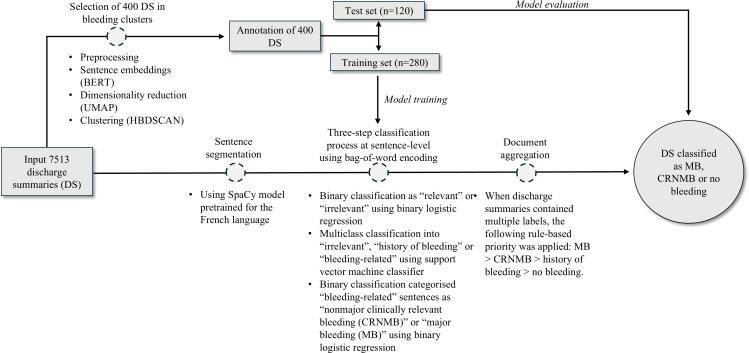 Figure 3
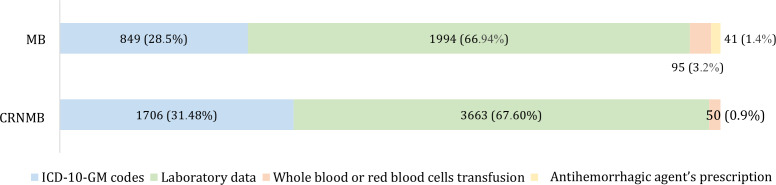 Figure 4
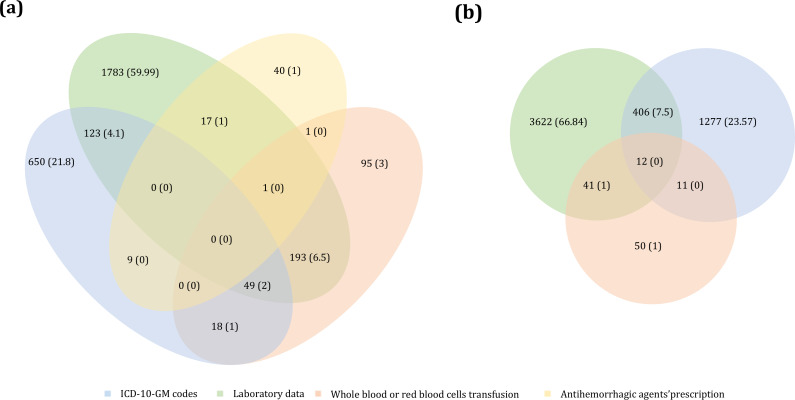 Figure 5
Peer Reviews
No public reviews on file for this paper yet. If you reviewed it on a platform where reviews are public (OpenReview, ICLR, NeurIPS, ICML), you can paste yours below so the community can read it here.
Videos
No videos yet. Explain this paper in a talk, walkthrough, or lecture? Add one.
Taxonomy
TopicsMachine Learning in Healthcare · Antiplatelet Therapy and Cardiovascular Diseases · Pharmacovigilance and Adverse Drug Reactions