Optical Detection of Water Adulteration in Ethanol Using PCPDTBT-Conjugated Polymer Nanoparticles
Claudio Y. Morassuti, Leandro O. Araujo, Samuel L. Oliveira, Anderson R. L. Caires

TL;DR
Researchers developed a new optical method using polymer nanoparticles to detect water contamination in ethanol biofuels with high accuracy.
Contribution
A novel optical sensing strategy using PCPDTBT-based conjugated polymer nanoparticles for rapid and sensitive water detection in ethanol.
Findings
PCPDTBT nanoparticles showed dual-emission bands at 679 and 846 nm, with emission intensity ratios correlating strongly to water concentration.
The method achieved a detection limit of 0.4% and quantification limit of 1.3% water in ethanol blends.
Destabilization and aggregation of nanoparticles in ethanol enabled precise calibration for water adulteration detection.
Abstract
The detection of water adulteration in ethanol biofuels is a persistent challenge due to ethanol’s high affinity for water and the limitations of conventional analytical methods. In this study, we present an innovative optical sensing strategy using conjugated polymer nanoparticles (CPNs) composed of poly[2,6-(4,4-bis(2-ethylhexyl)-4H-cyclopenta-[2,1-b;3,4-b0]dithiophene)-alt-4,7-(2,1,3-benzothiadiazole)] (PCPDTBT) for rapid and sensitive quantification of water content in ethanol blends. These nanoparticles were synthesized via nanoprecipitation and exhibited dual-emission bands centered at 679 and 846 nm, corresponding to nanoparticle fluorescence and aggregation-related emissions, respectively. Upon exposure to ethanol, destabilization of the CPN micelle structure and enhanced aggregation were observed, leading to pronounced changes in the emission profile. Notably, the emission…
Genes, proteins, chemicals, diseases, species, mutations and cell lines named across the full text — each resolved to its canonical identifier and authoritative record.
Click any figure to enlarge with its caption.
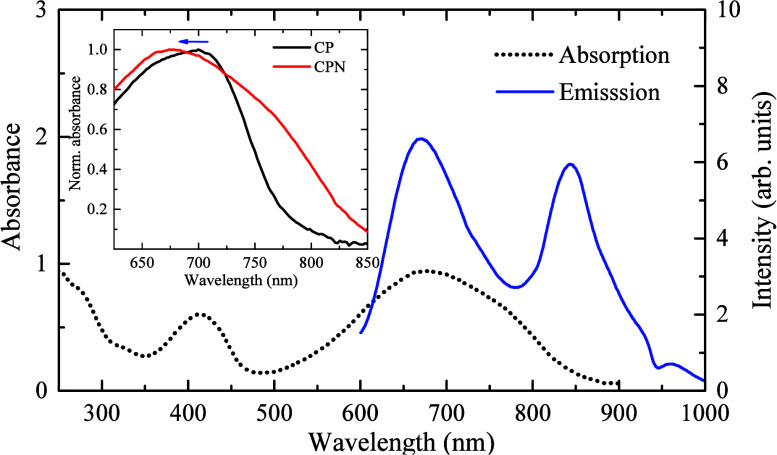 Figure 1
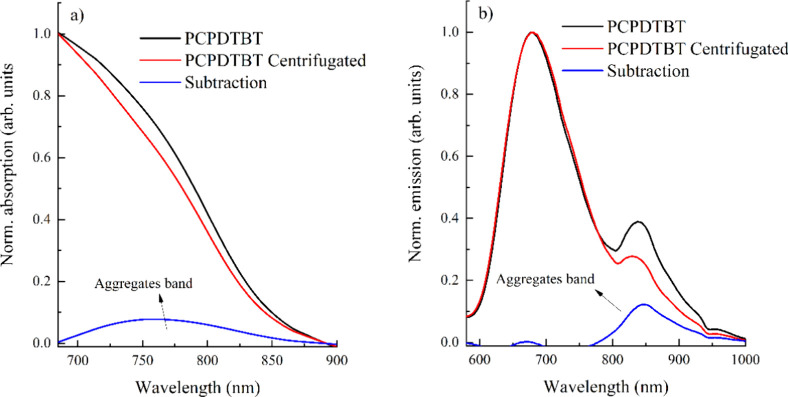 Figure 2
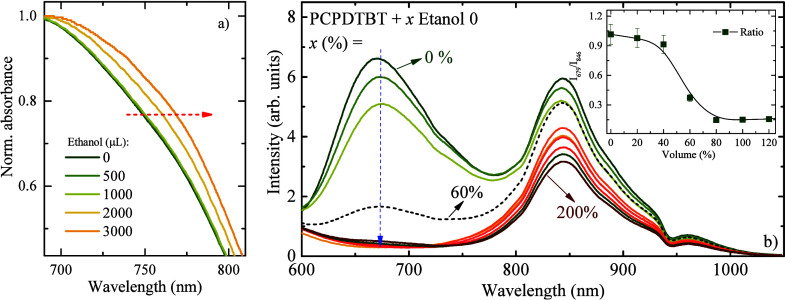 Figure 3
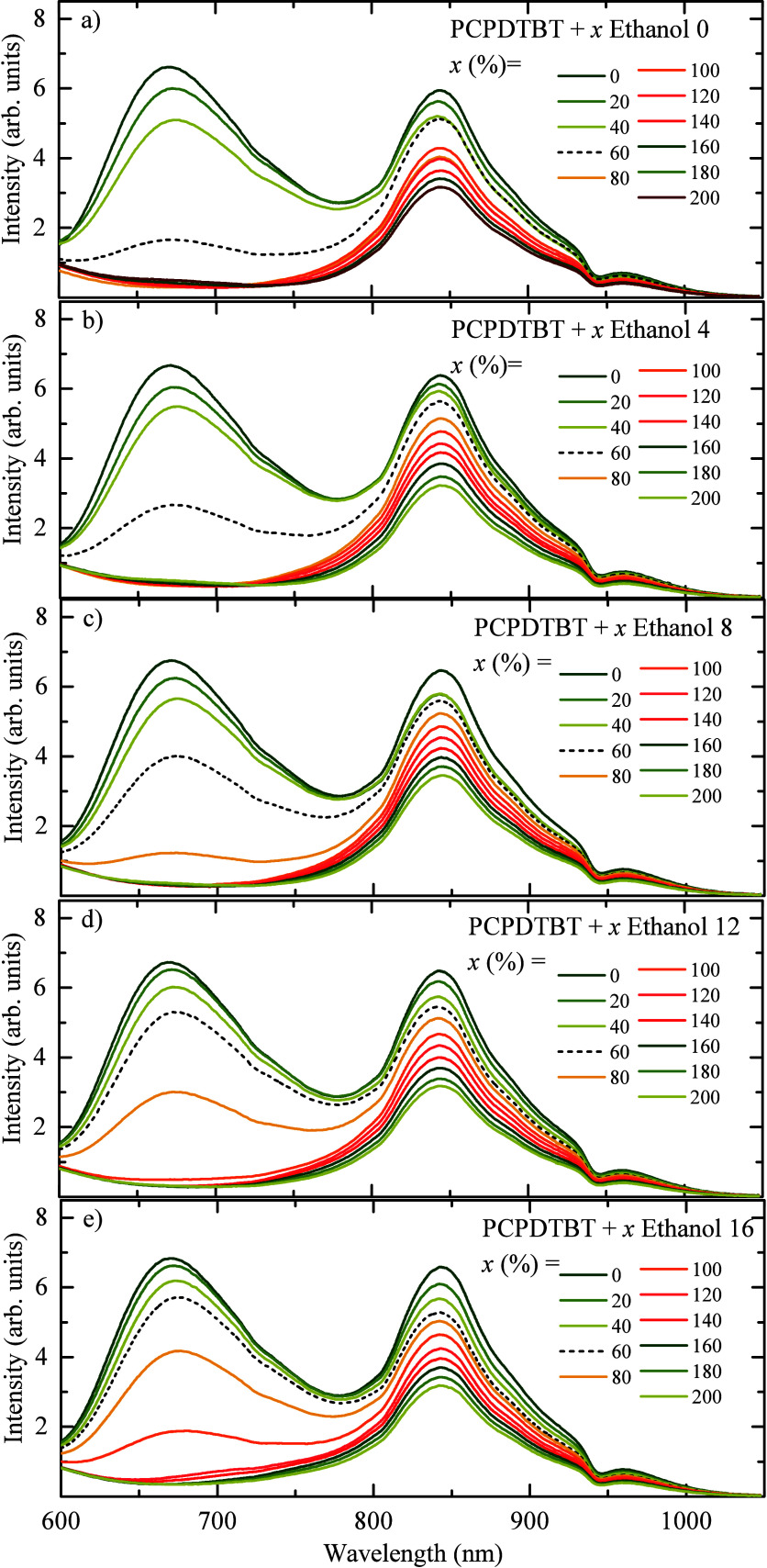 Figure 4
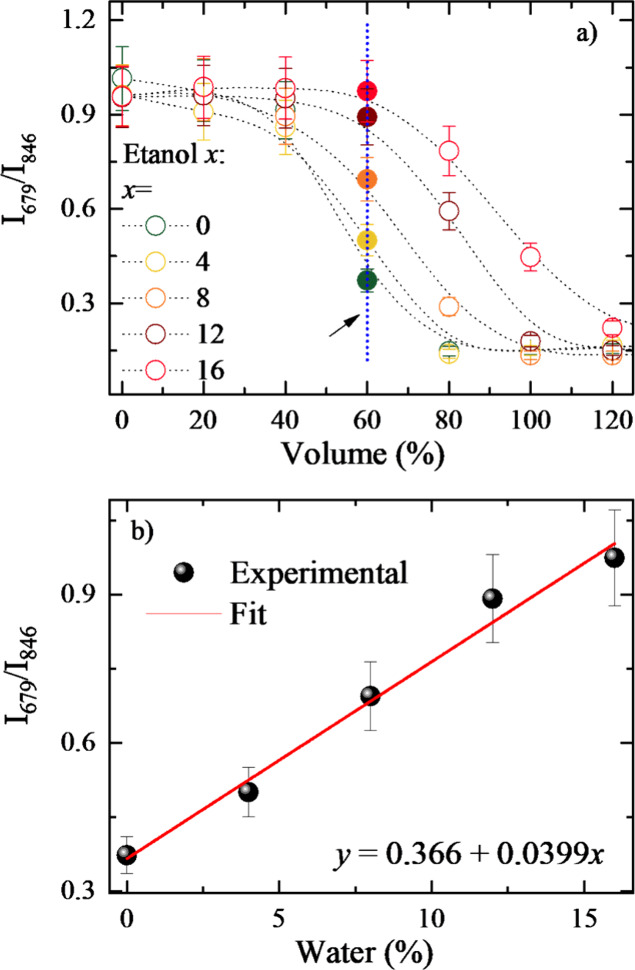 Figure 5
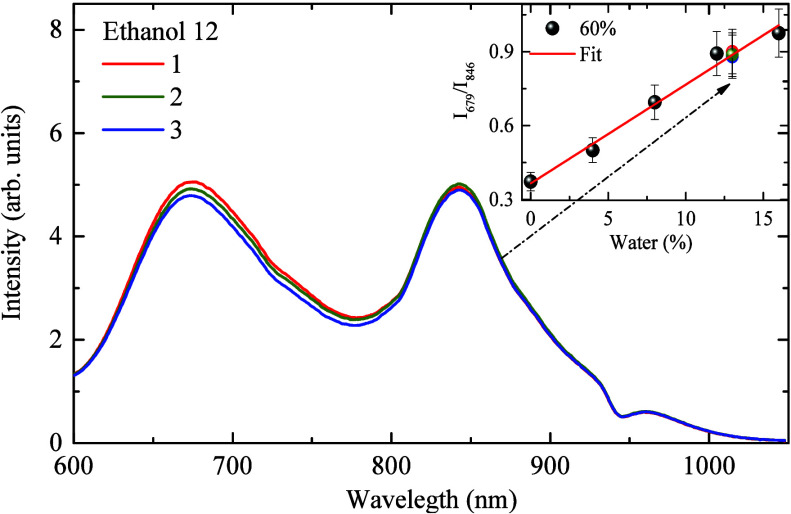 Figure 6
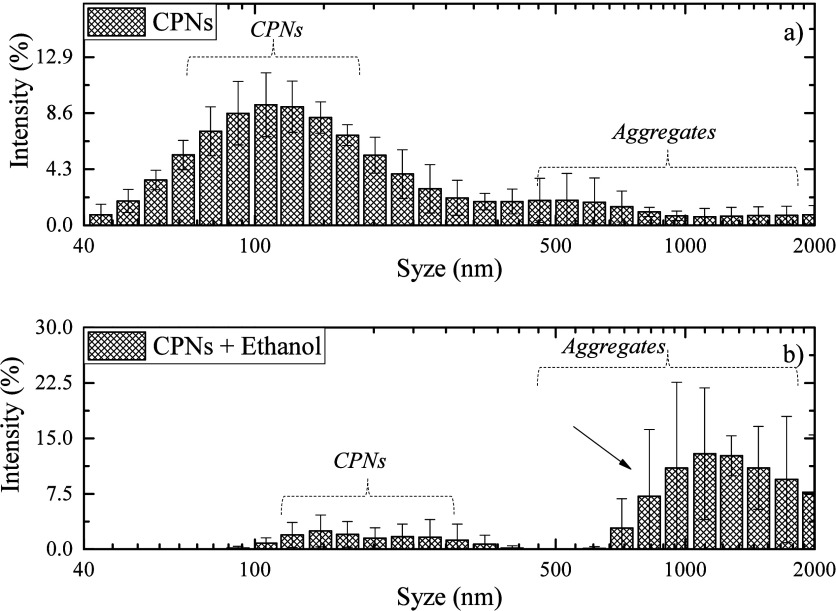 Figure 7
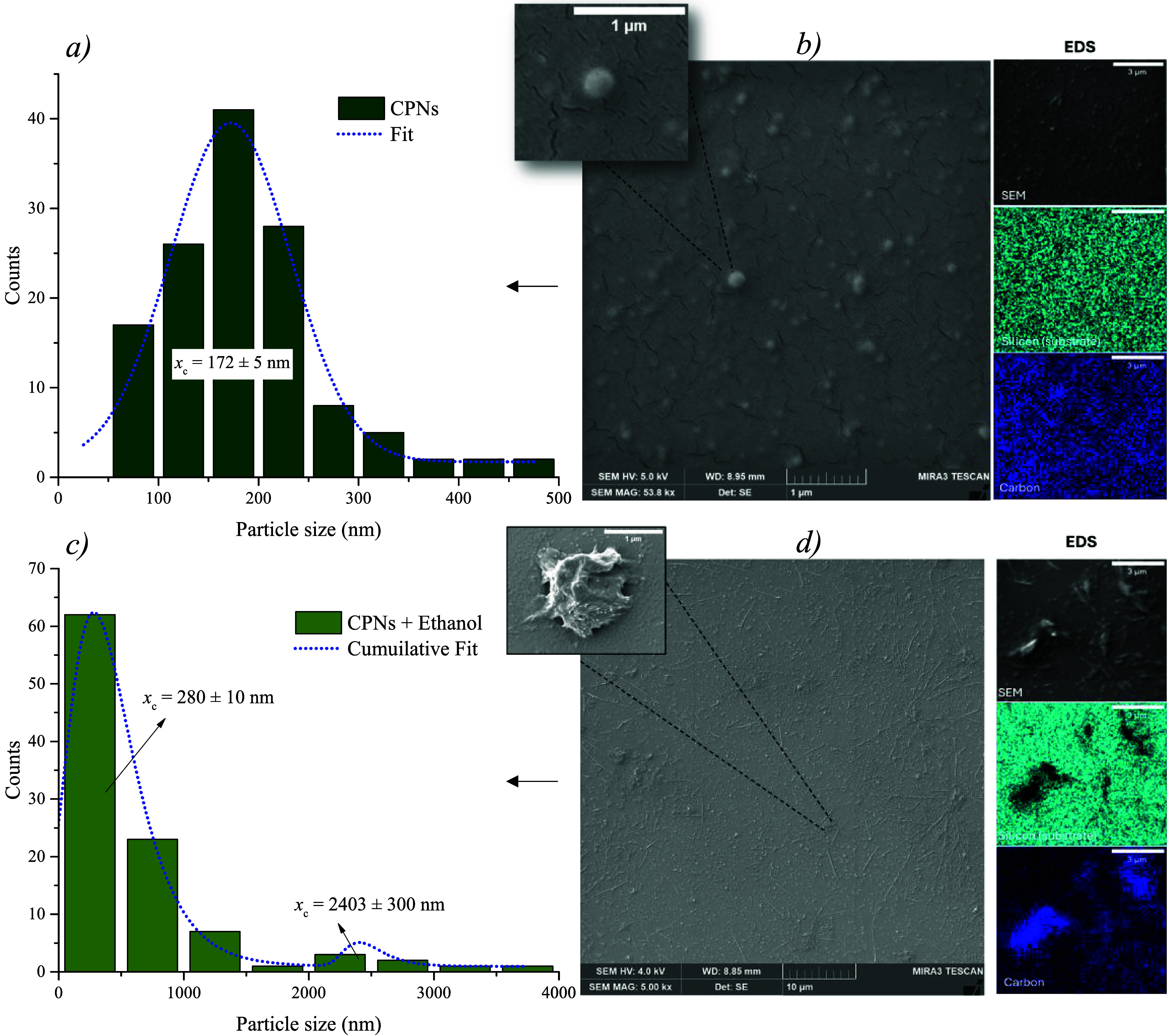 Figure 8
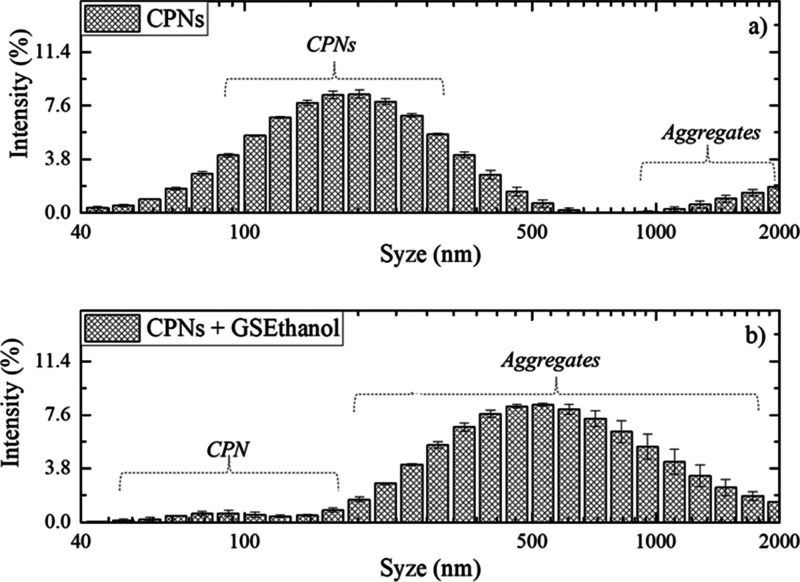 Figure 9
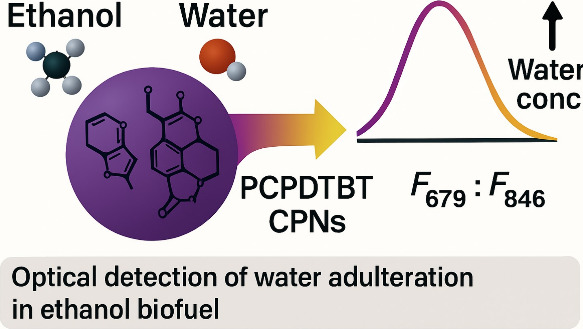 Figure 10
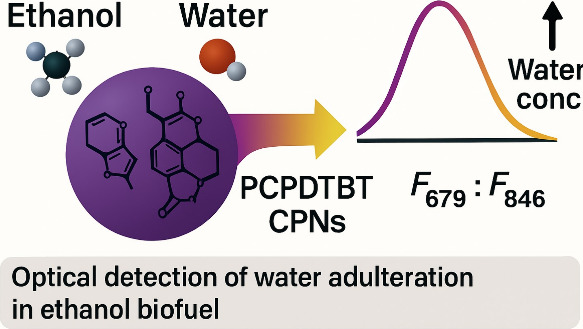 Figure 11
Peer Reviews
No public reviews on file for this paper yet. If you reviewed it on a platform where reviews are public (OpenReview, ICLR, NeurIPS, ICML), you can paste yours below so the community can read it here.
Videos
No videos yet. Explain this paper in a talk, walkthrough, or lecture? Add one.
Taxonomy
TopicsCarbon and Quantum Dots Applications · Luminescence and Fluorescent Materials · Polydiacetylene-based materials and applications