High-Pressure Synthesis and Structural Studies of La, Sm, Gd, and Dy Chlorides and Chloride Carbides
Fariia Iasmin Akbar, Alena Aslandukova, Andrey Aslandukov, Yuqing Yin, Elena Bykova, Maxim Bykov, Dominique Laniel, Pavel Milkin, Timofey Fedotenko, Jonathan Wright, Anna Pakhomova, Gaston Garbarino, Mohamed Mezouar, Michael Hanfland, Natalia Dubrovinskaia, Leonid Dubrovinsky

TL;DR
This study explores the creation of new rare-earth chloride and chloride carbide materials under extreme pressure and temperature, revealing unique structures like trans-polyacetylene-like carbon chains.
Contribution
The discovery of trans-polyacetylene-like carbon chains in lanthanide chloride carbides under high pressure is a novel structural finding.
Findings
Novel crystal structures of binary and ternary rare-earth compounds were identified using synchrotron X-ray diffraction.
Trans-polyacetylene-like carbon chains were experimentally observed in lanthanide chloride carbides for the first time.
Alkali halides showed enhanced reactivity under extreme conditions, leading to new chemical bonding and materials.
Abstract
High-pressure synthesis provides unique pathways to materials with unprecedented structures and properties. Here we report the synthesis and structural characterization of novel rare-earth (La, Sm, Gd, Dy) chlorides, chloride carbides, and oxychloride phases obtained due to complex chemical reactions in diamond anvil cells after laser heating of rare-earth metals and NaCl at pressures of 39–127 GPa and temperatures of 2500–2800 K. Synchrotron single-crystal X-ray diffraction analysis allowed us to solve previously unknown crystal structures of binary (La2Cl, LaCl, LaCl3, DyCl) and ternary (DyNa2Cl5, Sm2ClC2, Gd2ClC2, Dy2ClC2, Sm19ClC18, Gd19ClC18, Dy5Cl3C, DyOCl) compounds. Significantly, we identified trans-polyacetylene-like carbon chains in lanthanide chloride carbides, a structural motif previously hypothesized but not observed experimentally. Our findings highlight the enhanced…
Genes, proteins, chemicals, diseases, species, mutations and cell lines named across the full text — each resolved to its canonical identifier and authoritative record.
Click any figure to enlarge with its caption.
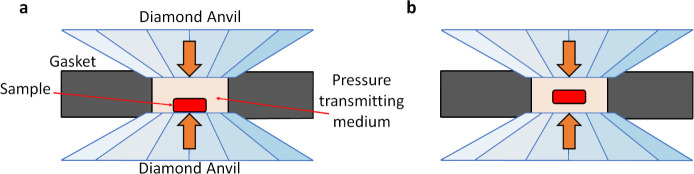 Figure 1
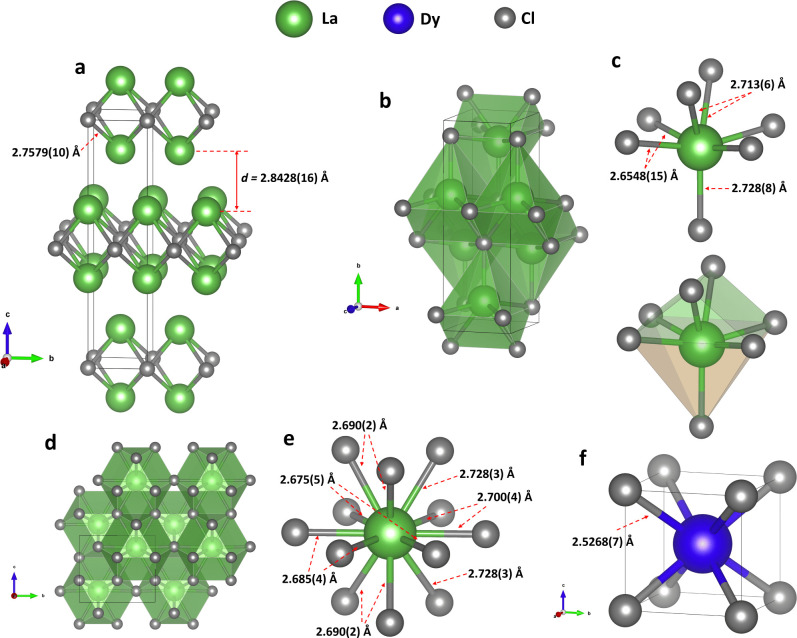 Figure 2
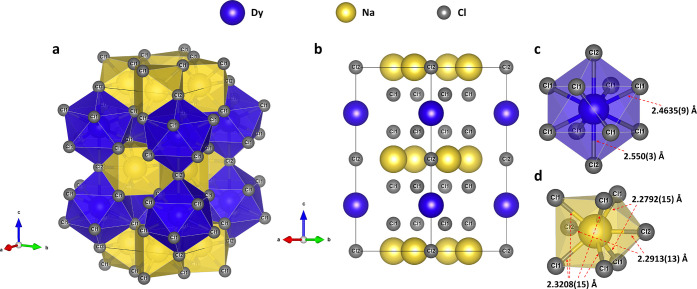 Figure 3
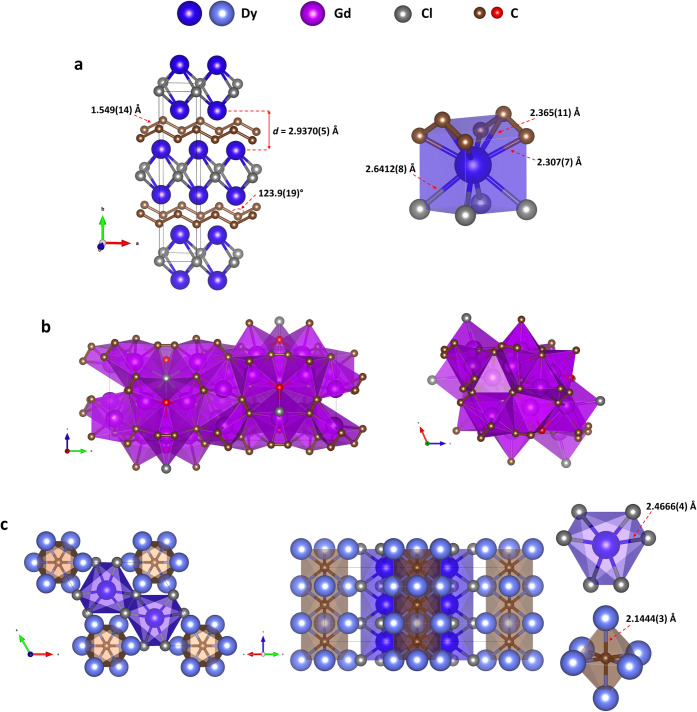 Figure 4
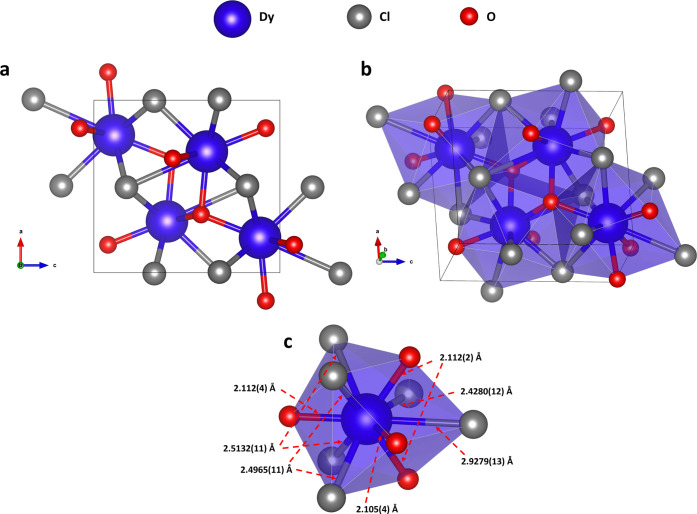 Figure 5
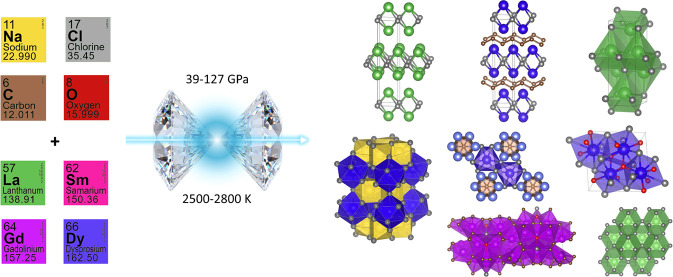 Figure 6
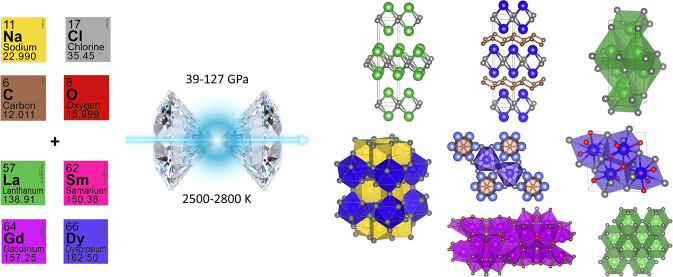 Figure 7
Peer Reviews
No public reviews on file for this paper yet. If you reviewed it on a platform where reviews are public (OpenReview, ICLR, NeurIPS, ICML), you can paste yours below so the community can read it here.
Videos
No videos yet. Explain this paper in a talk, walkthrough, or lecture? Add one.
Taxonomy
TopicsHigh-pressure geophysics and materials · Inorganic Chemistry and Materials · Rare-earth and actinide compounds