Targeting Mycobacterium tuberculosis: The Role of Alkyl Substitution in Pyrazinamide Derivatives
Martin Juhás, Ghada Bouz, Luping Pang, Stephen D. Weeks, Ondřej Jand́ourek, Klára Konečná, Pavla Paterová, Pavel Bárta, Martina Halířová, Marta Kučerová-Chlupáčová, Martin Doležal, Jan Zitko

TL;DR
This paper explores how modifying pyrazinamide with alkyl groups improves its effectiveness against tuberculosis, especially drug-resistant strains.
Contribution
The study introduces new pyrazinamide derivatives with 5-alkyl and 5-alkanamido modifications that show enhanced antimycobacterial activity.
Findings
5-alkyl chain length correlates with antimycobacterial activity, with heptyl substituents showing maximal potency.
Compound 23 (5-hexyl-N-(3-trifluoromethylphenyl)pyrazine-2-carboxamide) showed strong activity against MDR TB strains with low cytotoxicity.
5-alkyl derivatives are not hydrolyzed by PncA, suggesting a different mechanism of action than PZA.
Abstract
Tuberculosis (TB) remains a significant global health challenge due to the rapid emergence of drug resistance. Despite substantial progress in anti-TB drug development, effective treatment options are limited. In this study, we report the synthesis and biological evaluation of pyrazinamide (PZA) derivatives with 5-alkyl and 5-alkanamido modifications, designed to enhance antimycobacterial activity by increasing lipophilicity and improving penetration of the lipid-rich mycobacterial cell wall. A positive correlation between the length of the 5-alkyl chain and antimycobacterial activity was observed, with maximal potency achieved with the heptyl substituent (4: 5-heptylpyrazine-2-carboxamide, MIC_M. tuberculosis H37Rv = 3.13 μg/mL). In series C with phenyl substitution on the C-2 carboxamide, different simple substituents were tolerated on the benzene ring (both electron-donating and…
Genes, proteins, chemicals, diseases, species, mutations and cell lines named across the full text — each resolved to its canonical identifier and authoritative record.
Click any figure to enlarge with its caption.
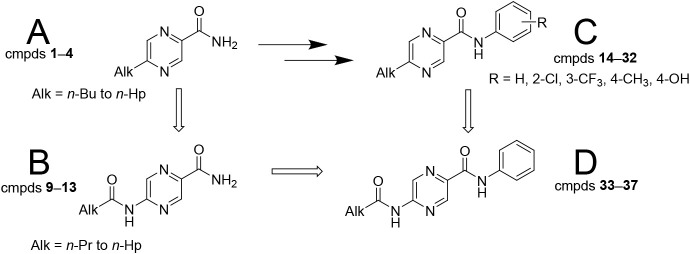 Figure 1
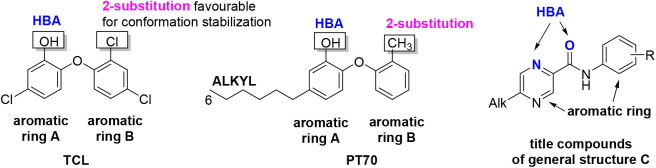 Figure 2
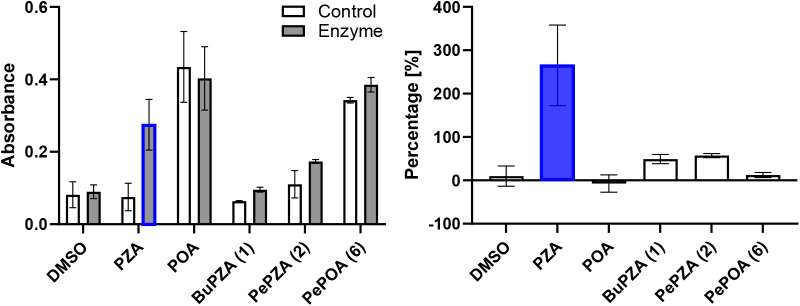 Figure 3
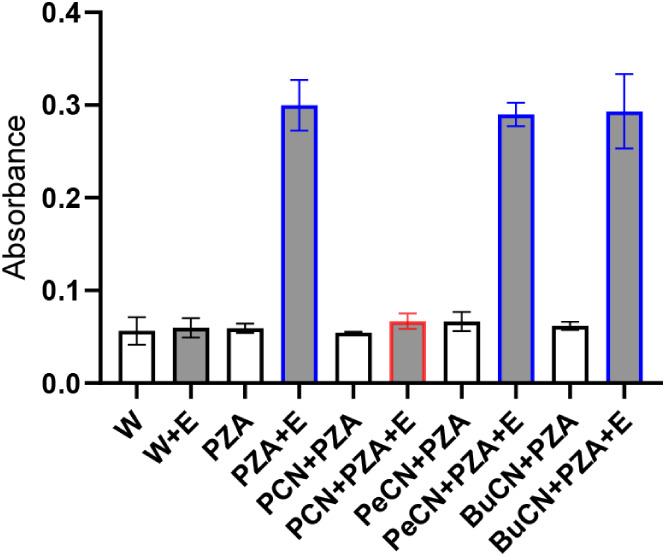 Figure 4
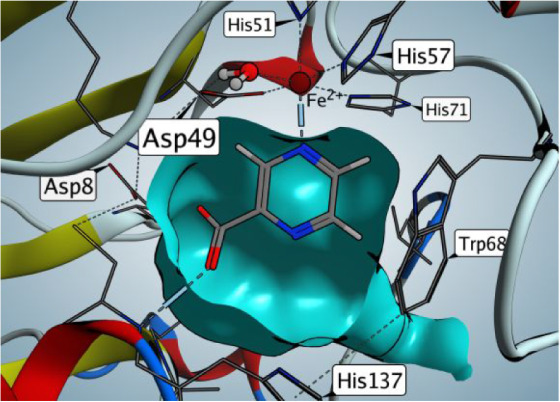 Figure 5
 Figure 6
 Figure 7
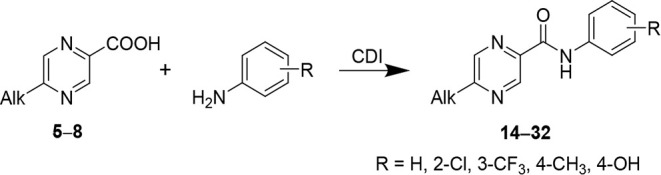 Figure 8
 Figure 9
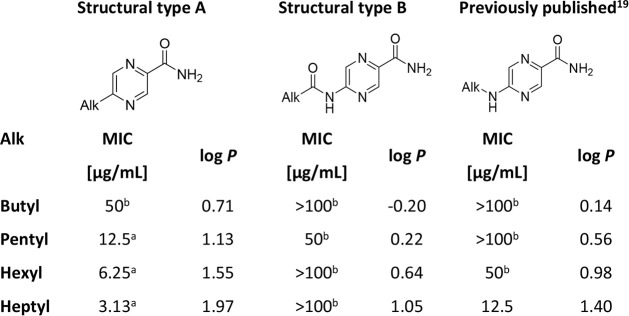 Figure 10
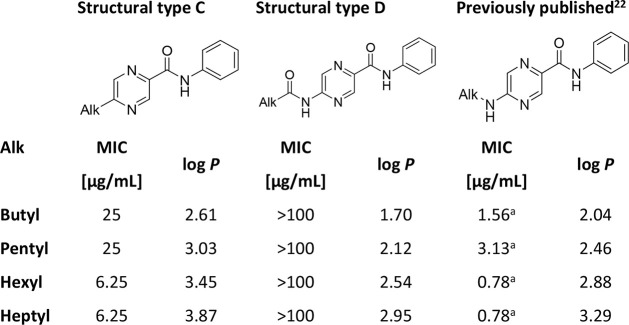 Figure 11
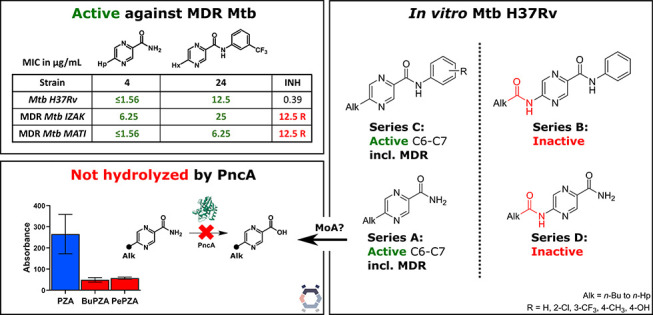 Figure 12
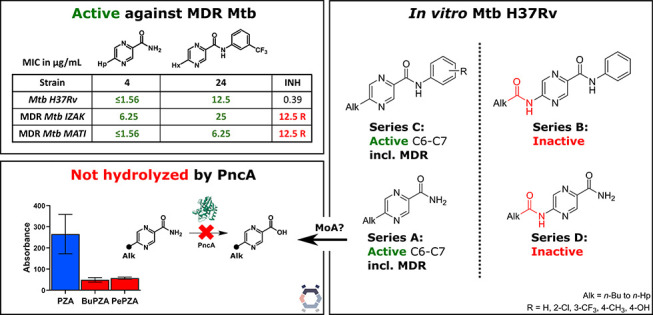 Figure 13
Peer Reviews
No public reviews on file for this paper yet. If you reviewed it on a platform where reviews are public (OpenReview, ICLR, NeurIPS, ICML), you can paste yours below so the community can read it here.
Videos
No videos yet. Explain this paper in a talk, walkthrough, or lecture? Add one.
Taxonomy
TopicsTuberculosis Research and Epidemiology · Synthesis and biological activity · Multicomponent Synthesis of Heterocycles