Is the human chin a spandrel? Insights from an evolutionary analysis of ape craniomandibular form
Noreen von Cramon-Taubadel, Jill E. Scott, Chris A. Robinson, Lauren Schroeder

TL;DR
This study investigates whether the human chin evolved as a direct adaptation or as a by-product of other evolutionary changes in the skull and jaw.
Contribution
The study provides new evidence that the human chin is likely a spandrel, not a directly selected trait.
Findings
Directional selection was found on cranial traits related to basicranial flexion and reduced facial prognathism.
Only three of nine chin-related traits showed significant direct selection, while others were under no or indirect selection.
The chin likely evolved as a by-product of selection for other craniofacial changes linked to bipedalism.
Abstract
Humans are unique among primates in possessing a chin, yet it is currently unclear whether the form of the symphyseal region of the mandible where the chin is located is the product of direct selection or a by-product of evolutionary pressures on other craniomandibular features. Here, we conduct an evolutionary analysis of hominoid craniomandibular traits to test three hypotheses: symphyseal mandibular traits evolved (1) neutrally due to genetic drift, (2) under direct selection, and (3) as a by-product (or “spandrel”) of selection on other craniomandibular traits. Evolutionary rates of morphological change, via Lande’s generalized genetic distance, were estimated along each branch of a fully-resolved hominoid phylogeny to reveal patterns of neutral, stabilizing and directional selection. Directional selection was detected along the branch between humans and the last common ancestor of…
Genes, proteins, chemicals, diseases, species, mutations and cell lines named across the full text — each resolved to its canonical identifier and authoritative record.
Click any figure to enlarge with its caption.
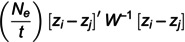 Figure 1
 Figure 2
 Figure 3
 Figure 4
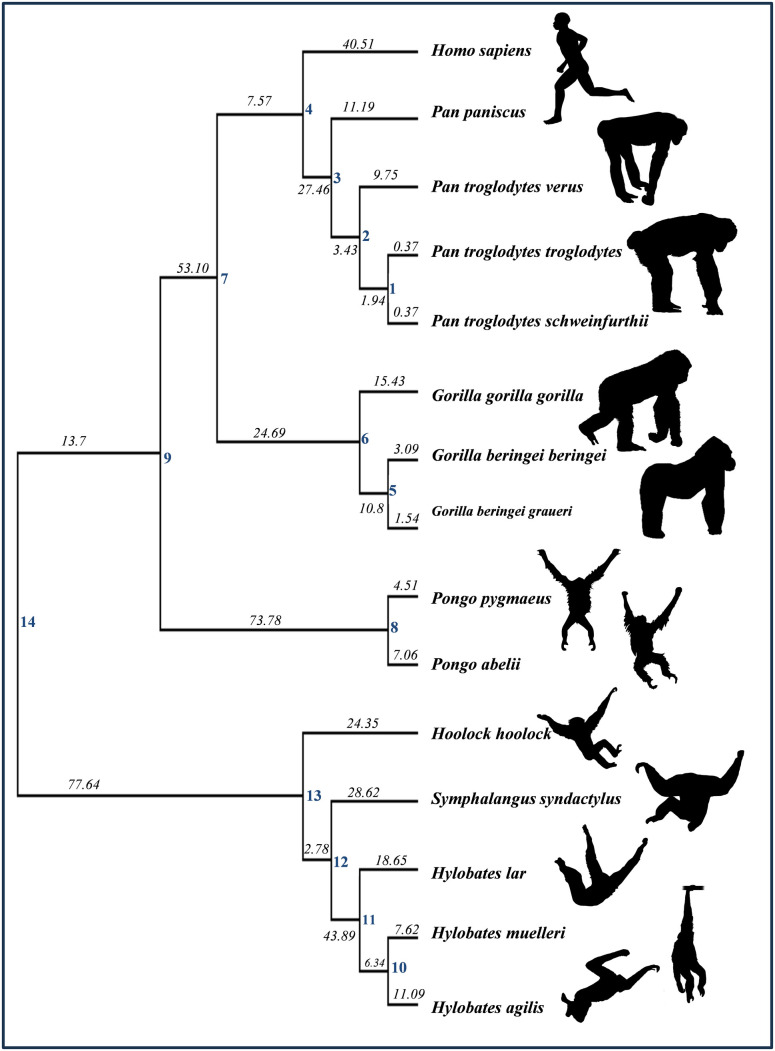 Figure 5
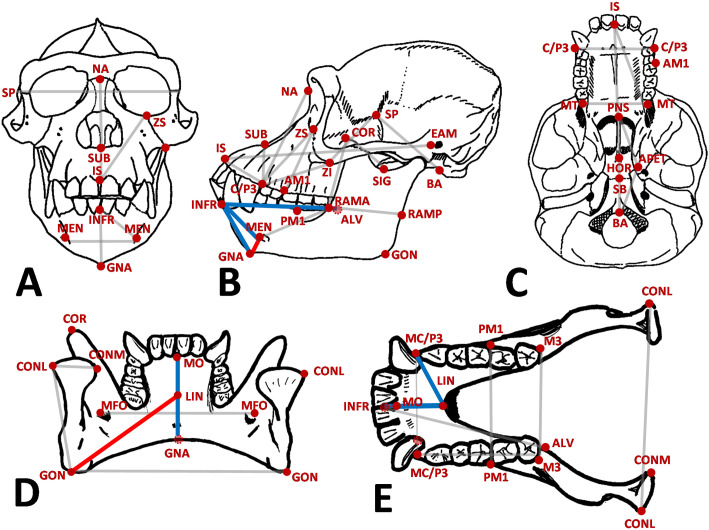 Figure 6
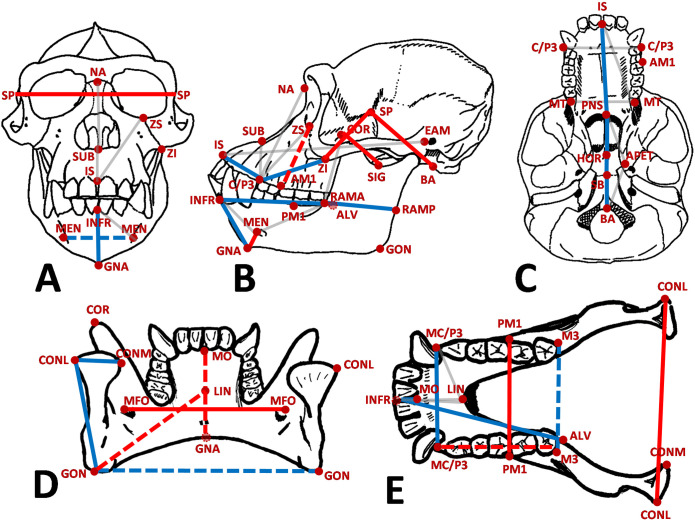 Figure 7
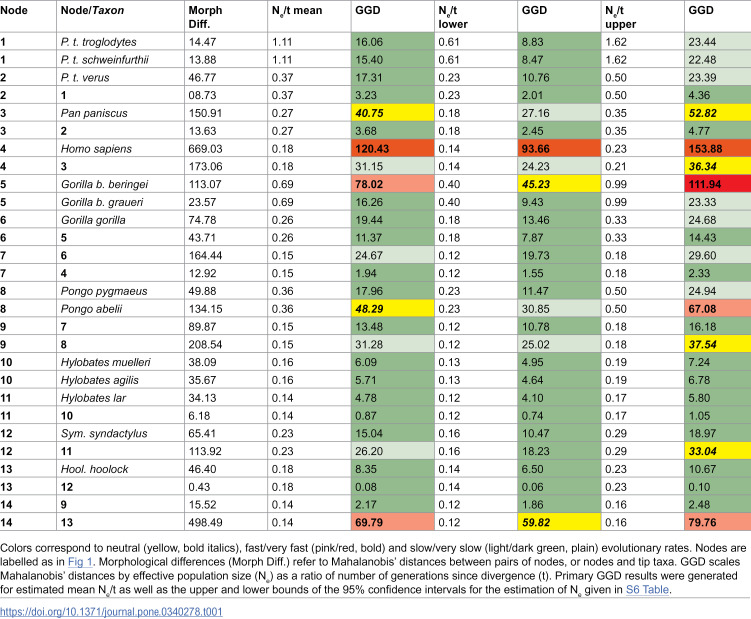 Figure 8
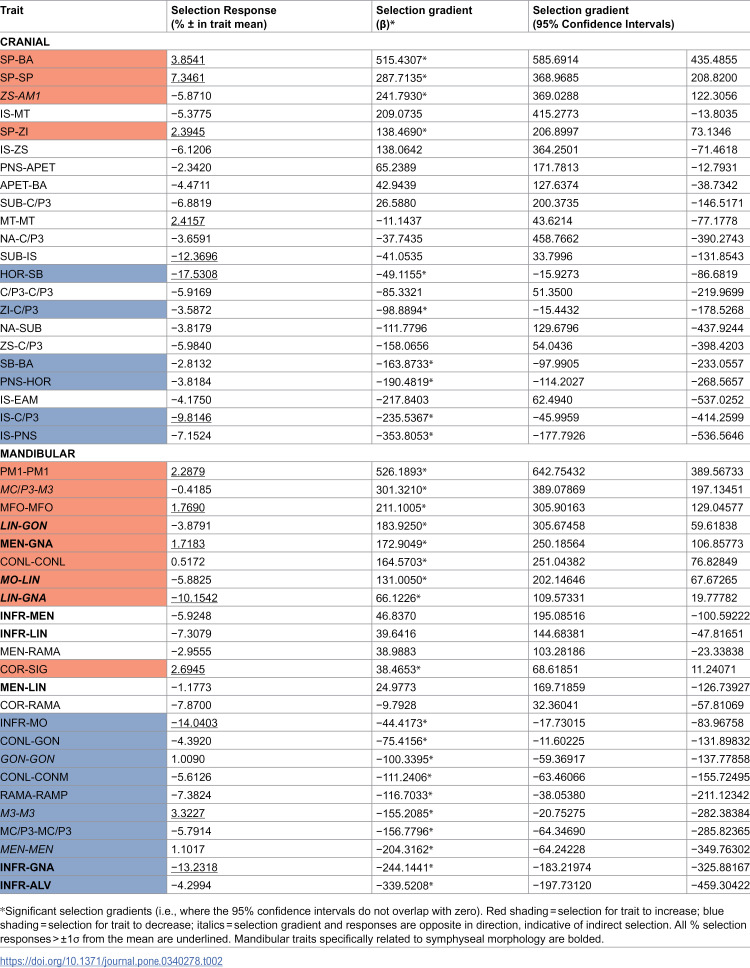 Figure 9
Peer Reviews
No public reviews on file for this paper yet. If you reviewed it on a platform where reviews are public (OpenReview, ICLR, NeurIPS, ICML), you can paste yours below so the community can read it here.
Videos
No videos yet. Explain this paper in a talk, walkthrough, or lecture? Add one.
Taxonomy
TopicsPrimate Behavior and Ecology · Pleistocene-Era Hominins and Archaeology · Morphological variations and asymmetry