Symmetry, presumptions, and the judges design
Murat C. Mungan

TL;DR
This paper examines the 'judges design' in social sciences and shows how assumptions about judge behavior can be violated under certain conditions, affecting causal inferences.
Contribution
The paper extends the understanding of when average monotonicity is violated in judges' decision-making under symmetric signals and presumptions.
Findings
Judges solving Bayesian decision problems violate average monotonicity with symmetric signals and no strong presumptions.
The violation persists even when judge presumptions are symmetrically distributed.
The analysis provides insights into the plausibility of assumptions in causal effect identification.
Abstract
An instrumental variables approach called ‘the judges design’ used frequently in social sciences relies on an assumption called ‘average monotonicity’. This assumption pertains to how different judges’ (or other classifiers’) decision making processes relate to each other. Violations of it are hard to detect, which raises the importance of it being supported by a plausible theory. Decisions of judges who solve Bayesian decision problems violate average monotonicity as long as the signals they process are symmetric and they do not possess strong presumptions. This result is extended to cases where judge presumptions are symmetrically distributed and may include strong presumptions. The analysis reveals factors that can be considered while discussing the plausibility of an assumption made to identify causal effects whose violations are difficult to detect and has important policy…
Genes, proteins, chemicals, diseases, species, mutations and cell lines named across the full text — each resolved to its canonical identifier and authoritative record.
Click any figure to enlarge with its caption.
 Figure 1
 Figure 2
 Figure 3
 Figure 4
 Figure 5
 Figure 6
 Figure 7
 Figure 8
 Figure 9
 Figure 10
 Figure 11
 Figure 12
 Figure 13
 Figure 14
 Figure 15
 Figure 16
 Figure 17
 Figure 18
 Figure 19
 Figure 20
 Figure 21
 Figure 22
 Figure 23
 Figure 24
 Figure 25
 Figure 26
 Figure 27
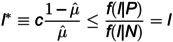 Figure 28
 Figure 29
 Figure 30
 Figure 31
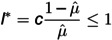 Figure 32
 Figure 33
 Figure 34
 Figure 35
 Figure 36
 Figure 37
 Figure 38
 Figure 39
 Figure 40
 Figure 41
 Figure 42
 Figure 43
 Figure 44
 Figure 45
 Figure 46
 Figure 47
 Figure 48
 Figure 49
 Figure 50
Peer Reviews
No public reviews on file for this paper yet. If you reviewed it on a platform where reviews are public (OpenReview, ICLR, NeurIPS, ICML), you can paste yours below so the community can read it here.
Videos
No videos yet. Explain this paper in a talk, walkthrough, or lecture? Add one.
Taxonomy
TopicsJudicial and Constitutional Studies · Qualitative Comparative Analysis Research · Jury Decision Making Processes