Multiple contexts and frequencies aggregation network for deepfake detection
Zifeng Li, Wenzhong Tang, Shijun Gao, Yanyang Wang, Shuai Wang, Bushra Zafar, Bushra Zafar, Daniel Parkes, Feng Ding, Feng Ding

TL;DR
This paper introduces MkfaNet, a new network for detecting deepfakes by combining spatial and frequency features, achieving strong performance across multiple benchmarks.
Contribution
The novel contribution is MkfaNet, which integrates multi-kernel and multi-frequency aggregation modules for improved deepfake detection.
Findings
MkfaNet achieves an AUC of 0.9591 in within-domain deepfake detection.
The model outperforms state-of-the-art methods in cross-domain evaluations with an AUC of 0.7963.
The proposed network maintains high computational efficiency while offering robustness against diverse deepfake manipulations.
Abstract
Deepfake detection faces increasing challenges since the fast growth of generative models in developing massive and diverse Deepfake technologies. Recent advances rely on introducing heuristic features from spatial or frequency domains rather than modeling general forgery features within backbones. To address this issue, we turn to the backbone design with two intuitive priors from spatial and frequency detectors, i.e., learning robust spatial attributes and frequency distributions that are discriminative for real and fake samples. To this end, we propose an efficient network for face forgery detection named MkfaNet, which consists of two core modules. For spatial contexts, we design a Multi-Kernel Aggregator that adaptively selects organ features extracted by multiple convolutions for modeling subtle facial differences between real and fake faces. For the frequency components, we…
Genes, proteins, chemicals, diseases, species, mutations and cell lines named across the full text — each resolved to its canonical identifier and authoritative record.
Click any figure to enlarge with its caption.
 Figure 1
 Figure 2
 Figure 3
 Figure 4
 Figure 5
 Figure 6
 Figure 7
 Figure 8
 Figure 9
 Figure 10
 Figure 11
 Figure 12
 Figure 13
 Figure 14
 Figure 15
 Figure 16
 Figure 17
 Figure 18
 Figure 19
 Figure 20
 Figure 21
 Figure 22
 Figure 23
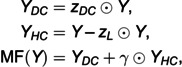 Figure 24
 Figure 25
 Figure 26
 Figure 27
 Figure 28
 Figure 29
 Figure 30
 Figure 31
 Figure 32
 Figure 33
 Figure 34
 Figure 35
 Figure 36
 Figure 37
 Figure 38
 Figure 39
 Figure 40
 Figure 41
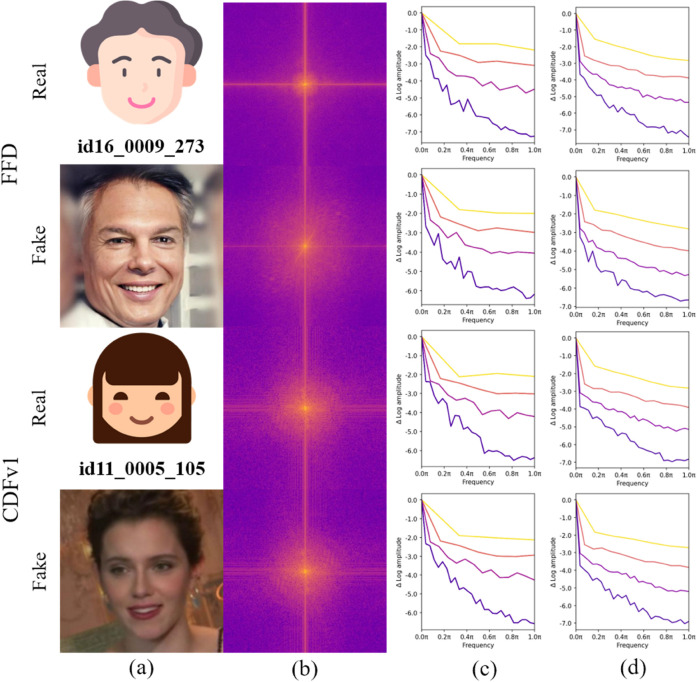 Figure 42
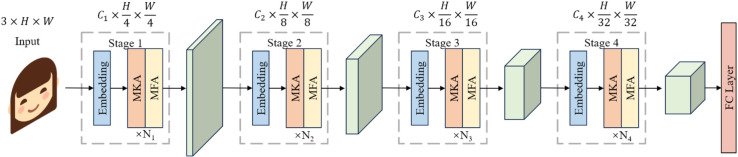 Figure 43
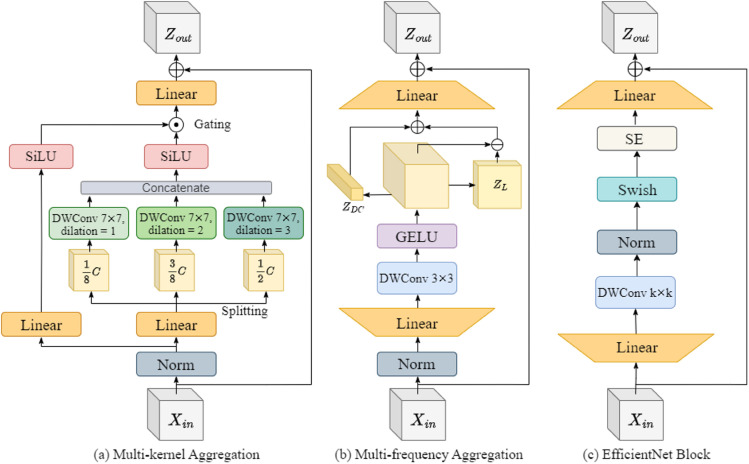 Figure 44
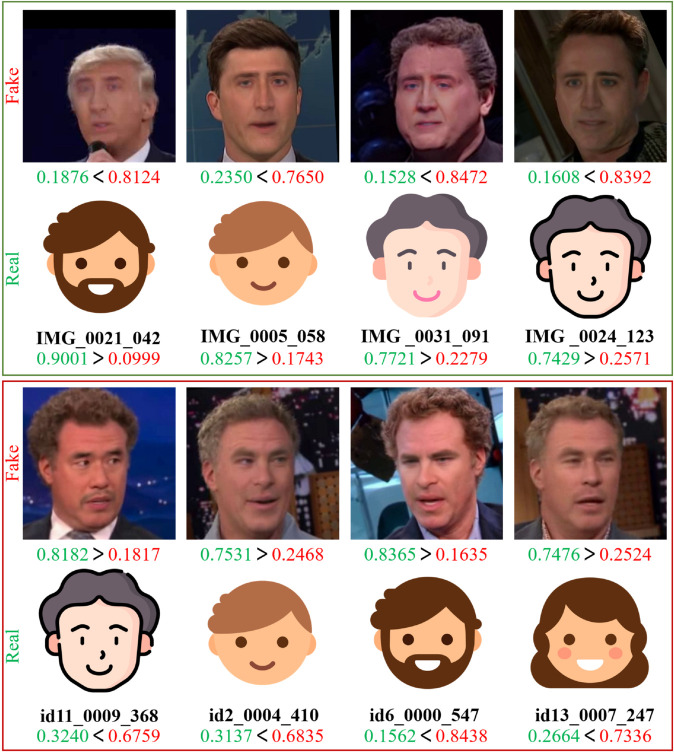 Figure 45
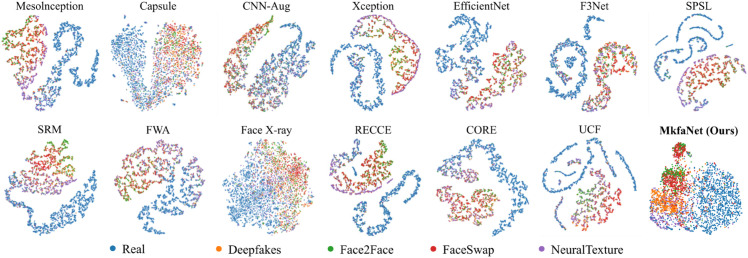 Figure 46
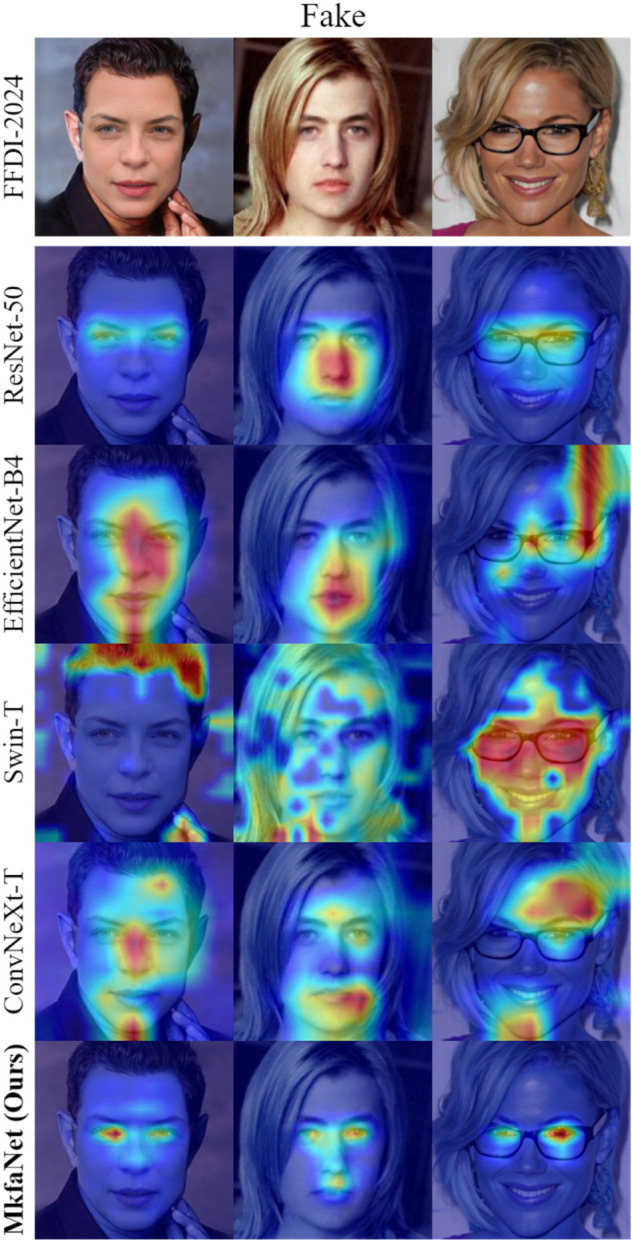 Figure 47
 Figure 48
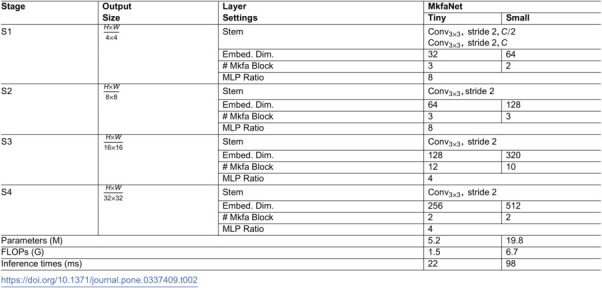 Figure 49
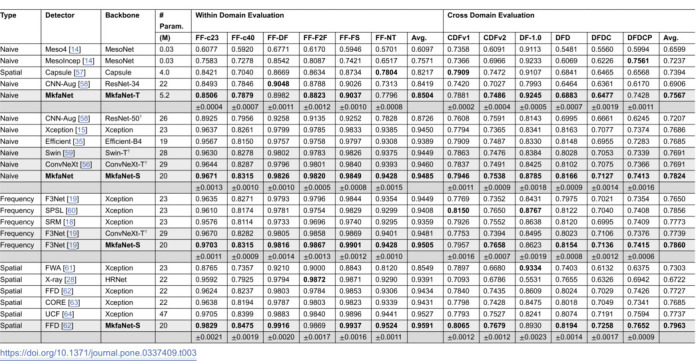 Figure 50
Peer Reviews
No public reviews on file for this paper yet. If you reviewed it on a platform where reviews are public (OpenReview, ICLR, NeurIPS, ICML), you can paste yours below so the community can read it here.
Videos
No videos yet. Explain this paper in a talk, walkthrough, or lecture? Add one.
Taxonomy
TopicsGenerative Adversarial Networks and Image Synthesis · Digital Media Forensic Detection · Face recognition and analysis