SpaConTDS: A multimodal contrastive learning framework for identifying spatial domains by applying tuple disturbing strategy
Ruiwen Xu, Xiaoqing Cheng, Waiki Ching, Siyao Wu, Yuanben Zhang, Yidan Zhang

TL;DR
SpaConTDS is a new framework that uses multimodal contrastive learning and reinforcement learning to improve the identification of spatial domains in spatial transcriptomics data.
Contribution
SpaConTDS introduces a novel tuple disturbing strategy and reinforcement learning for multimodal contrastive learning in spatial domain identification.
Findings
SpaConTDS achieves state-of-the-art accuracy in spatial domain identification.
The model outperforms existing methods in downstream tasks like denoising and UMAP visualization.
SpaConTDS effectively integrates multiple tissue sections and corrects batch effects without alignment.
Abstract
The rational utilization of multimodal spatial transcriptomics (ST) data enables accurate identification of spatial domains, which is essential for investigating cellular structure and functions. In this study, we proposed SpaConTDS, a novel framework that integrates reinforcement learning with self-supervised multimodal contrastive learning. SpaConTDS generates positive and negative samples through data augmentation and a pseudo-label tuple perturbation strategy, enabling the learning of fused representations that capture global semantics and cross-modal interactions. The model’s hyper-parameters are dynamically optimized using reinforcement learning. Extensive experiments across various resolutions and platforms demonstrate that SpaConTDS achieves state-of-the-art accuracy in spatial domain identification and outperforms existing methods in downstream tasks such as denoising,…
Genes, proteins, chemicals, diseases, species, mutations and cell lines named across the full text — each resolved to its canonical identifier and authoritative record.
Click any figure to enlarge with its caption.
 Figure 1
 Figure 2
 Figure 3
 Figure 4
 Figure 5
 Figure 6
 Figure 7
 Figure 8
 Figure 9
 Figure 10
 Figure 11
 Figure 12
 Figure 13
 Figure 14
 Figure 15
 Figure 16
 Figure 17
 Figure 18
 Figure 19
 Figure 20
 Figure 21
 Figure 22
 Figure 23
 Figure 24
 Figure 25
 Figure 26
 Figure 27
 Figure 28
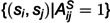 Figure 29
 Figure 30
 Figure 31
 Figure 32
 Figure 33
 Figure 34
 Figure 35
 Figure 36
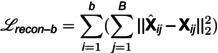 Figure 37
 Figure 38
 Figure 39
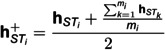 Figure 40
 Figure 41
 Figure 42
 Figure 43
 Figure 44
 Figure 45
 Figure 46
 Figure 47
 Figure 48
 Figure 49
 Figure 50
Peer Reviews
No public reviews on file for this paper yet. If you reviewed it on a platform where reviews are public (OpenReview, ICLR, NeurIPS, ICML), you can paste yours below so the community can read it here.
Videos
No videos yet. Explain this paper in a talk, walkthrough, or lecture? Add one.
Taxonomy
TopicsSingle-cell and spatial transcriptomics · Cell Image Analysis Techniques · Domain Adaptation and Few-Shot Learning