Molecular evolution of CO2-sensing ab1C neurons underlies divergent sensory responses in the Drosophila suzukii species group
Alice Gadau, Sasha Mills, Xin Yu Zhu Jiang, Cong Li, Nicolas Svetec, Ziyu Xu, Wanhe Li, Katherine I. Nagel, Li Zhao, Emily Behrman, Emily Behrman, Emily Behrman

TL;DR
The study shows how fruit flies evolved different CO2 sensing abilities, leading to distinct egg-laying preferences in ripe versus decaying fruit.
Contribution
The paper reveals that CO2 sensitivity in Drosophila species can evolve through changes in either receptor protein or regulatory DNA elements.
Findings
D. suzukii and D. subpulchrella prefer CO2-enriched substrates for oviposition, unlike D. melanogaster.
Transgenic experiments showed that CO2 sensitivity can be altered by modifying receptor function or expression.
Evolutionary changes in CO2 detection contribute to ecological niche adaptation in closely related species.
Abstract
Organisms evolve behavioral and morphological traits to adapt to their ecological niches, yet the genetic basis of adaptation remains largely unknown. Drosophila suzukii has evolved a distinctive oviposition preference for ripe fruit, unlike most Drosophila species such as D. melanogaster, which prefer overripe fruit. Carbon dioxide (CO2), a metabolic volatile that increases as fruit ripens and decays, may act as a critical ecological cue shaping these preferences. Here, we focus on D. suzukii and its sister species D. subpulchrella, which shows an intermediate preference, to investigate the genetic basis of CO2 responses. We report a previously unrecognized shift in CO2-guided oviposition: D. suzukii and D. subpulchrella readily lay eggs on CO2-enriched substrates, unlike the strong aversion displayed by D. melanogaster. Electrophysiological recordings revealed a species-specific…
Genes, proteins, chemicals, diseases, species, mutations and cell lines named across the full text — each resolved to its canonical identifier and authoritative record.
Click any figure to enlarge with its caption.
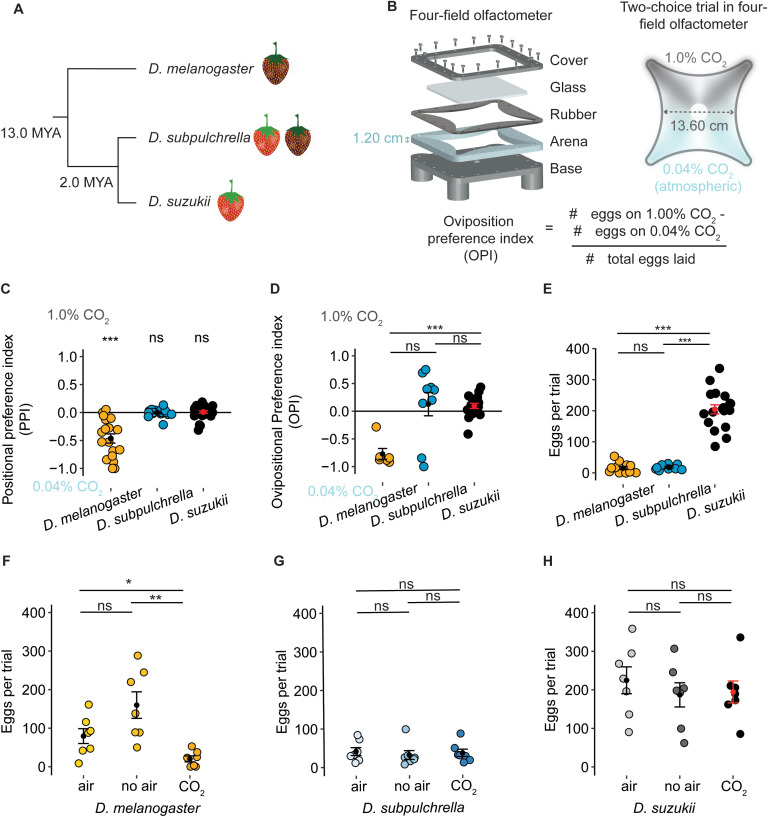 Figure 1
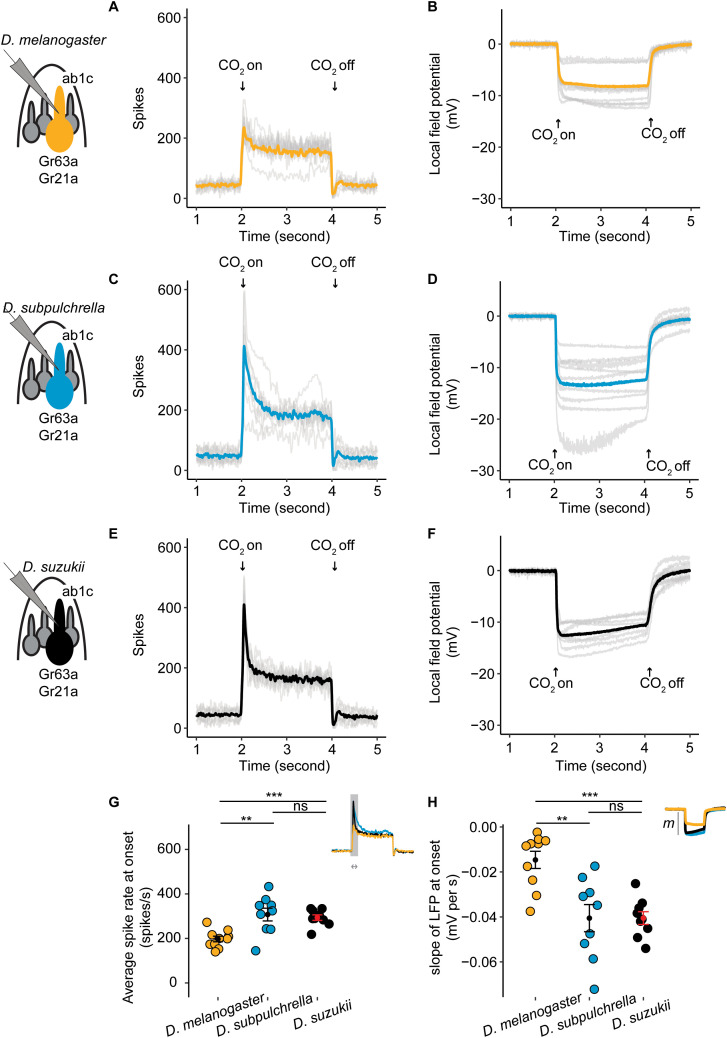 Figure 2
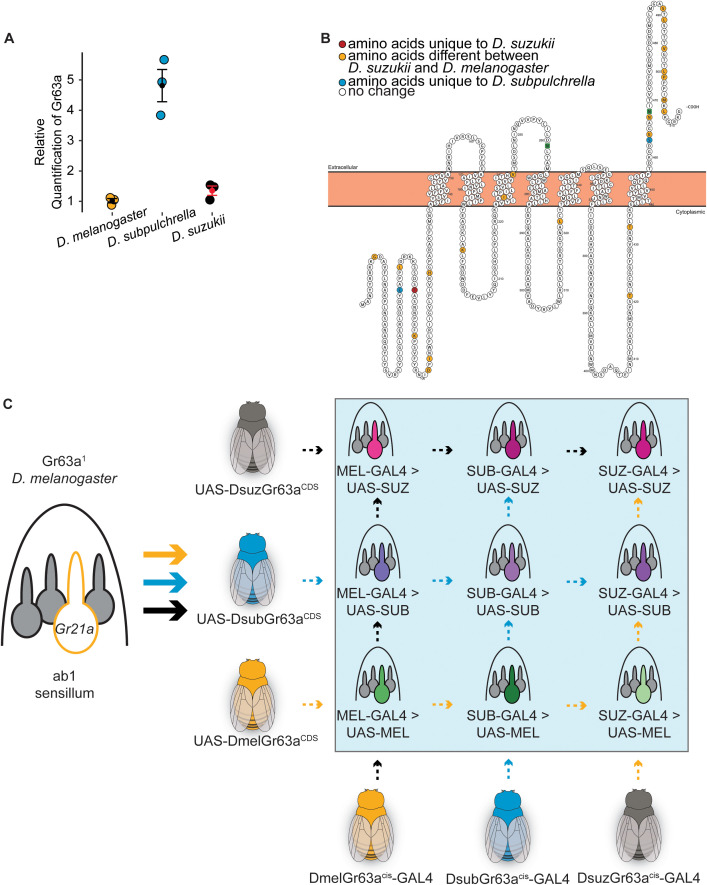 Figure 3
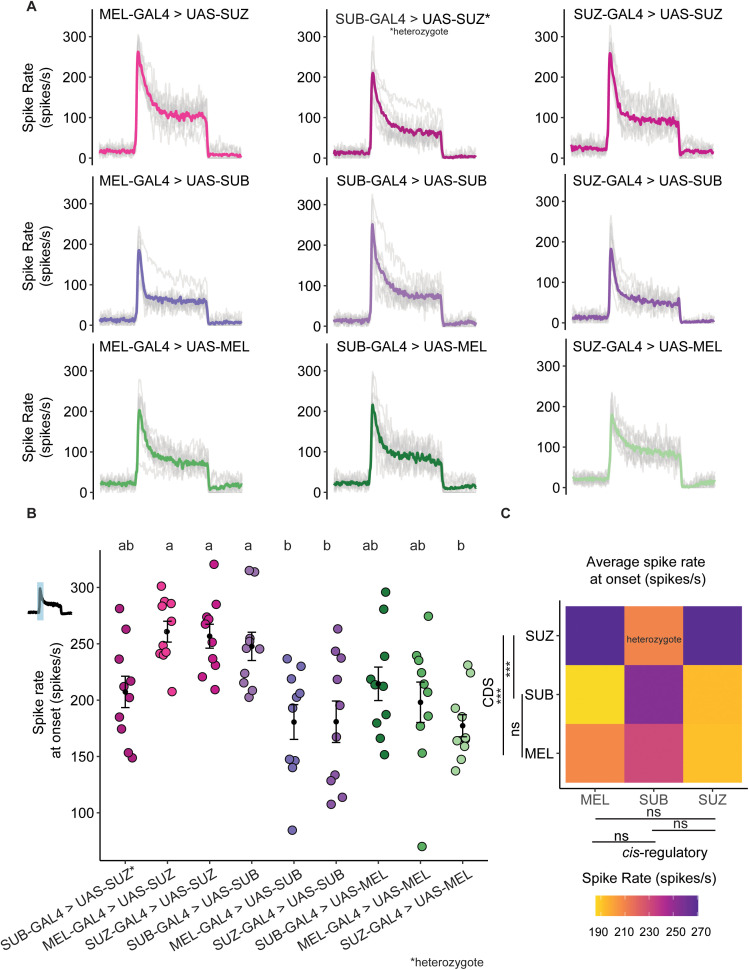 Figure 4
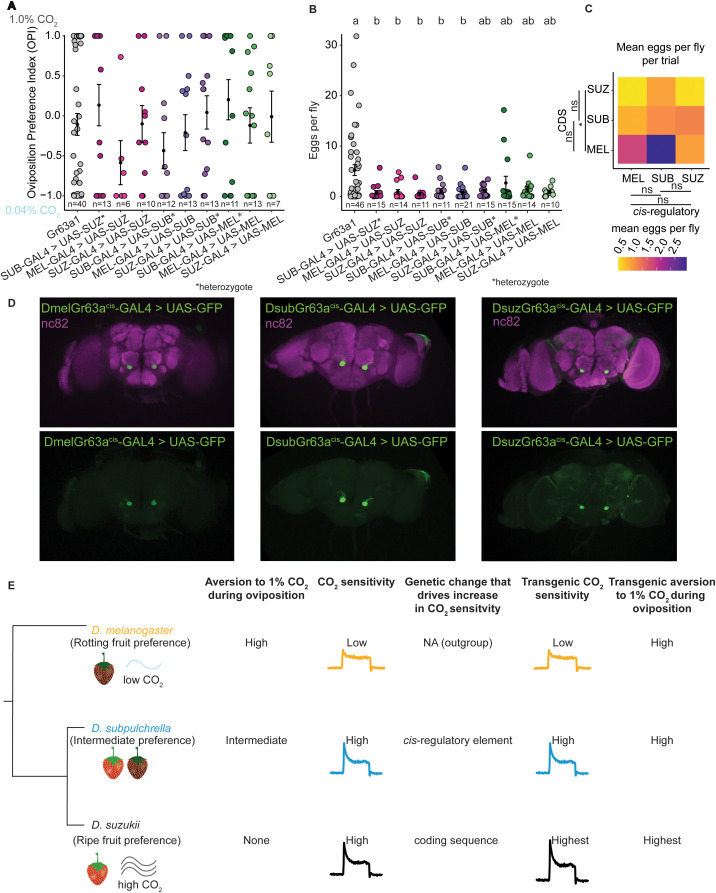 Figure 5
Peer Reviews
No public reviews on file for this paper yet. If you reviewed it on a platform where reviews are public (OpenReview, ICLR, NeurIPS, ICML), you can paste yours below so the community can read it here.
Videos
No videos yet. Explain this paper in a talk, walkthrough, or lecture? Add one.
Taxonomy
TopicsNeurobiology and Insect Physiology Research · Insect behavior and control techniques · Invertebrate Immune Response Mechanisms