Genomic characterization of clinical and environmental isolates of Bacillus anthracis in Peru
Eissen E. Guerrero-Seminario, Abraham Espinoza-Culupú, Patricia García-Vara, John Calderón-Escalante, Dana González-Quispe, Ever F. Córdova-Diaz, Beitzy Cubas-Yalle, M. Angelica Delgado-Baldeon, Lourdes Balda Juárez, Ruth García-de-la-Guarda, Ana LTO Nascimento

TL;DR
This study analyzes the genomes of Bacillus anthracis isolates in Peru, revealing genetic similarities, resistance genes, and virulence factors important for anthrax outbreaks.
Contribution
This is the first genomic characterization of B. anthracis in Peru, identifying multidrug resistance and virulence genes in clinical and environmental isolates.
Findings
All 18 isolates belong to group A, subgroup A.Br.003/004, showing high genetic similarity.
Eight multidrug resistance genes and 24 chromosomal virulence genes were identified.
pXO1 and pXO2 plasmids contain key virulence genes related to toxin production and capsule synthesis.
Abstract
Anthrax, or charbon, is a zoonotic disease caused by the Gram-positive bacterium Bacillus anthracis, responsible for sporadic outbreaks and representing a significant public health issue in Peru. In this study, 18 isolates from humans, animals and soil, collected between 2005 and 2017 across different country regions, were reactivated and analyzed. We identified antimicrobial resistance genes, virulence factors, plasmids, and their phylogenetic relationships using next-generation sequencing and bioinformatics tools. We detected eight genes associated with multidrug resistance, including vanZ-F, mphL, fosB_gen, fosB, satA, bla, bla2, and fosB2. Additionally, 24 chromosomal virulence genes were identified, related to toxin production, capsule biosynthesis, secretion systems, and iron acquisition. Analysis of the pXO1 plasmid revealed the presence of 67 virulence-related genes, such as…
Genes, proteins, chemicals, diseases, species, mutations and cell lines named across the full text — each resolved to its canonical identifier and authoritative record.
Click any figure to enlarge with its caption.
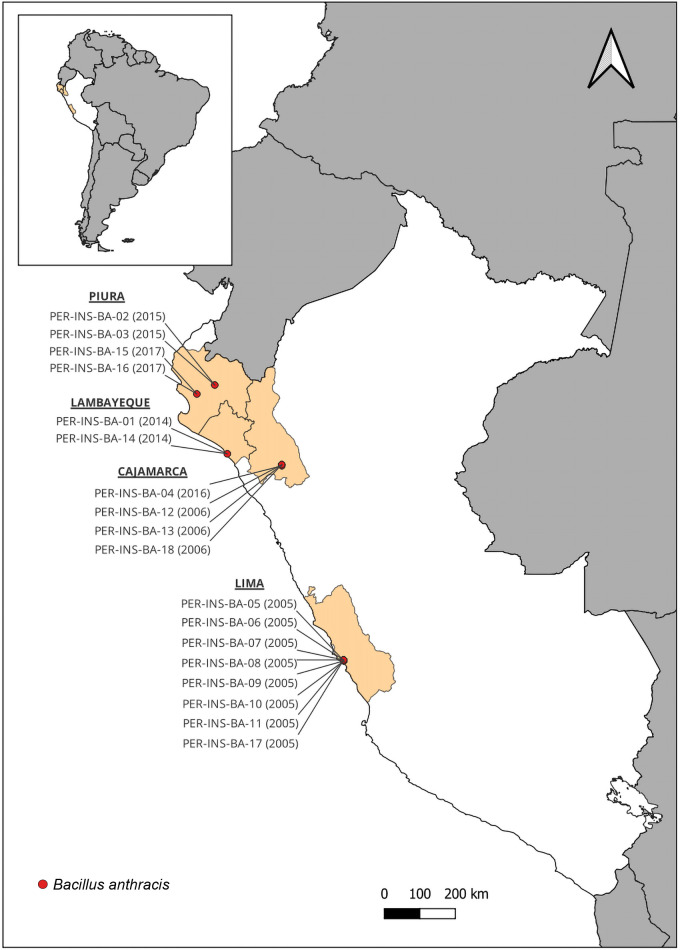 Figure 1
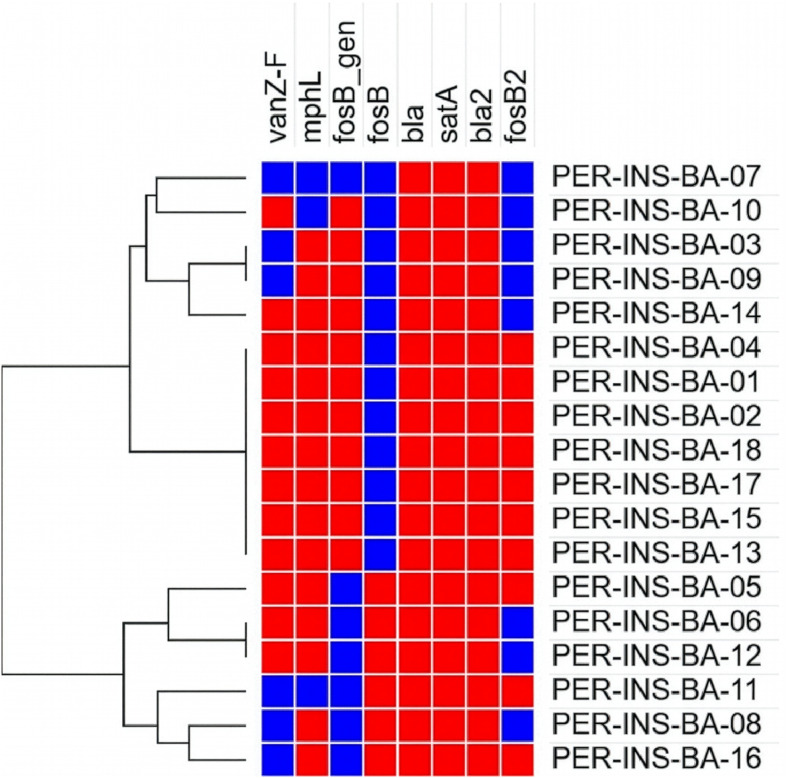 Figure 2
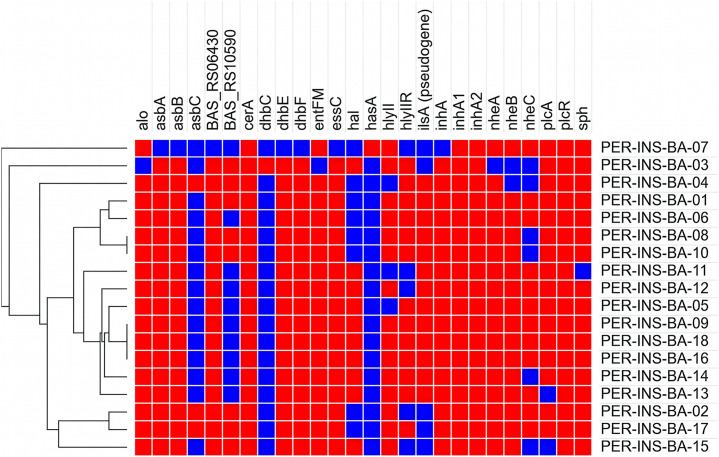 Figure 3
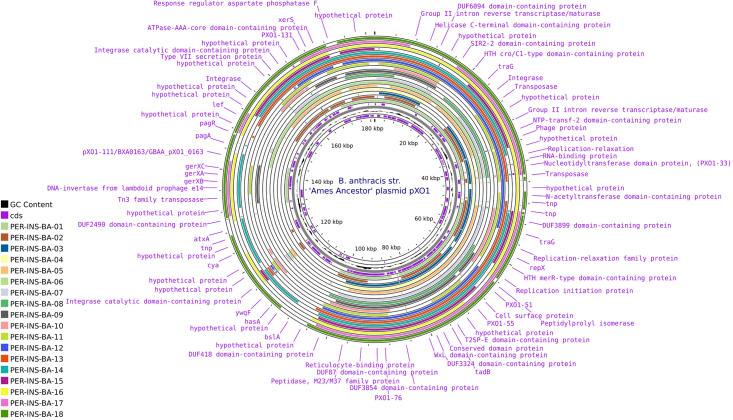 Figure 4
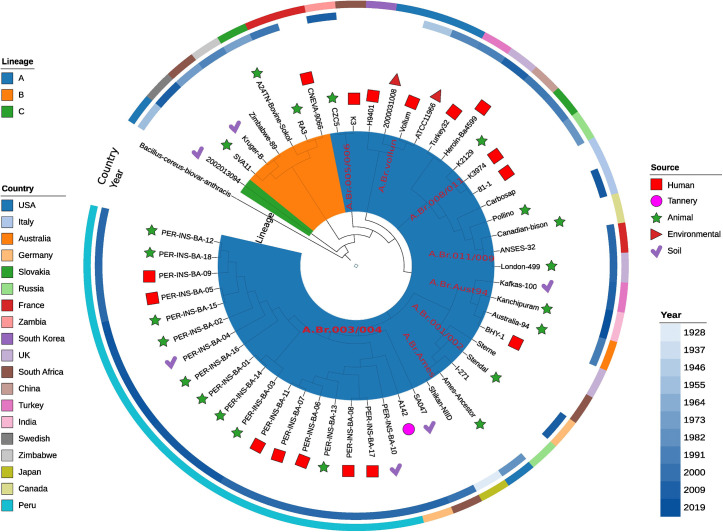 Figure 5
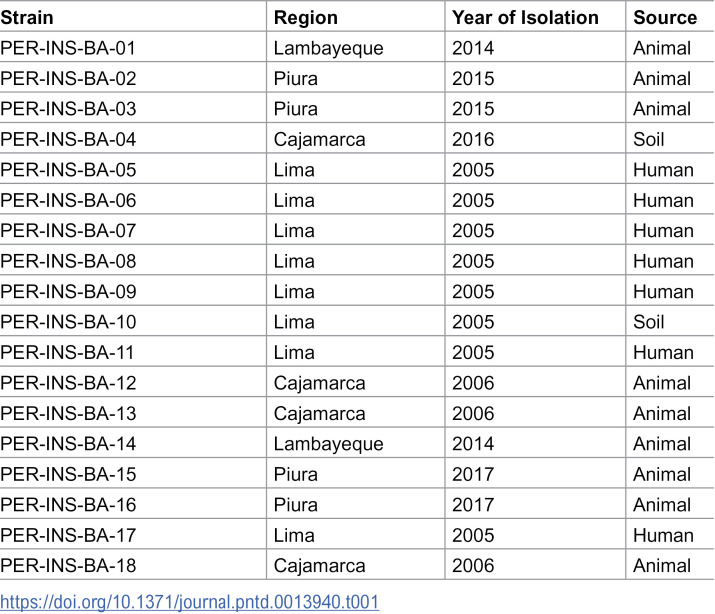 Figure 6
Peer Reviews
No public reviews on file for this paper yet. If you reviewed it on a platform where reviews are public (OpenReview, ICLR, NeurIPS, ICML), you can paste yours below so the community can read it here.
Videos
No videos yet. Explain this paper in a talk, walkthrough, or lecture? Add one.
Taxonomy
TopicsBacillus and Francisella bacterial research · Bacterial Genetics and Biotechnology · Vibrio bacteria research studies