Protocol for investigating the warping of spatial experience across the blind spot to contrast predictions of the Integrated Information Theory and Predictive Processing accounts of consciousness
Clement Abbatecola, Bernard Marius ’t Hart, Belén M. Montabes de la Cruz, Lucy S. Petro, Cyriel M. A. Pennartz, Giulio Tononi, Karl J. Friston, Jakob Hohwy, Umberto Olcese, Melanie Boly, Andrew M. Haun, Srimant P. Tripathy, Patrick Cavanagh, Lars F. Muckli

TL;DR
This paper presents a protocol to study how the blind spot affects spatial perception, comparing theories of consciousness like Integrated Information Theory and Predictive Processing.
Contribution
The study introduces a novel experimental protocol to contrast theories of consciousness using the blind spot as a natural test case.
Findings
Psychometric functions show differences in perceived space when the blind spot is involved.
Simulated results align with predictions from Integrated Information Theory and Predictive Processing accounts.
The blind spot disrupts subjective spatial extendedness differently depending on eye and condition.
Abstract
We investigate the subjective experience of space around the visual blind spot area, the cortical representation of which is missing feedforward connectivity from one eye. We performed these experiments as part of an adversarial collaboration to test contrasting theories of consciousness; Integrated Information Theory (IIT), Predictive Processing Active Inference (AI), and Predictive Processing Neurorepresentationalism (NREP) accounts. According to the Integrated Information Theory of consciousness, non-activatable retinotopic cortical regions, such as the blind spot region for the ipsilateral eye, create a different cause-effect structure and therefore should contribute differently to the perceived quality of space of activatable retinotopic regions. The two Predictive Processing accounts, in contrast, posit that internal models will accommodate structural deviations around the blind…
Genes, proteins, chemicals, diseases, species, mutations and cell lines named across the full text — each resolved to its canonical identifier and authoritative record.
Click any figure to enlarge with its caption.
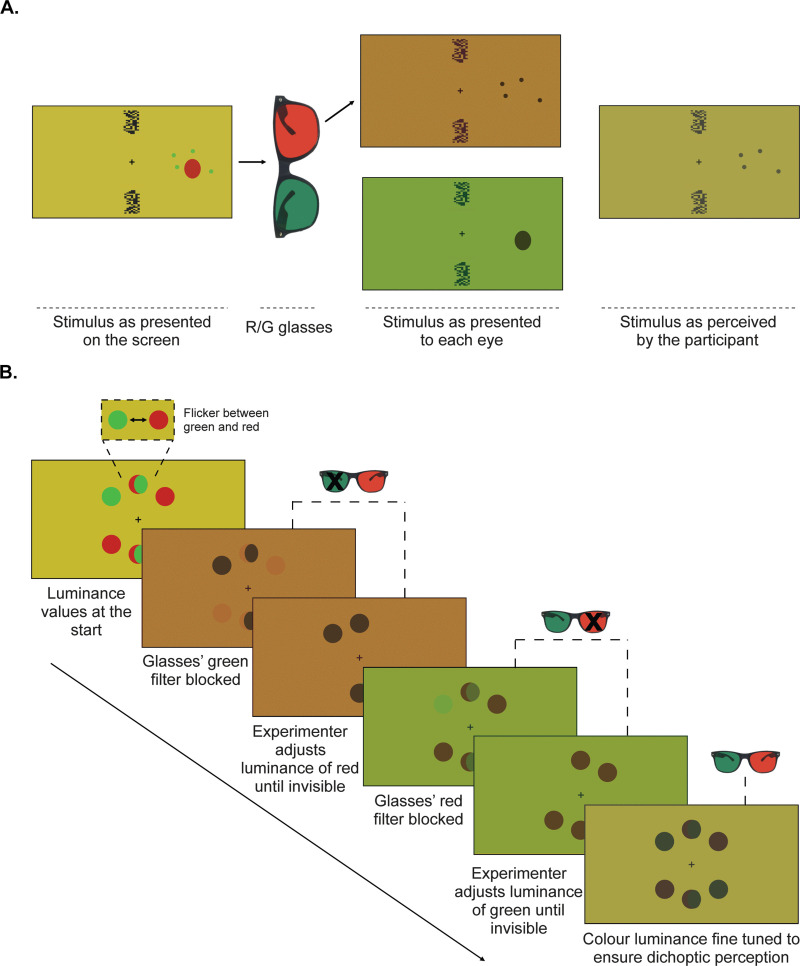 Figure 1
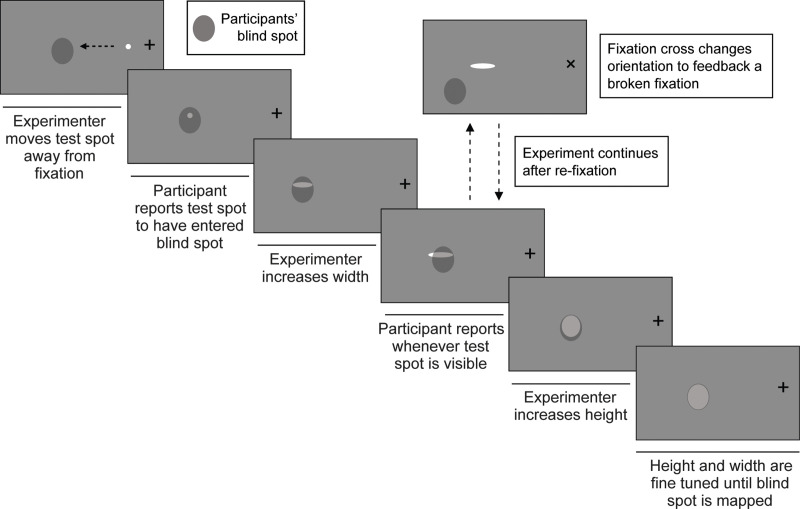 Figure 2
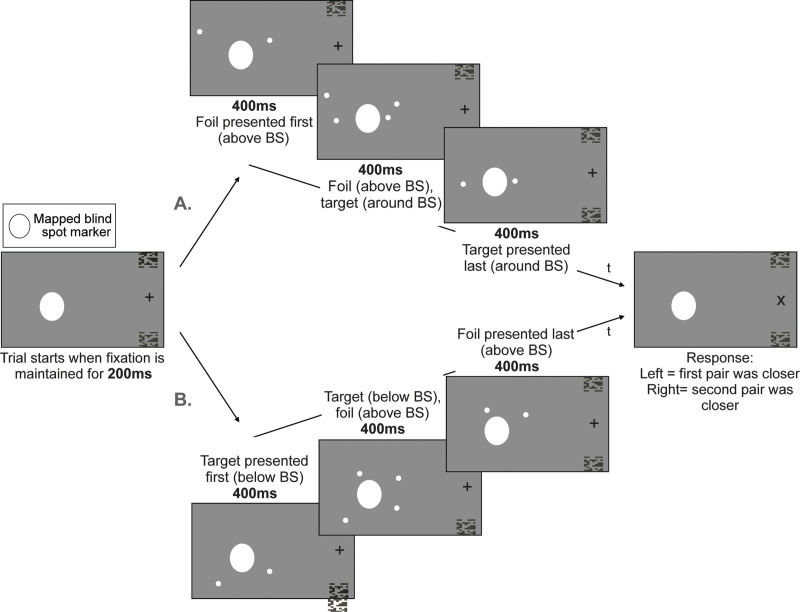 Figure 3
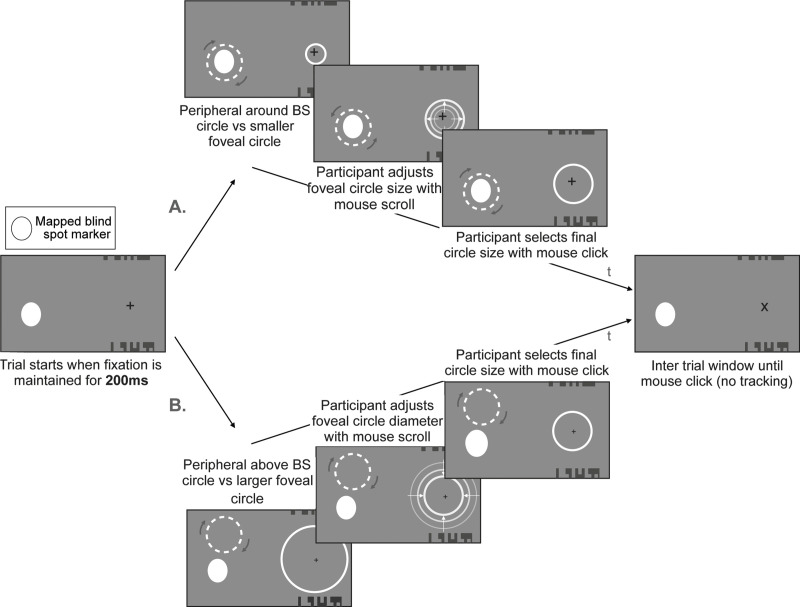 Figure 4
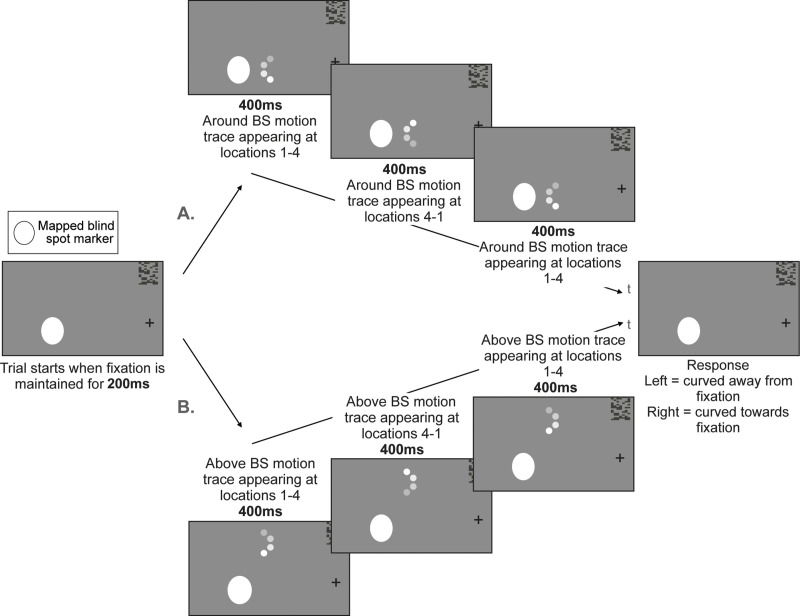 Figure 5
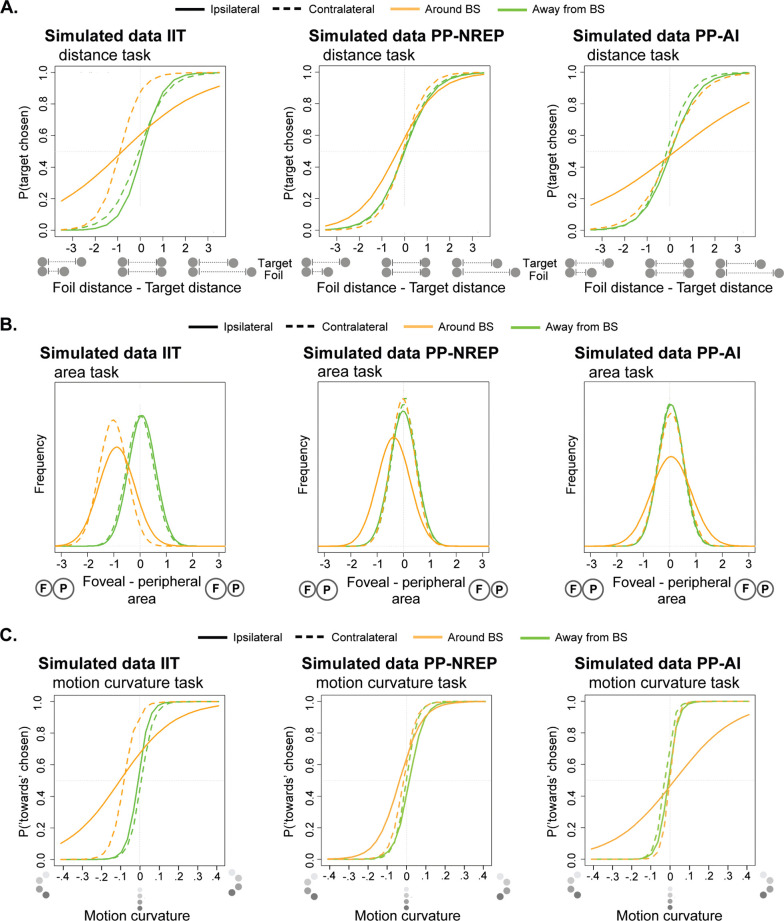 Figure 6
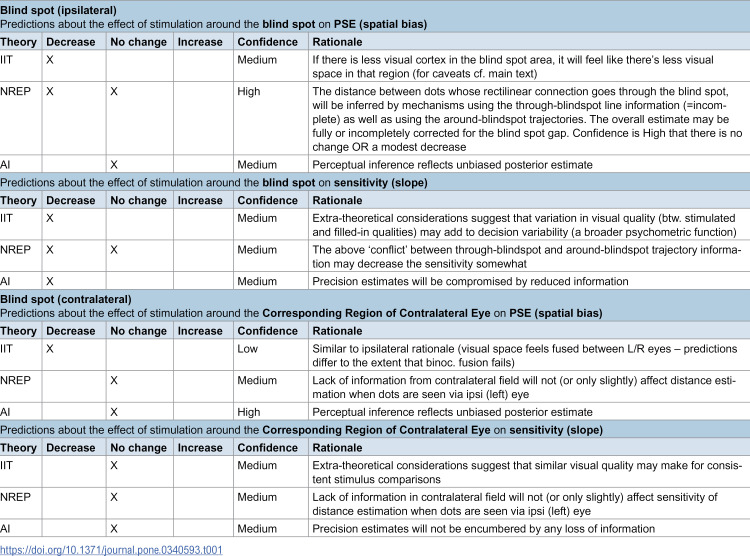 Figure 7
Peer Reviews
No public reviews on file for this paper yet. If you reviewed it on a platform where reviews are public (OpenReview, ICLR, NeurIPS, ICML), you can paste yours below so the community can read it here.
Videos
No videos yet. Explain this paper in a talk, walkthrough, or lecture? Add one.
Taxonomy
TopicsVisual perception and processing mechanisms · Philosophy and Theoretical Science · Face Recognition and Perception