Modeling the beating degree of wheat straw biochemical mechanical pulp using multifactorial equations
Zihuan Liu, Xiaoli Liang, Xiaoyun Zhang, Ling Li, Liang Yin, Zhenhua Hou, Xiaojie Ma, Yanpeng Xu, Piwu Li, Kaiquan Liu, Ruiming Wang

TL;DR
This study creates a reliable model to predict the beating degree of wheat straw pulp using three key factors, improving efficiency and reducing resource waste.
Contribution
The study introduces a novel application of Box-Behnken Design for modeling pulp beating degree without extreme conditions.
Findings
A quadratic polynomial model with high R² values (0.9899) accurately predicts the beating degree.
The model demonstrates strong predictive ability with a signal-to-noise ratio of 29.2395.
The model avoids extreme conditions, making it safer and more practical than traditional methods.
Abstract
In traditional pulp beating processes, the “produce-test-adjust” cycle is commonly employed, often resulting in unnecessary consumption of energy and chemicals. To address this issue, this study integrated single-factor experiments with a Plackett-Burman (PB) design to identify three key parameters—refiner gap, KOH dosage, and enzyme dosage—that significantly influence the beating degree of wheat straw biochemical mechanical pulp, selected from ten potential factors. On this basis, the Box-Behnken Design (BBD) response surface methodology (RSM) was employed to establish a quadratic polynomial predictive model between the beating degree and the aforementioned three factors. For this quadratic polynomial predictive model, the coefficient of determination (R²) is 0.9899, the adjusted R² is 0.9768, and the predicted R² is 0.8723. The adjusted R² is close to R², and the predicted R² is close…
Genes, proteins, chemicals, diseases, species, mutations and cell lines named across the full text — each resolved to its canonical identifier and authoritative record.
Click any figure to enlarge with its caption.
 Figure 1
 Figure 2
 Figure 3
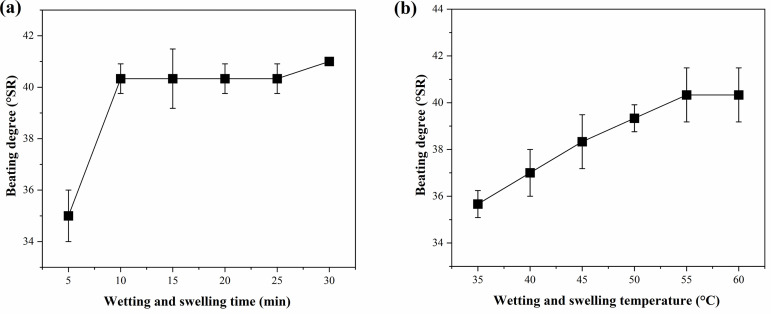 Figure 4
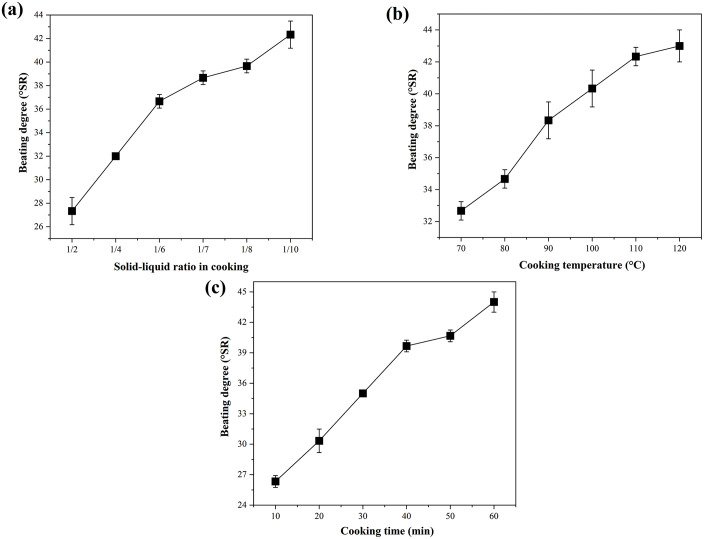 Figure 5
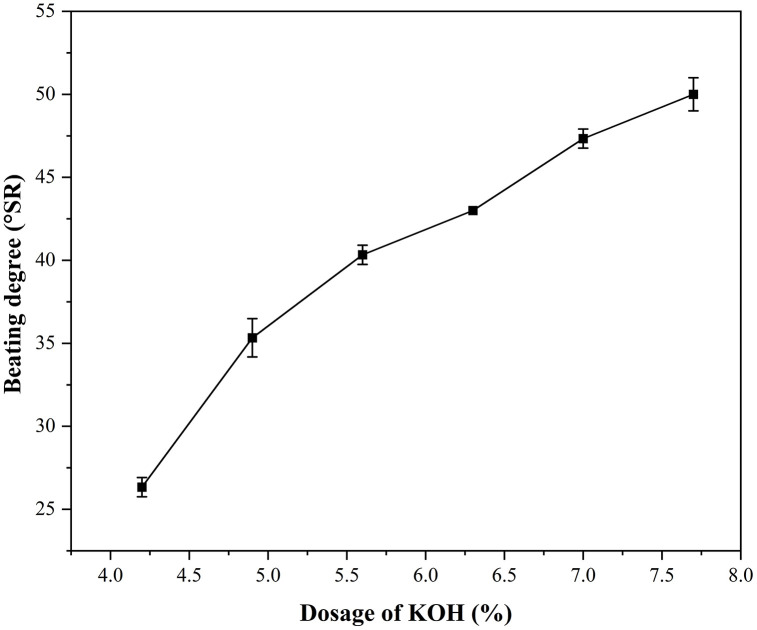 Figure 6
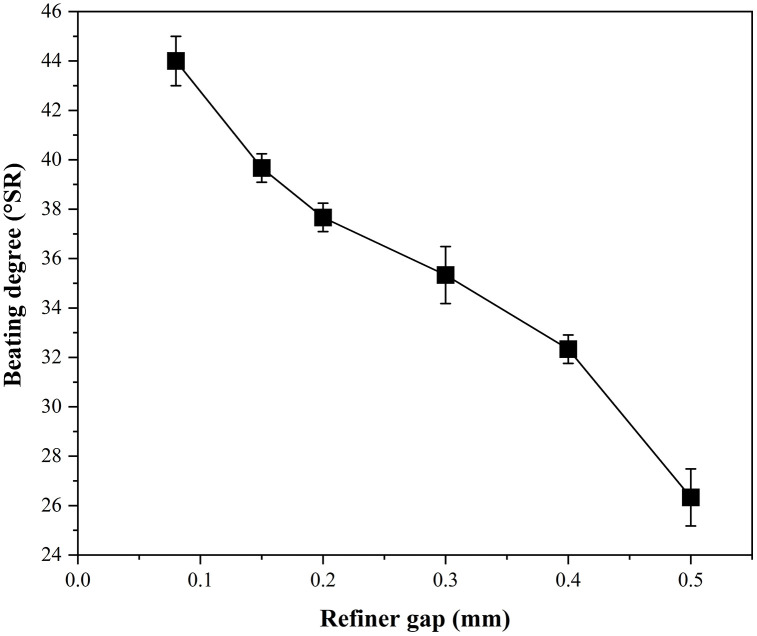 Figure 7
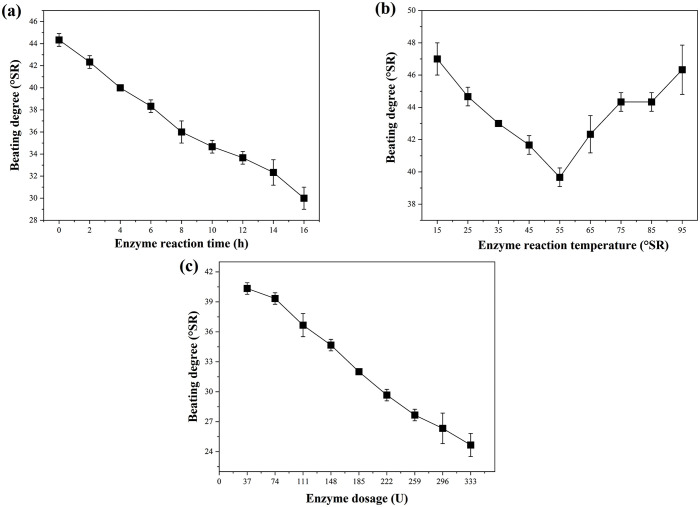 Figure 8
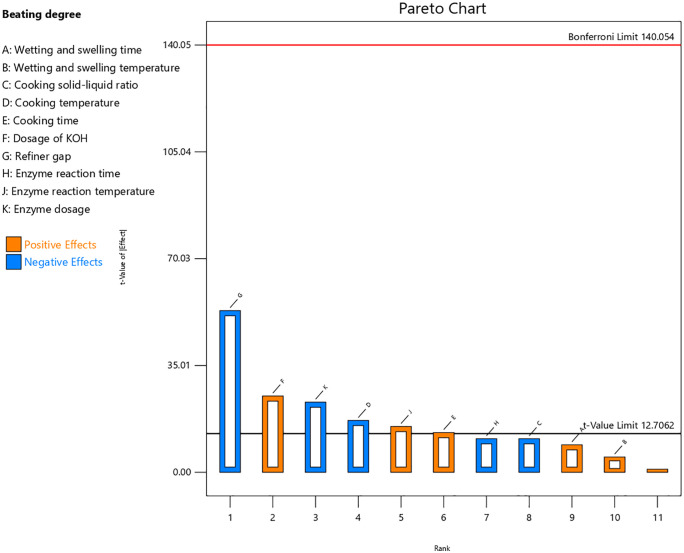 Figure 9
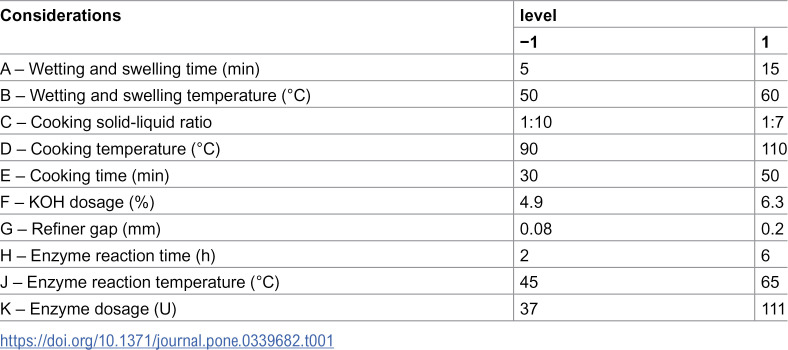 Figure 10
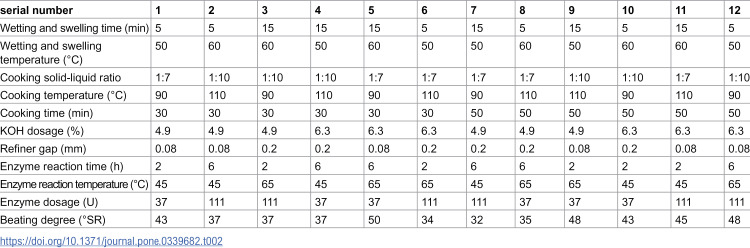 Figure 11
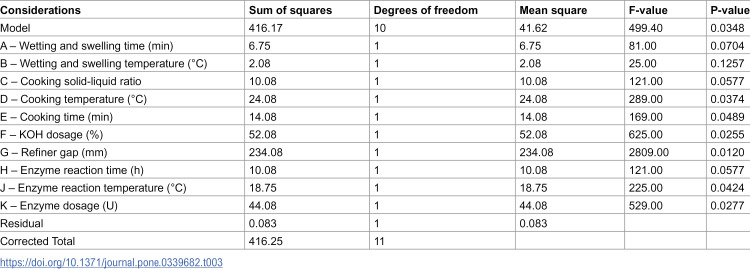 Figure 12
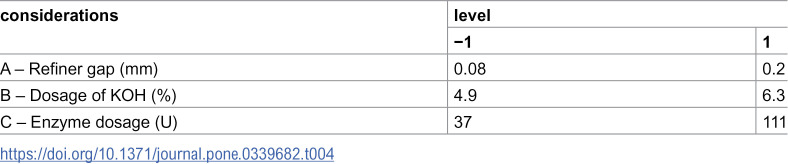 Figure 13
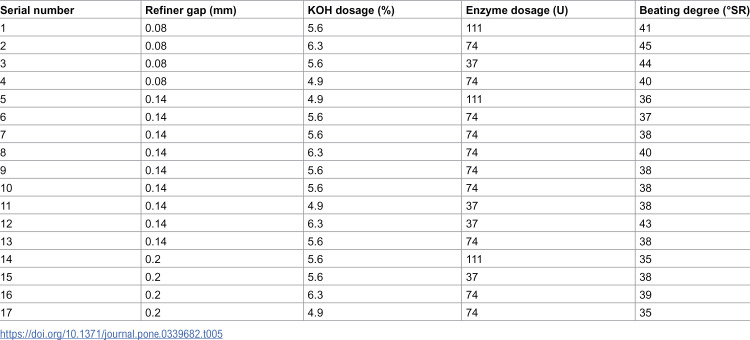 Figure 14
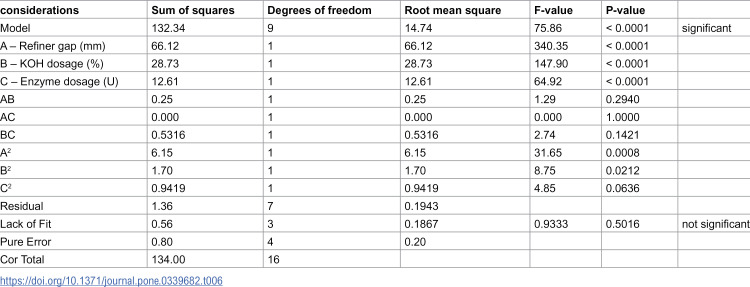 Figure 15
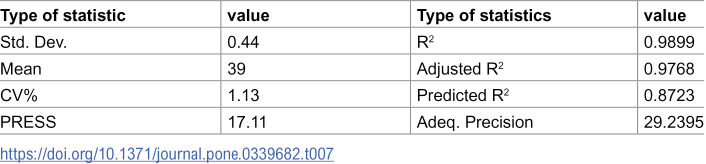 Figure 16
Peer Reviews
No public reviews on file for this paper yet. If you reviewed it on a platform where reviews are public (OpenReview, ICLR, NeurIPS, ICML), you can paste yours below so the community can read it here.
Videos
No videos yet. Explain this paper in a talk, walkthrough, or lecture? Add one.
Taxonomy
TopicsLignin and Wood Chemistry · Advanced Cellulose Research Studies · Biofuel production and bioconversion