Exploring the role of meaning in non-Māori speakers’ ‘proto-lexicon’
Wakayo Mattingley, Forrest Panther, Simon Todd, Jennifer Hay, Jeanette King, Peter J. Keegan

TL;DR
This study explores how non-Māori speakers in New Zealand use their implicit knowledge of Māori words to learn meanings, suggesting that the 'proto-lexicon' may not be as devoid of meaning as previously thought.
Contribution
The study challenges the assumption that the proto-lexicon lacks semantic content by showing varying levels of semantic knowledge for different words.
Findings
Non-Māori speakers in New Zealand can identify meanings of Māori words relatively well.
Familiarity with Māori word shapes gives an advantage in learning meanings, but not specifically for real words.
Words assumed to be in the proto-lexicon were not robustly distinguished from nonwords, suggesting limited semantic knowledge.
Abstract
Previous work has demonstrated that New Zealanders who do not speak Māori but are regularly exposed to the language develop implicit knowledge of it. The core of this knowledge, it has been argued, is the ‘proto-lexicon’—a set of stored word-forms, without associated meaning, which yields subsequent Māori phonotactic and morphological knowledge. Previous research shows that having a proto-lexicon gives learners a head start in learning Māori word meanings in formal education. We investigate experimentally whether the proto-lexicon confers an advantage for attaching meanings to words. In Experiment 1, non-Māori-speaking New Zealanders were tested on their ability to identify meanings of Māori words in a forced-choice definition task, and they did this relatively well. Then, words with low accuracy were selected for Experiment 2, where non-Māori-speaking New Zealanders and non-New…
Genes, proteins, chemicals, diseases, species, mutations and cell lines named across the full text — each resolved to its canonical identifier and authoritative record.
Click any figure to enlarge with its caption.
 Figure 1
 Figure 2
 Figure 3
 Figure 4
 Figure 5
 Figure 6
 Figure 7
 Figure 8
 Figure 9
 Figure 10
 Figure 11
 Figure 12
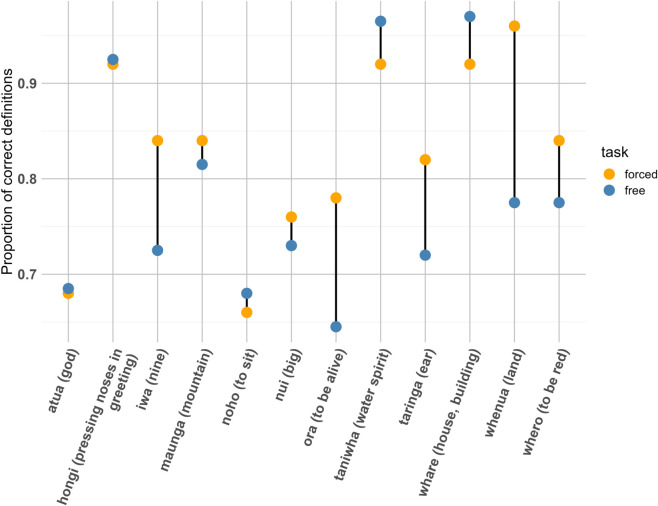 Figure 13
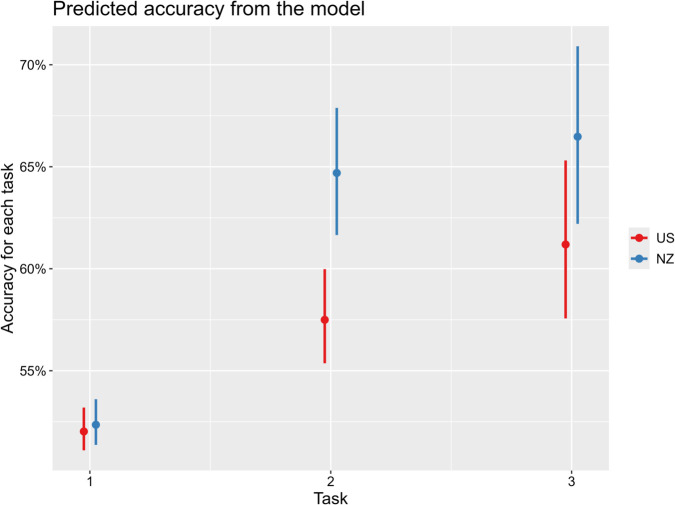 Figure 14
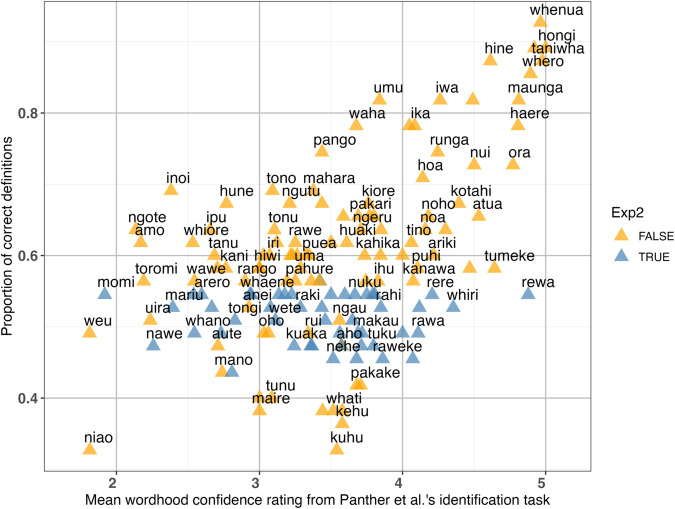 Figure 15
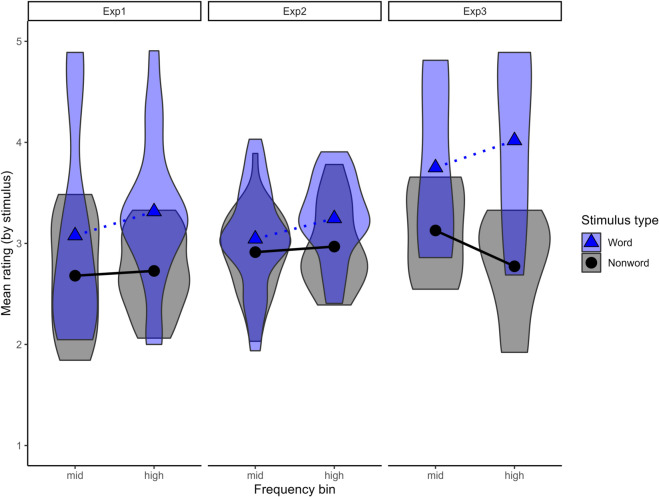 Figure 16
 Figure 17
 Figure 18
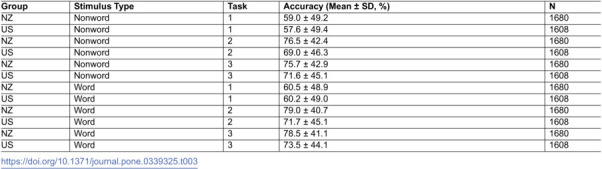 Figure 19
 Figure 20
 Figure 21
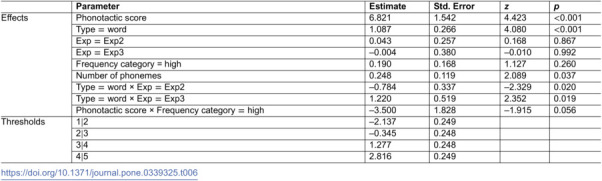 Figure 22
Peer Reviews
No public reviews on file for this paper yet. If you reviewed it on a platform where reviews are public (OpenReview, ICLR, NeurIPS, ICML), you can paste yours below so the community can read it here.
Videos
No videos yet. Explain this paper in a talk, walkthrough, or lecture? Add one.
Taxonomy
TopicsAustralian Indigenous Culture and History · Categorization, perception, and language · Pacific and Southeast Asian Studies