Influence of age on speech-in-noise and spatial processing abilities in middle-aged adults
Pavithra Nayak, Suresh Pillai, Hari Prakash Palaniswamy

TL;DR
Middle-aged adults' ability to understand speech in noise is more influenced by cognitive function than age, according to a study using hearing and cognition tests.
Contribution
The study identifies cognition as the strongest predictor of speech-in-noise performance in middle-aged adults, despite no age-related differences in hearing scores.
Findings
Cognitive function (MoCA) was the only significant predictor of speech-in-noise performance in co-located listening conditions.
The older middle-aged subgroup showed reduced spatial advantage and lower cognitive scores, but no hearing differences were found.
Variables like noise exposure, mental health, and physical activity did not significantly affect speech-in-noise performance.
Abstract
Speech perception in noise (SPIN) difficulties are commonly associated with older adults, but emerging evidence suggests they may begin in midlife. This study investigated SPIN and spatial processing abilities in middle-aged adults using the Spatial Separation Sentence Test-Kannada (SSST-K). A cross-sectional design assessed 76 participants aged 41–60 years, divided into two groups (41–50 and 51–60 years). Assessments included: (1) the SSST-K to evaluate SPIN and spatial processing, (2) the Montreal Cognitive Assessment (MoCA) for general cognition, and (3) standardized questionnaires measuring noise exposure (NESI), physical activity (GPAQ), and mental status (PHQ-9). Hierarchical regression analysis revealed two key findings. First, in the co-located (0° azimuth) condition, cognition (MoCA) was the only significant predictor of SPIN performance, overshadowing age and other variables.…
Genes, proteins, chemicals, diseases, species, mutations and cell lines named across the full text — each resolved to its canonical identifier and authoritative record.
Click any figure to enlarge with its caption.
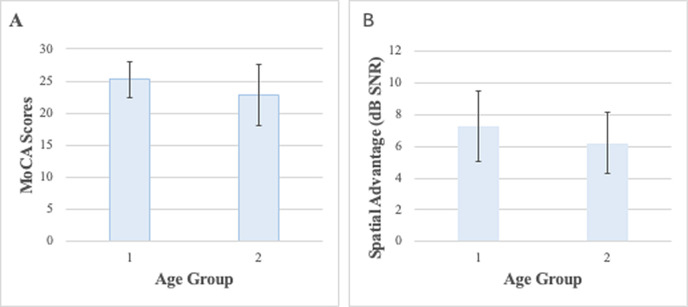 Figure 1
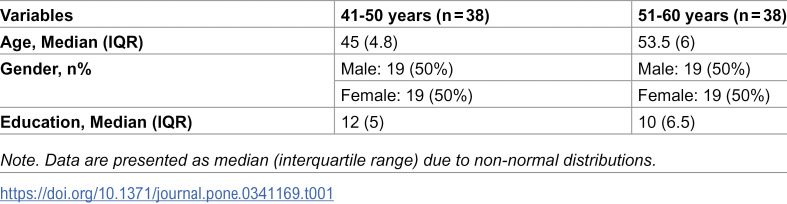 Figure 2
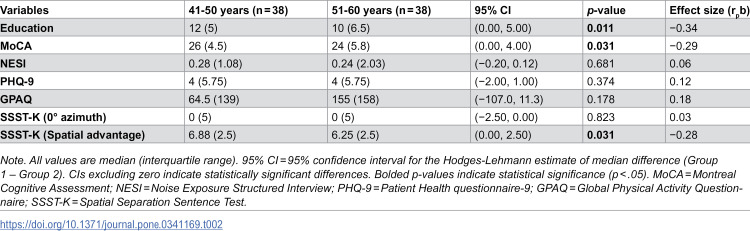 Figure 3
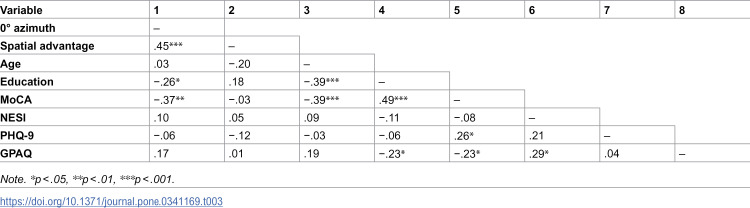 Figure 4
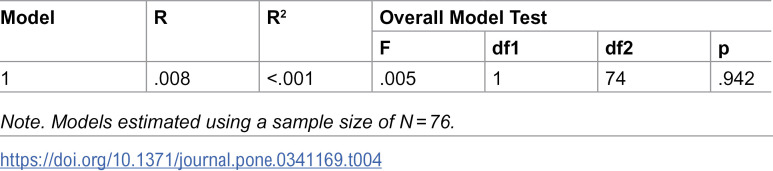 Figure 5
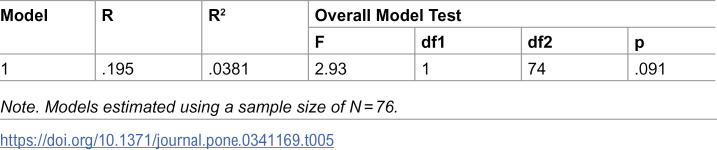 Figure 6
Peer Reviews
No public reviews on file for this paper yet. If you reviewed it on a platform where reviews are public (OpenReview, ICLR, NeurIPS, ICML), you can paste yours below so the community can read it here.
Videos
No videos yet. Explain this paper in a talk, walkthrough, or lecture? Add one.
Taxonomy
TopicsHearing Loss and Rehabilitation · Noise Effects and Management · Hearing, Cochlea, Tinnitus, Genetics