An Autologous, Vascularized and Immunocompetent Tissue Engineered Skin to Highlight Inter‐Individual Variability to Better Understand the Human Wound Healing
Emilie Attiogbe, Elodie Mareux, Sébastien Larochelle, Adèle Mauroux, Sandrine Gofflo, Carine Mainzer, Sylvie Bordes, Brigitte Closs, Caroline Gilbert, Véronique J. Moulin

TL;DR
A new skin model shows how different people heal wounds differently, which could help develop personalized treatments.
Contribution
The study introduces an autologous, vascularized, and immunocompetent tissue-engineered skin model to study inter-individual variability in wound healing.
Findings
Wound closure varied significantly between healthy donors, showing individual differences in healing.
Platelet lysate treatment induced donor-specific responses, including epidermal migration and neo-angiogenesis.
Lymphocytes migrated into wounds, but no CD206-positive cells or neo-angiogenesis occurred without treatment.
Abstract
In vitro tissue‐engineered skin models are valuable tools for dermatological research. Yet, they often fail to reproduce the complex interactions among vascular, immune, and cutaneous cells during the wound healing process. In addition, inter‐individual variability response remains poorly understood, limiting our knowledge of the genetic and environmental factors that influence wound healing. This study presents a 3D autologous, vascularised, and immunocompetent Tissue Engineered Skin model (aviTES), generated using cells from the same donor to study the wound healing process. The aviTES models were injured using a 2 mm punch biopsy, and wound closure was macroscopically monitored for 7 days in the absence of any stimuli. The re‐epithelialisation rate was highly reproducible within the same donor. However, wound closure differed between healthy donors (five distinct donors),…
Genes, proteins, chemicals, diseases, species, mutations and cell lines named across the full text — each resolved to its canonical identifier and authoritative record.
Click any figure to enlarge with its caption.
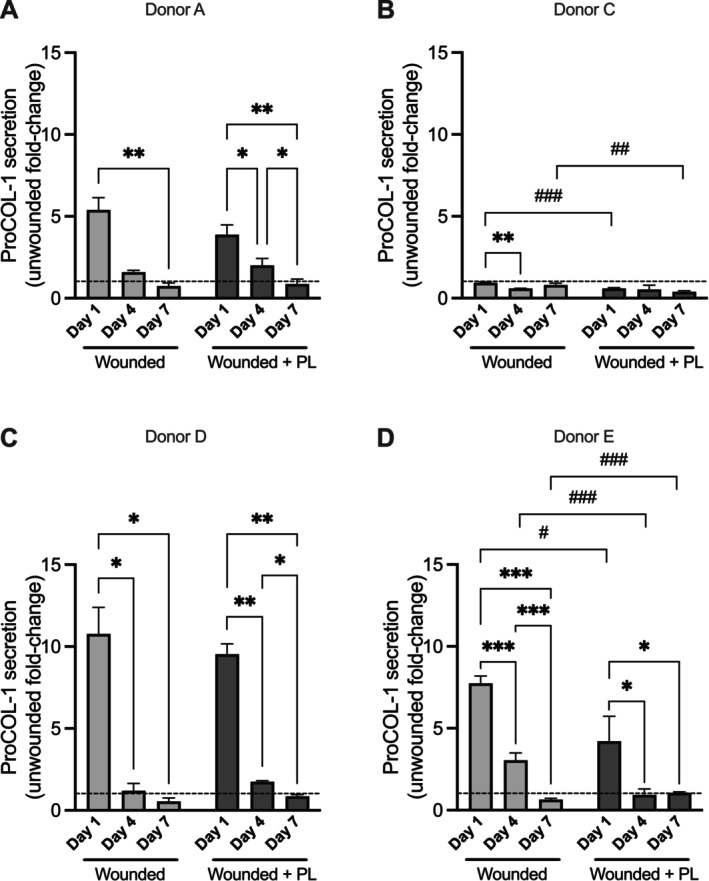 Figure 1
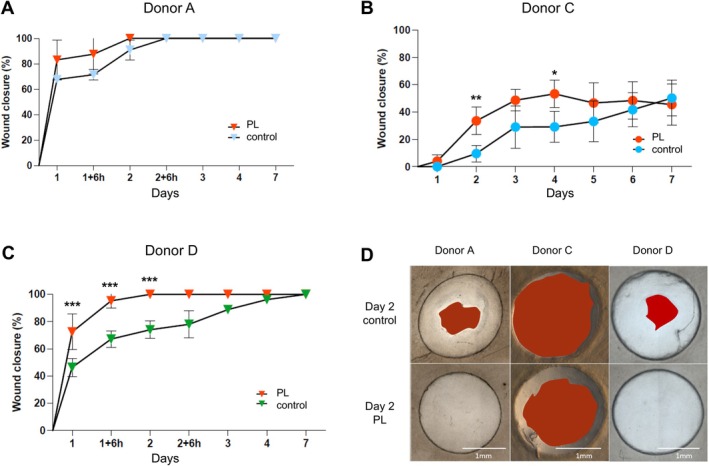 Figure 2
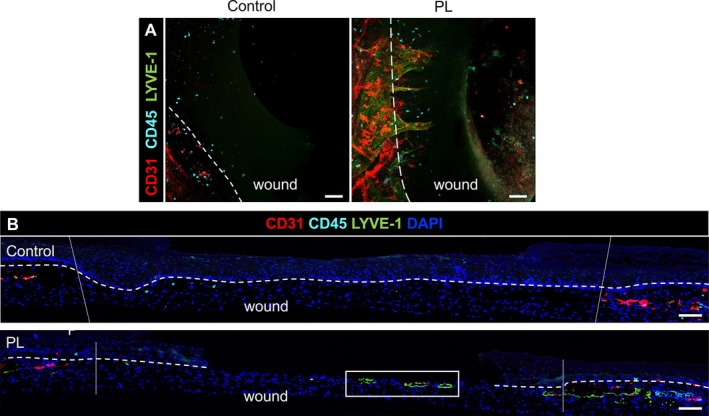 Figure 3
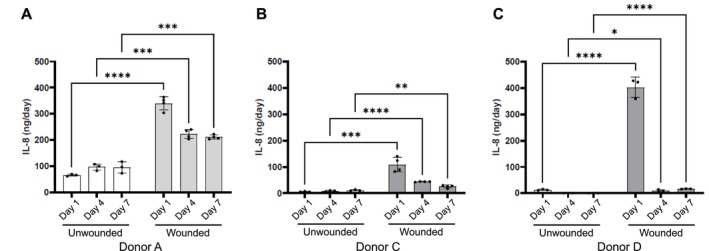 Figure 4
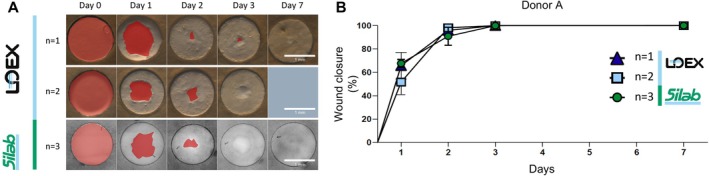 Figure 5
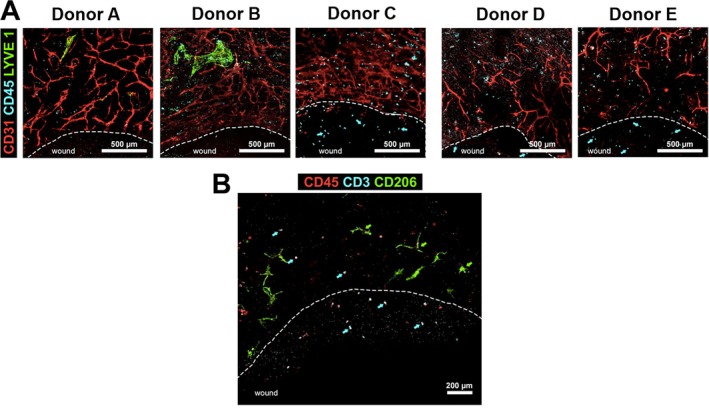 Figure 6
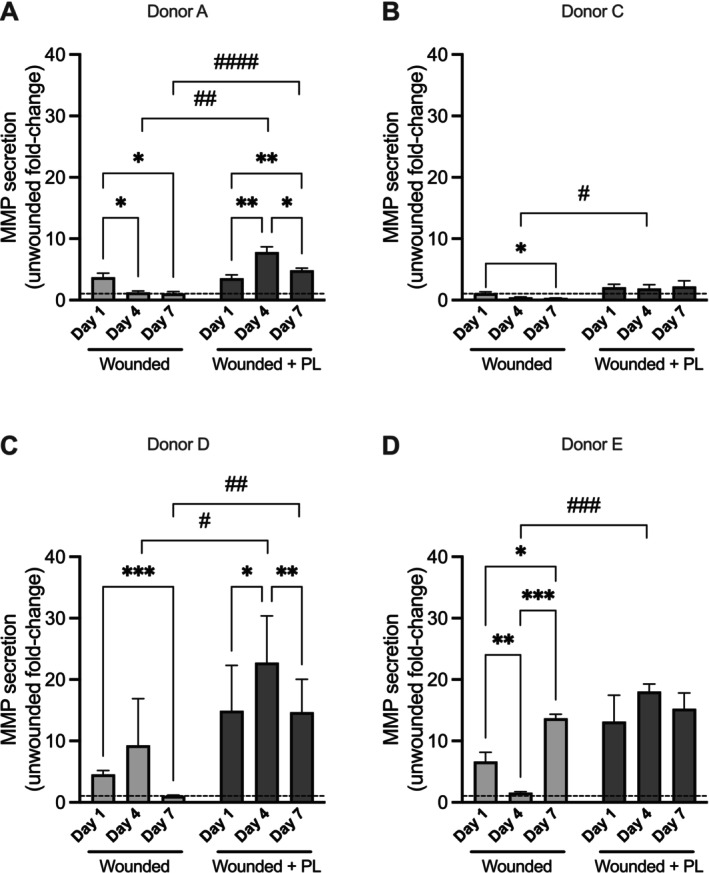 Figure 7
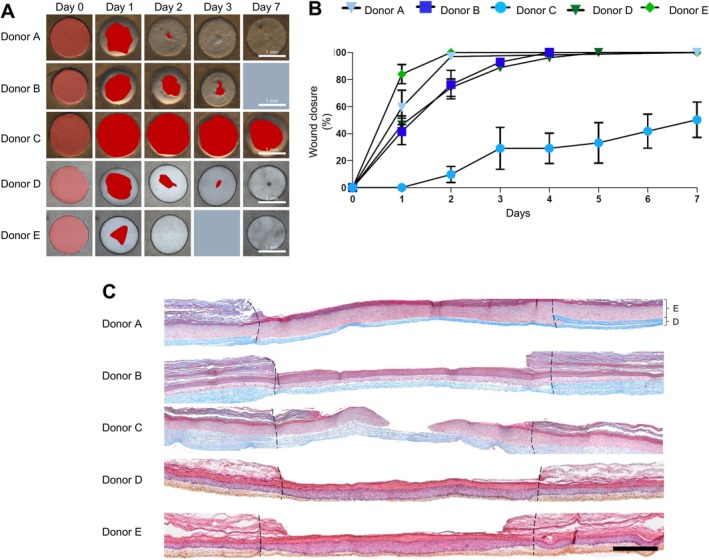 Figure 8
Peer Reviews
No public reviews on file for this paper yet. If you reviewed it on a platform where reviews are public (OpenReview, ICLR, NeurIPS, ICML), you can paste yours below so the community can read it here.
Videos
No videos yet. Explain this paper in a talk, walkthrough, or lecture? Add one.
Taxonomy
TopicsWound Healing and Treatments · Tissue Engineering and Regenerative Medicine · 3D Printing in Biomedical Research