Rapunzel Syndrome Complicated by Cholecystoduodenal Fistula Secondary to Biliary Compression: A Case Report of a Patient With Cerebral Palsy
José Serafio-Gómez, Ian-Arfaxad Saldaña-Badillo, Dana Karina Mauleon-Tiscareño, Juan Pablo Pérez Bucio, Angela Márquez Romero, Yozgart Aldahir Hornedo García

TL;DR
A rare case of Rapunzel syndrome with a cholecystoduodenal fistula in a patient with cerebral palsy is reported, highlighting complex surgical challenges and outcomes.
Contribution
This case report presents a unique combination of Rapunzel syndrome and a cholecystoduodenal fistula in a patient with cerebral palsy.
Findings
A gastric and duodenal trichobezoar was identified along with a vesicoduodenal fistula.
The patient's condition mimicked type V Mirizzi syndrome due to gallbladder compression.
A Roux-en-Y hepaticojejunostomy was performed, but the patient died from nosocomial pneumonia.
Abstract
Rapunzel syndrome is a rare form of gastric trichobezoar that extends into the small intestine, leading to intestinal obstruction. Biliary-enteric fistulas are abnormal communications between the biliary system and the gastrointestinal tract, generally occurring spontaneously. We report the case of a 26-year-old female patient with a history of cerebral palsy who presented to the emergency department with an acute abdomen. Computed tomography revealed a mass occupying the stomach and intestine. A laparotomy was performed, identifying a gastric and duodenal trichobezoar complicated by an acute perforated gastric ulcer, in addition to a vesicoduodenal fistula secondary to extrinsic compression of the gallbladder. This fistula clinically mimicked a type V Mirizzi syndrome. A Roux-en-Y hepaticojejunostomy was carried out. The patient died from nosocomial pneumonia 30 days later. This case…
Genes, proteins, chemicals, diseases, species, mutations and cell lines named across the full text — each resolved to its canonical identifier and authoritative record.
Click any figure to enlarge with its caption.
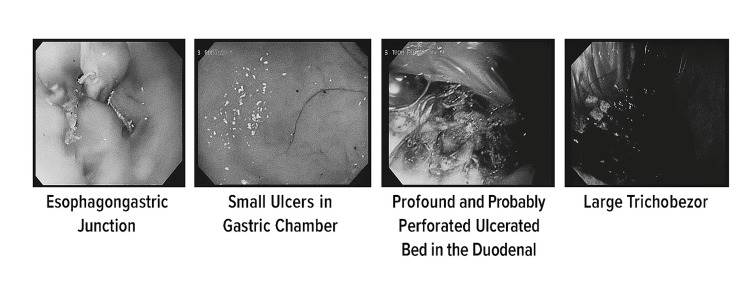 Figure 1
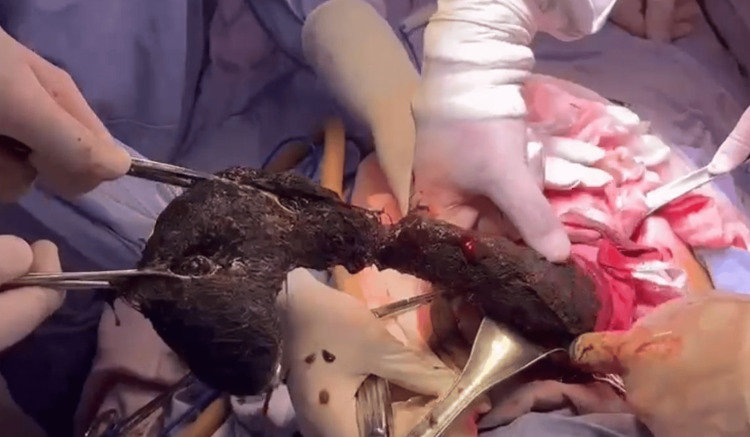 Figure 2
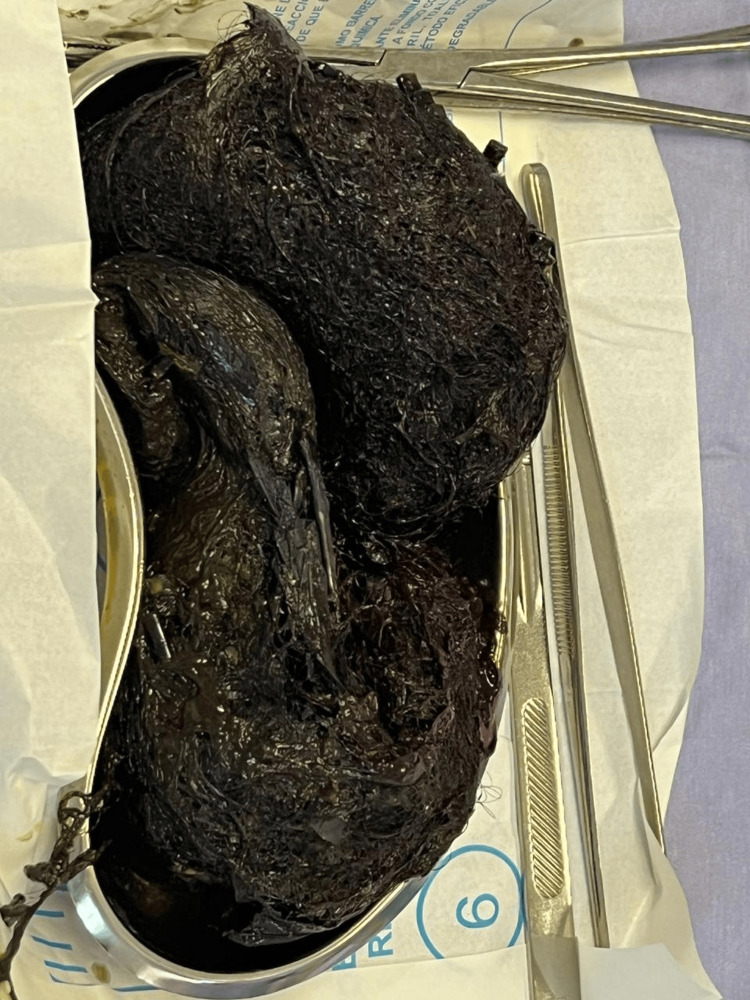 Figure 3
Peer Reviews
No public reviews on file for this paper yet. If you reviewed it on a platform where reviews are public (OpenReview, ICLR, NeurIPS, ICML), you can paste yours below so the community can read it here.
Videos
No videos yet. Explain this paper in a talk, walkthrough, or lecture? Add one.
Taxonomy
TopicsIntestinal and Peritoneal Adhesions · Biliary and Gastrointestinal Fistulas · Omental and Epiploic Conditions