Synthesis and Characterization of Lignin‐Based Polycarbonate Polyols for Flexible Polyurethane Foam Application
Enoch Kofi Acquah, Daniel Holmes, Kevin Dunne, Anibal Bher, Saeid Ansari Sadrabadi, Amin Joodaky, Rafael Auras, Mojgan Nejad

TL;DR
This paper presents a new method to create sustainable, high-performance polyurethane foams using lignin-based polyols as a renewable alternative to petroleum-based materials.
Contribution
A novel synthesis method for lignin-based polycarbonate polyols is developed for use in flexible polyurethane foams.
Findings
Lignin polyols showed hydroxyl values of 111–179 mg KOH/g and viscosities of 12,000–26,000 mPa·s.
Foams with up to 60% lignin polyol replacement showed better mechanical and thermal properties than petroleum-based foams.
The developed foams exhibited partial biodegradability and improved shock absorption.
Abstract
With the rising demand for sustainable materials, lignin‐based polyols offer a promising renewable alternative to traditional petroleum‐based polyols in flexible polyurethane (PU) foams. This study focuses on synthesizing novel high‐performance lignin‐based polycarbonate polyols via transesterification with dimethyl carbonate. The resulting lignin polyols exhibited hydroxyl values ranging from 111 to 179 mg KOH/g and viscosities of 12,000–26,000 mPa·s, thereby enhancing the suitability of lignin for flexible foam formulation. An in‐depth structural analysis using proton, carbon, phosphorus, and 2D nuclear magnetic resonance confirmed the grafting of long polyether chains and the introduction of multiple carbonate linkages onto the lignin structure. Foams were formulated by replacing up to 60% of petroleum‐based polyols with either synthesized lignin polyol or a mixture of lignin and soy…
Genes, proteins, chemicals, diseases, species, mutations and cell lines named across the full text — each resolved to its canonical identifier and authoritative record.
Click any figure to enlarge with its caption.
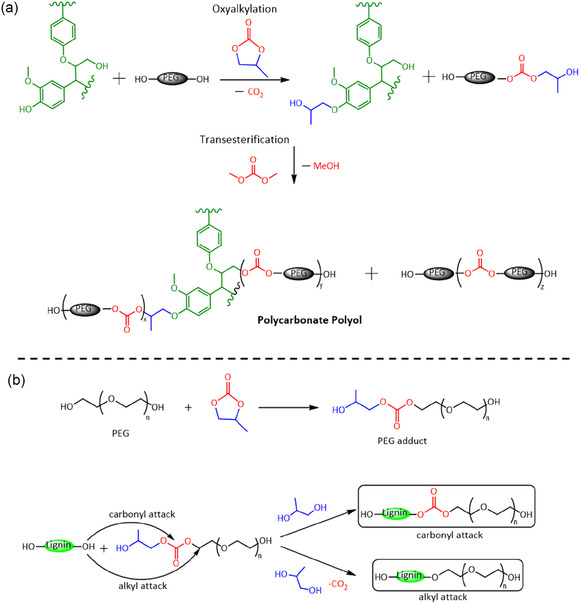 Figure 1
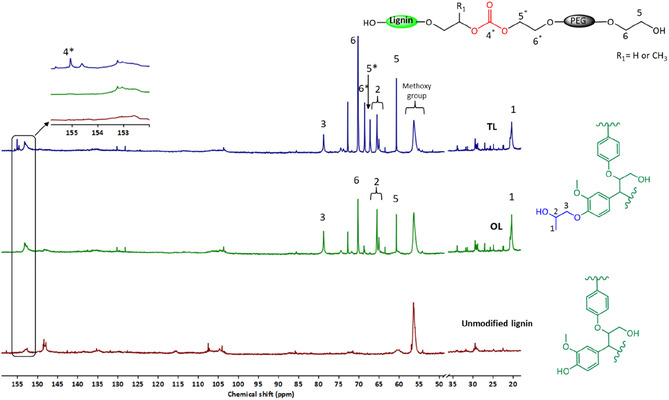 Figure 2
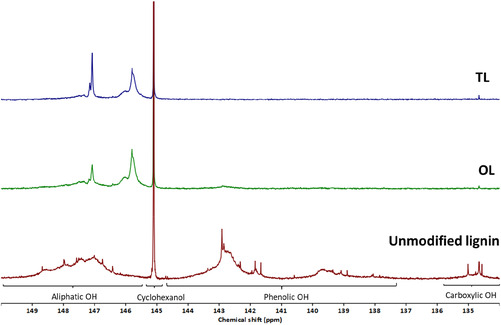 Figure 3
 Figure 4
 Figure 5
 Figure 6
 Figure 7
 Figure 8
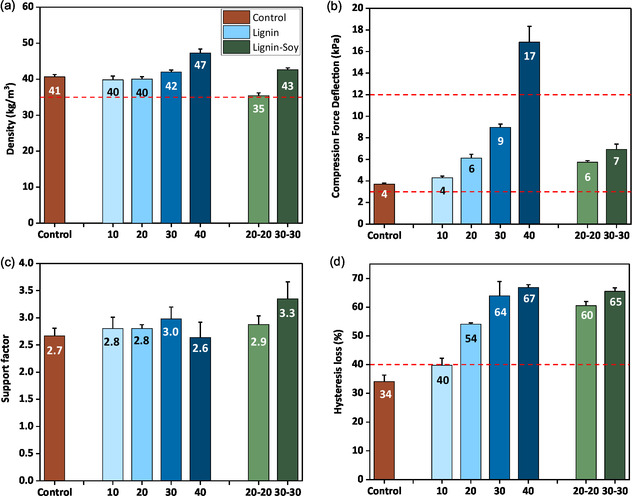 Figure 9
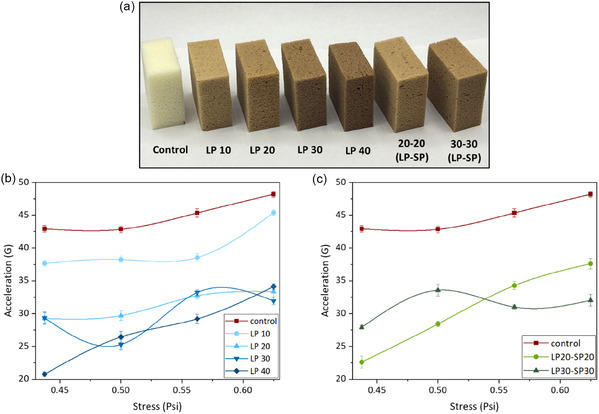 Figure 10
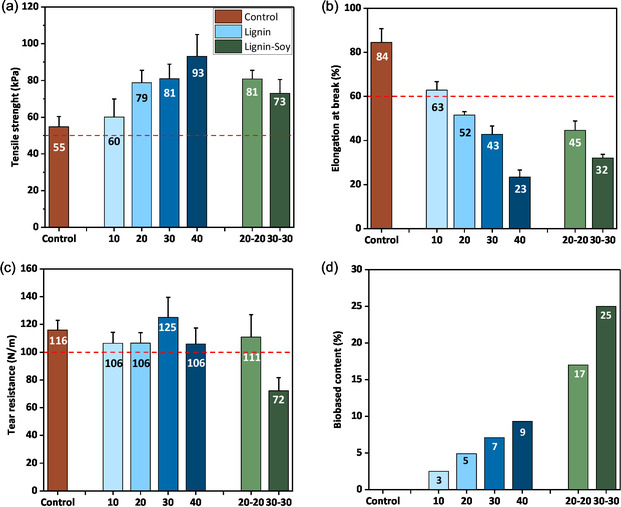 Figure 11
Peer Reviews
No public reviews on file for this paper yet. If you reviewed it on a platform where reviews are public (OpenReview, ICLR, NeurIPS, ICML), you can paste yours below so the community can read it here.
Videos
No videos yet. Explain this paper in a talk, walkthrough, or lecture? Add one.
Taxonomy
TopicsLignin and Wood Chemistry · Polymer composites and self-healing · Carbon dioxide utilization in catalysis