Sleeping giants: temporal, seasonal, and spatial variations in the 24-h activity budget of Hippopotamus amphibius
Victoria L Inman, Keith E A Leggett

TL;DR
This study reveals new insights into hippo behavior, showing they are active both day and night, challenging previous assumptions about their habits.
Contribution
The first 24-h observational activity budget of hippos and the first behavioral data from Botswana.
Findings
Hippos show a clear circadian rhythm with activity peaks at sunrise, sunset, midday, and midnight.
Hippos fed during only a quarter of the night and were active for a similar proportion of the day.
Aquatic vegetation plays a more significant role in their diet than previously assumed.
Abstract
Understanding animal activity budgets is essential for assessing habitat use and ecological roles, with important implications for conservation. Despite their ecological significance, the behavior of Common Hippopotamus (Hippopotamus amphibius) remains poorly studied, particularly at night. This study aimed to (i) quantify the 24-h activity budget of hippos; (ii) evaluate how behavior changed over the day and varied seasonally; (iii) examine how behavior varied between different areas; and (iv) between age classes. This study presents the first 24-h observational activity budget of hippos and the first behavioral data from Botswana. Hippo behavior varied significantly by time of day, season, study area, and age class. Hippos exhibited a well-defined circadian rhythm, with activity peaking and dipping at sunrise, sunset, around midday, and midnight. Contrary to the persistent assumption…
Genes, proteins, chemicals, diseases, species, mutations and cell lines named across the full text — each resolved to its canonical identifier and authoritative record.
Click any figure to enlarge with its caption.
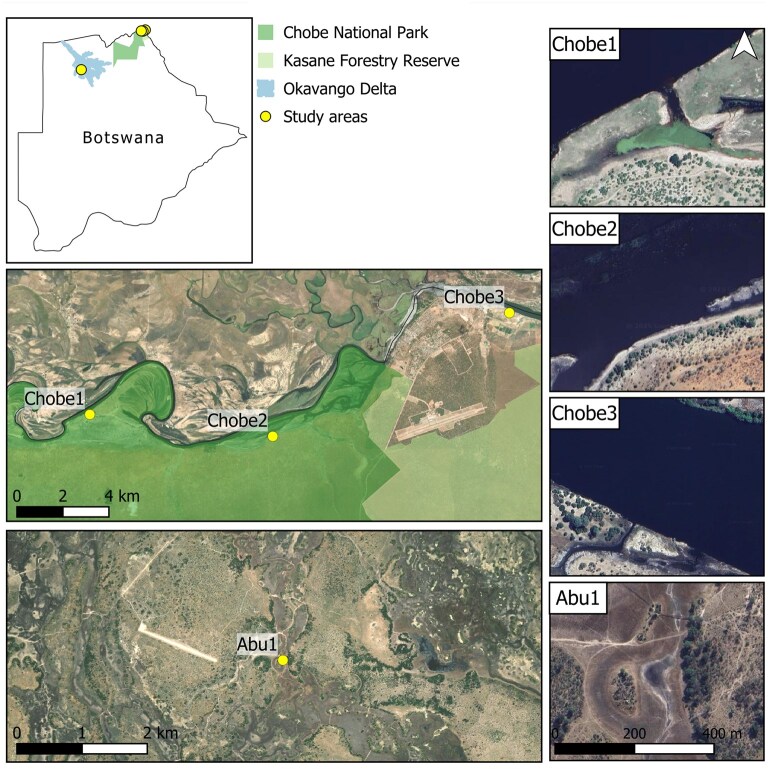 Figure 1
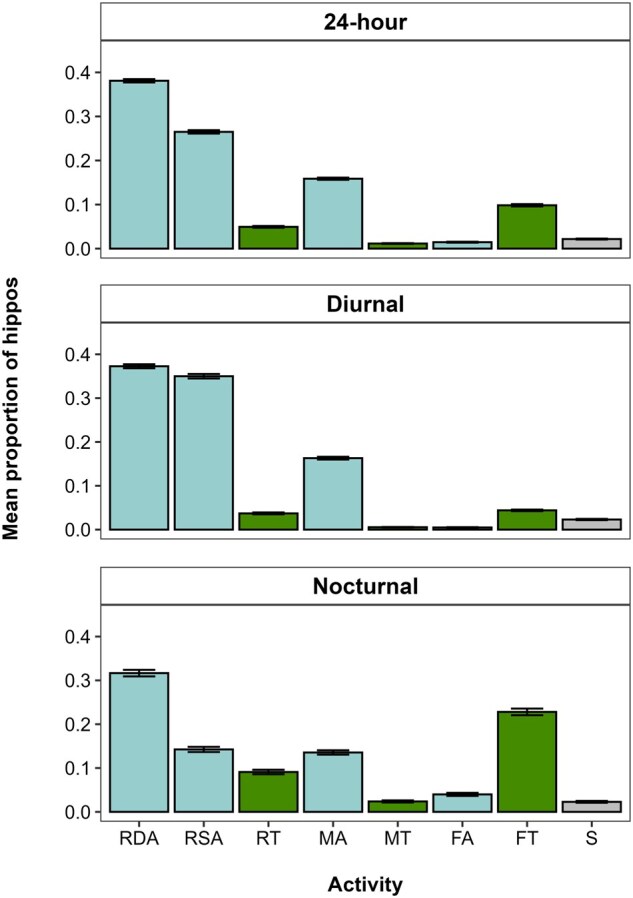 Figure 2
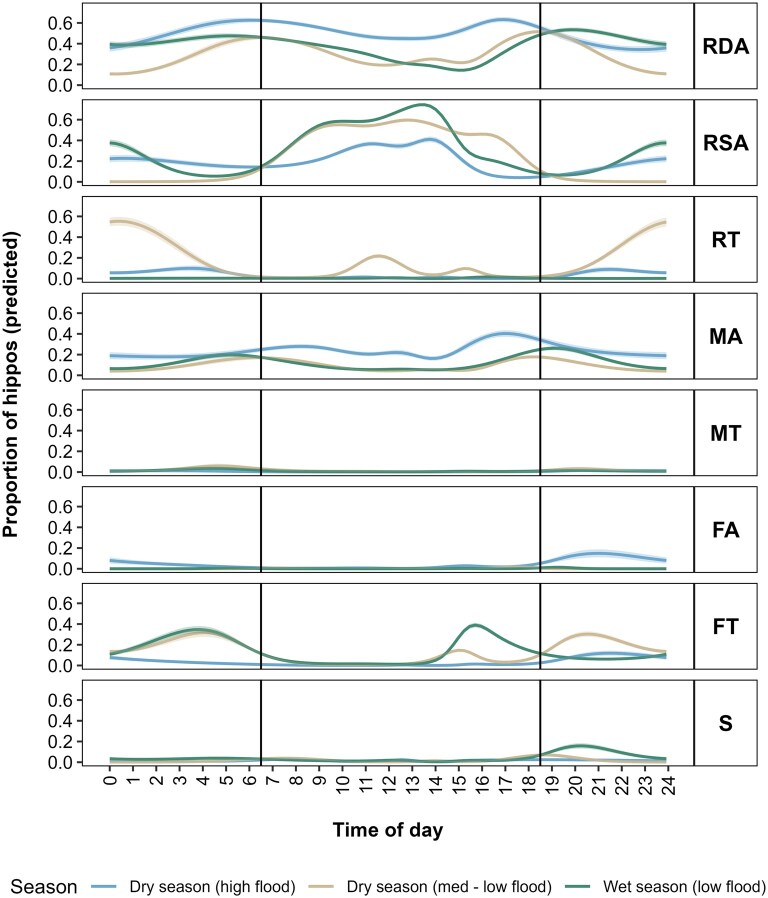 Figure 3
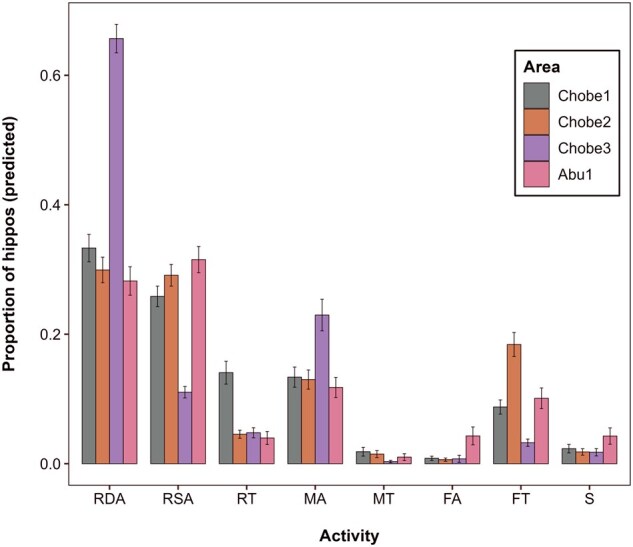 Figure 4
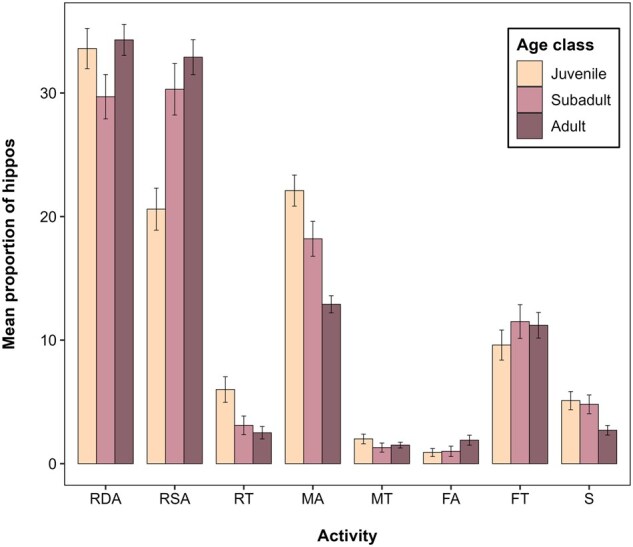 Figure 5
Peer Reviews
No public reviews on file for this paper yet. If you reviewed it on a platform where reviews are public (OpenReview, ICLR, NeurIPS, ICML), you can paste yours below so the community can read it here.
Videos
No videos yet. Explain this paper in a talk, walkthrough, or lecture? Add one.
Taxonomy
TopicsFish Ecology and Management Studies · Avian ecology and behavior · Bat Biology and Ecology Studies