Continuous monitoring of radiation emissions from 131I thyroid cancer ablation subjects: development of a novel radiation detector system and measurement of effective retention half-time in 250 subjects
Dale L Bailey, Afsaneh Lahooti, Kathy P Willowson, Brian H C Shin, Carl Muñoz-Ferrada

TL;DR
A new radiation detector system was developed to monitor real-time radiation from thyroid cancer patients treated with 131I, revealing how quickly the radioiodine is retained in the body.
Contribution
A novel ceiling-mounted radiation detector system for real-time monitoring of 131I retention in thyroid cancer patients.
Findings
The average effective retention half-time of 131I was 11.9±3.2 hours in 250 subjects.
Younger patients (<55 years) had a shorter retention half-time (11.5 hrs) compared to older patients (14.4 hrs).
The system effectively characterized retention profiles despite patient movement in the isolation room.
Abstract
To report methodology that has been developed to provide real-time monitoring of radiation emissions from subjects treated with radionuclide therapies and summarise the radioiodine retention profiles of 250 subjects treated for differentiated thyroid cancer with 131I. A small ceiling-mounted radiation detector for continuously monitoring the exposure rate in the radiation isolation rooms has been developed. Measurements were made every minute after administration of 1-6 GBq of 131I over the one to three days typical inpatient admission. The data are saved in text format and have been fitted with a mono-exponential curve to measure retention half time. The average effective retention half time (t½ (Eff)) for all subjects was 11.9±3.2 hrs (range: 5.0–23.1 hrs; n=250). Over 90% of the subjects had their serum TSH levels increased by injection of recombinant human TSH prior to treatment.…
Genes, proteins, chemicals, diseases, species, mutations and cell lines named across the full text — each resolved to its canonical identifier and authoritative record.
Click any figure to enlarge with its caption.
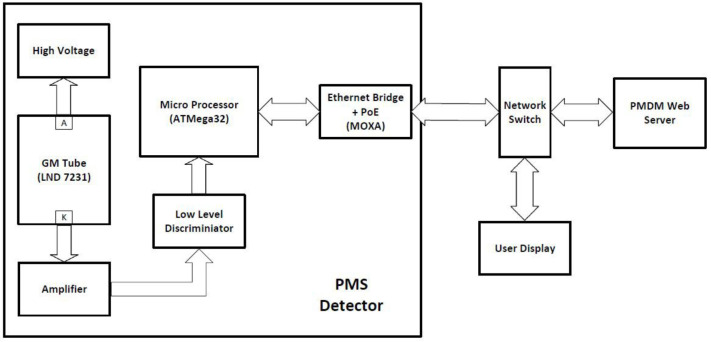 Figure 1
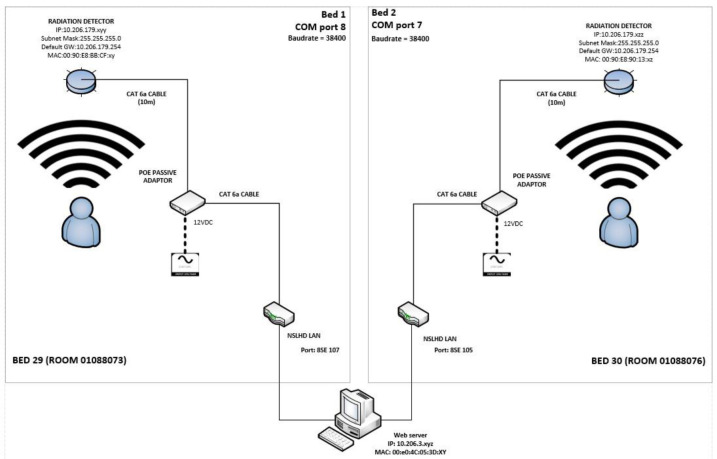 Figure 2
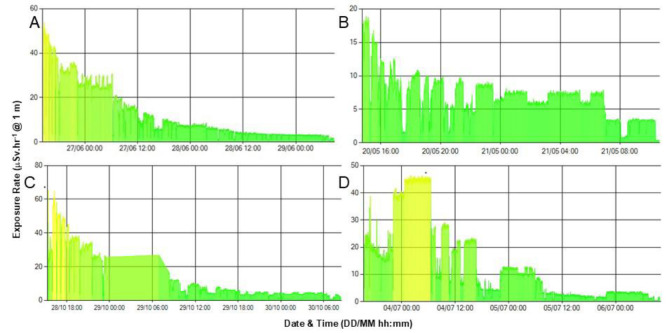 Figure 3
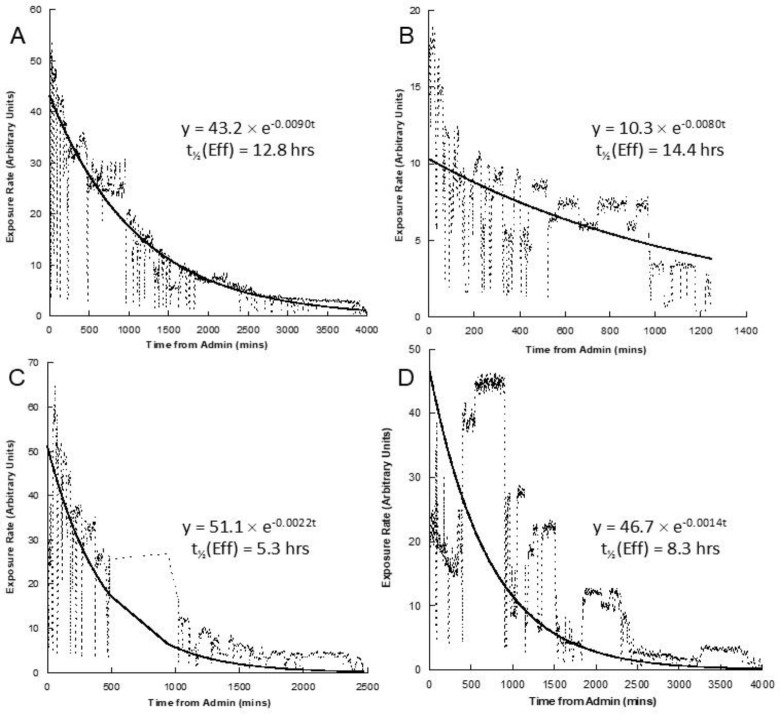 Figure 4
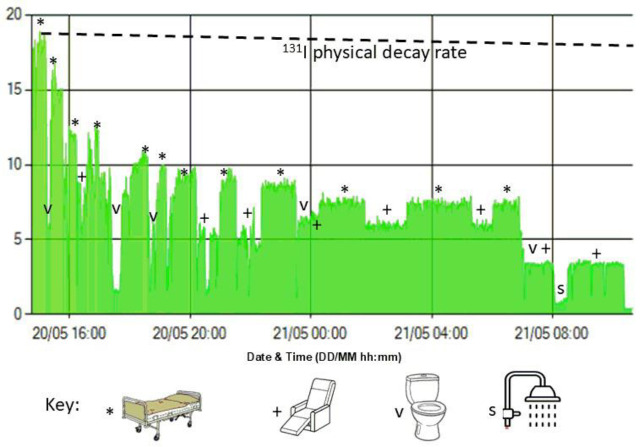 Figure 5
Peer Reviews
No public reviews on file for this paper yet. If you reviewed it on a platform where reviews are public (OpenReview, ICLR, NeurIPS, ICML), you can paste yours below so the community can read it here.
Videos
No videos yet. Explain this paper in a talk, walkthrough, or lecture? Add one.
Taxonomy
TopicsThyroid Cancer Diagnosis and Treatment · Radiation Dose and Imaging · Radiopharmaceutical Chemistry and Applications