Prevalence of Intestinal Parasitic Infections and Associated Factors Among Rural Ghanaian School Children: A Cross‐Sectional Study in Tokuroano, Krachi East Municipality
Christopher Yaw Dumevi, Prince Wise Amekudi, Nana Aba Setorwu Eyeson, Hugette Naa Ayele Aryee, Joyce Junior Asiamah, Ezekiel Kofi Vicar, James‐Paul Kretchy, Simon Sovoe, Saviour Kweku Adjenti, Nicholas T. K. D. Dayie, George Boateng Kyei, Patience B. Tetteh‐Quarcoo, Irene Ayi

TL;DR
Over 60% of rural Ghanaian schoolchildren had intestinal parasites, with poor sanitation and hygiene as main risk factors, highlighting the need for better health programs.
Contribution
The study identifies specific parasitic infections and their associated risk factors in rural Ghanaian children, emphasizing the need for integrated deworming and sanitation initiatives.
Findings
63.23% of schoolchildren had intestinal parasitic infections, with Ascaris lumbricoides and Hookworm being most common.
Polyparasitism was prevalent, with protozoan–helminth and helminth–helminth co-infections observed.
Home-cooked meals and health awareness reduced infection odds, while certain sanitation practices increased Giardia risk.
Abstract
Intestinal parasitic infections (IPIs) pose a significant public health burden in developing regions, disproportionately affecting children. This study investigated the prevalence, determinants, and co‐occurrence patterns of IPIs among schoolchildren in rural Krachi East Municipality, Oti Region, Ghana. A cross‐sectional study (March–August 2024) enrolled 204 schoolchildren (aged 4–15 years) via simple random sampling. Sociodemographic and risk factor data were collected, using standardized questionnaires. Single fresh stool specimens were microscopically examined using direct wet mount, sedimentation, and Kato–Katz techniques. Data were analyzed with STATA version 18. Overall IPI prevalence was 63.23% (n = 129), with monoparasitism at 33.3% (n = 68). Key parasites included Ascaris lumbricoides (57.4%), Hookworm (38.7%), and Giardia duodenalis (21.6%), Entamoeba dispar/histolytica…
Genes, proteins, chemicals, diseases, species, mutations and cell lines named across the full text — each resolved to its canonical identifier and authoritative record.
Click any figure to enlarge with its caption.
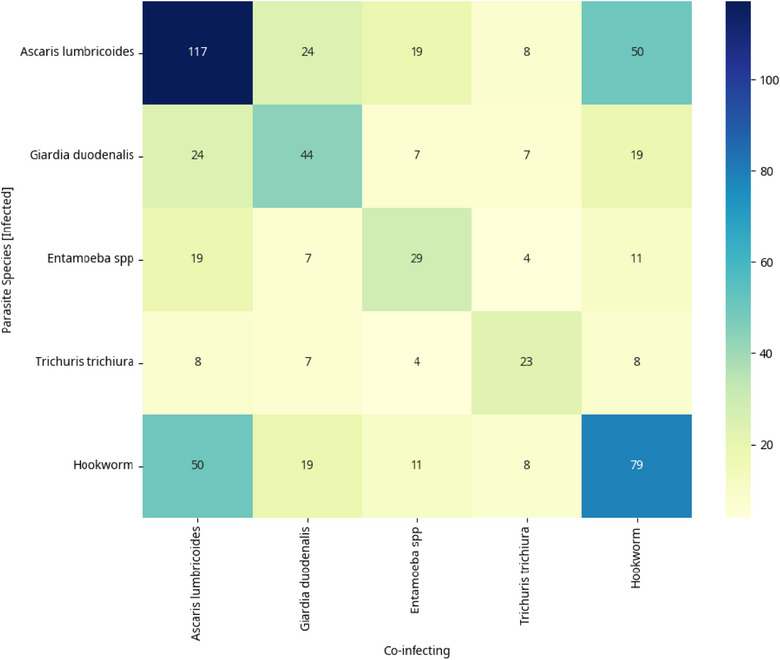 Figure 1
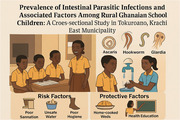 Figure 2
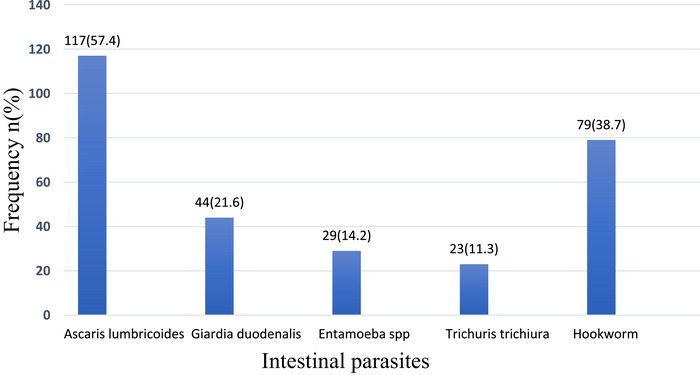 Figure 3
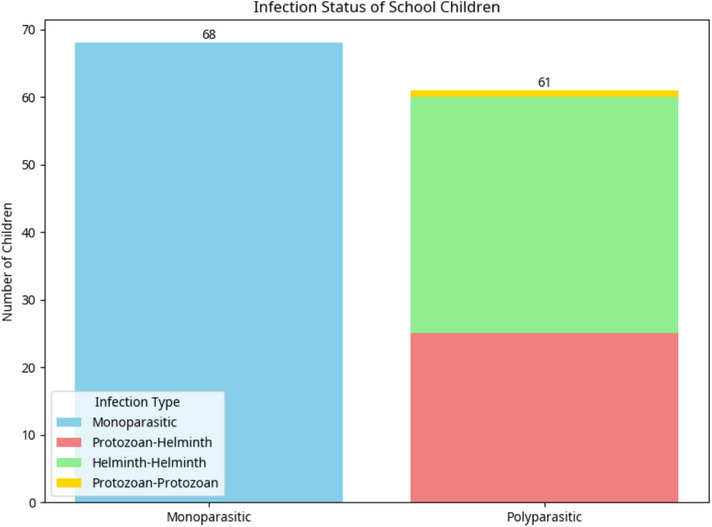 Figure 4
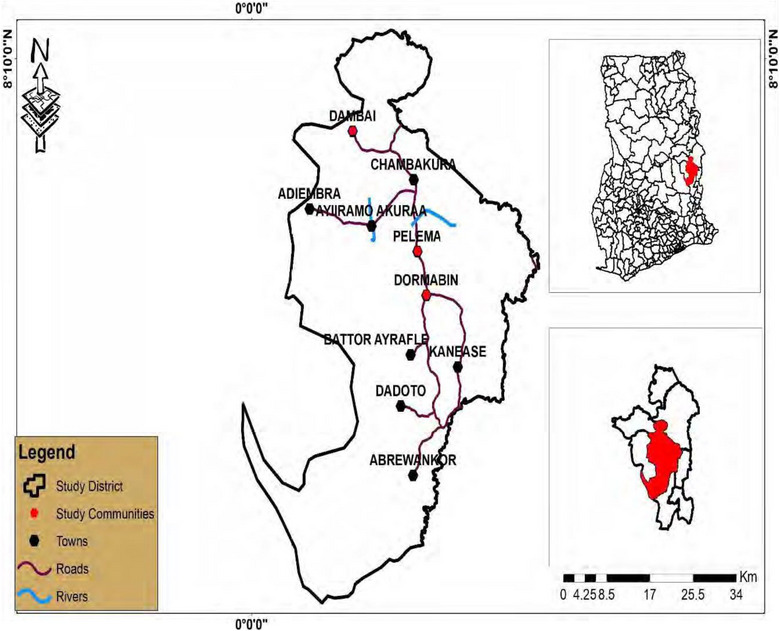 Figure 5
Peer Reviews
No public reviews on file for this paper yet. If you reviewed it on a platform where reviews are public (OpenReview, ICLR, NeurIPS, ICML), you can paste yours below so the community can read it here.
Videos
No videos yet. Explain this paper in a talk, walkthrough, or lecture? Add one.
Taxonomy
TopicsParasites and Host Interactions · Amoebic Infections and Treatments · Parasitic Infections and Diagnostics