Ascending aortic length across a large population presenting to the emergency room, a retrospective cross-sectional study
Thomas Saliba, Gabriella Giandotti Gomar, Olivier Cappeliez, Yasser Alemán-Gómez, Guillaume Fahrni, David Rotzinger

TL;DR
This study finds that ascending aortic length is significantly longer in patients with aortic dissection and provides a risk prediction model based on this measurement.
Contribution
The study establishes normative aortic length values by age and sex and develops a dissection risk prediction tool using aortic length.
Findings
Ascending aortic length was significantly longer in patients with type A dissection compared to those without.
Aortic length was the strongest independent predictor of dissection risk (OR = 1.13).
A logistic model using aortic length achieved high discrimination (AUC = 0.871) for dissection risk.
Abstract
Aortic dissection often occurs at diameters below surgical thresholds, underscoring the need for better predictive markers. Ascending aortic length has emerged as a potential morphologic risk factor, but normal population data are limited. This study aimed to establish normative aortic length values by age and sex and develop a tool to predict dissection risk. We retrospectively analyzed 1030 (986 without and 44 with type A dissection) emergency room patients (from 1,445 screened) who underwent ECG-gated thoracic CT angiography between 2019 and 2025, excluding those with prior aortic surgery or disease. Ascending aortic length, from the sinotubular junction to the brachiocephalic trunk, was measured using semi-automated centerline tools. Logistic and LASSO regression models estimated type A dissection probability based on aortic length, age, height, and sex. Mean ascending aortic…
Genes, proteins, chemicals, diseases, species, mutations and cell lines named across the full text — each resolved to its canonical identifier and authoritative record.
Click any figure to enlarge with its caption.
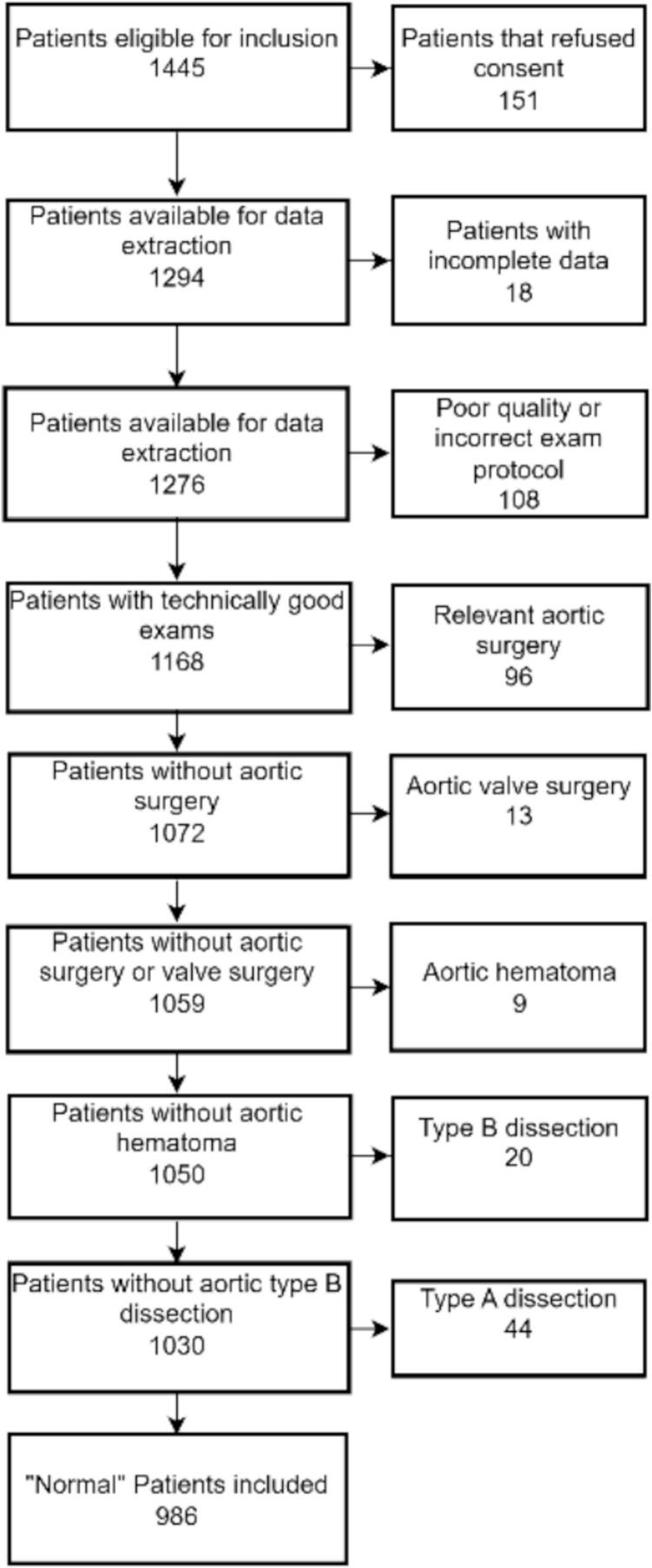 Figure 1
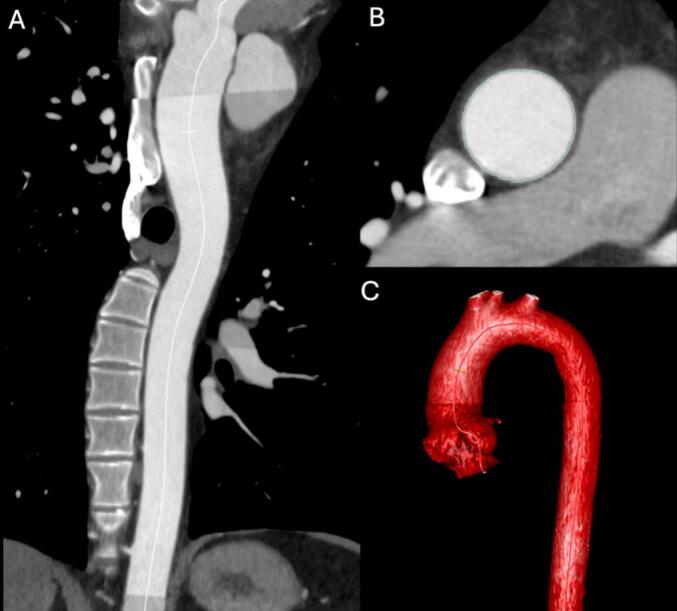 Figure 2
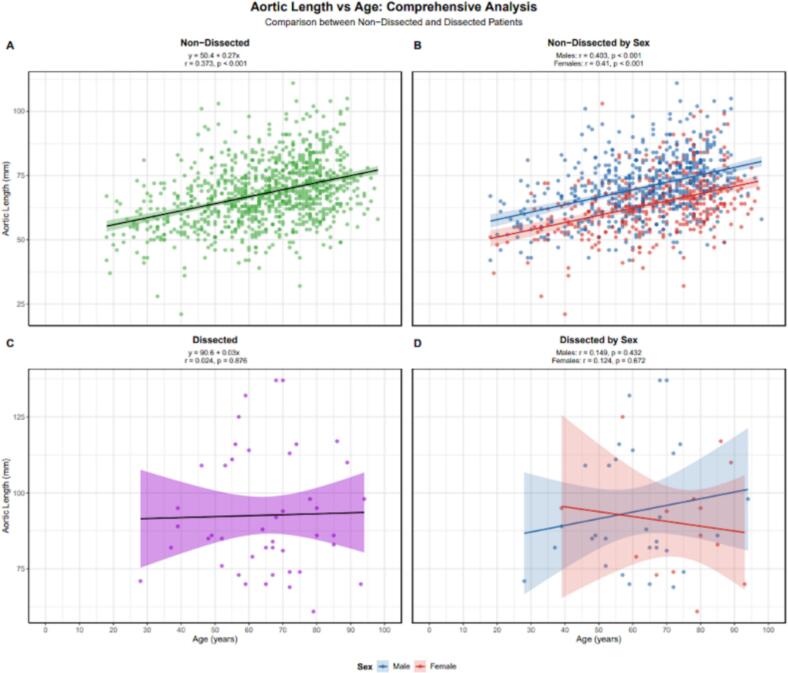 Figure 3
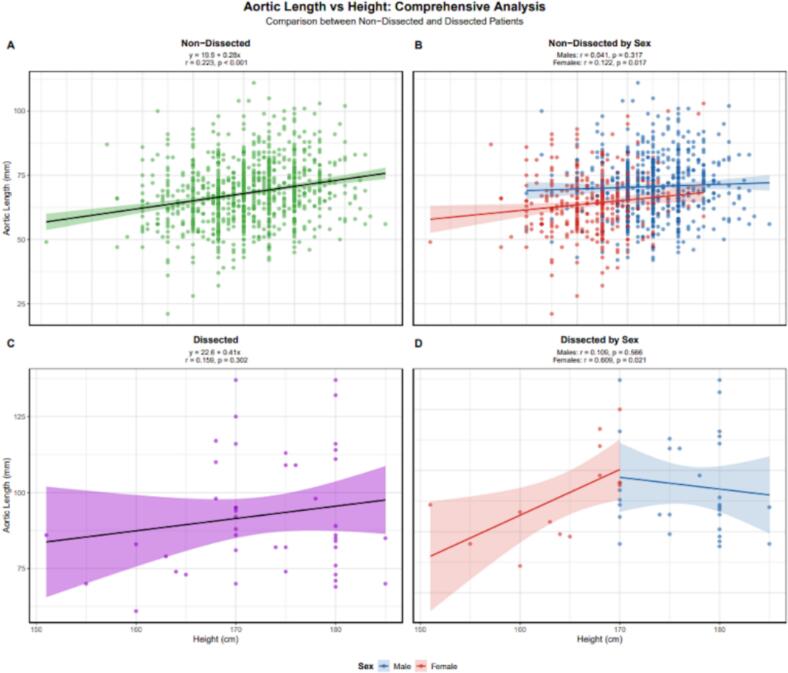 Figure 4
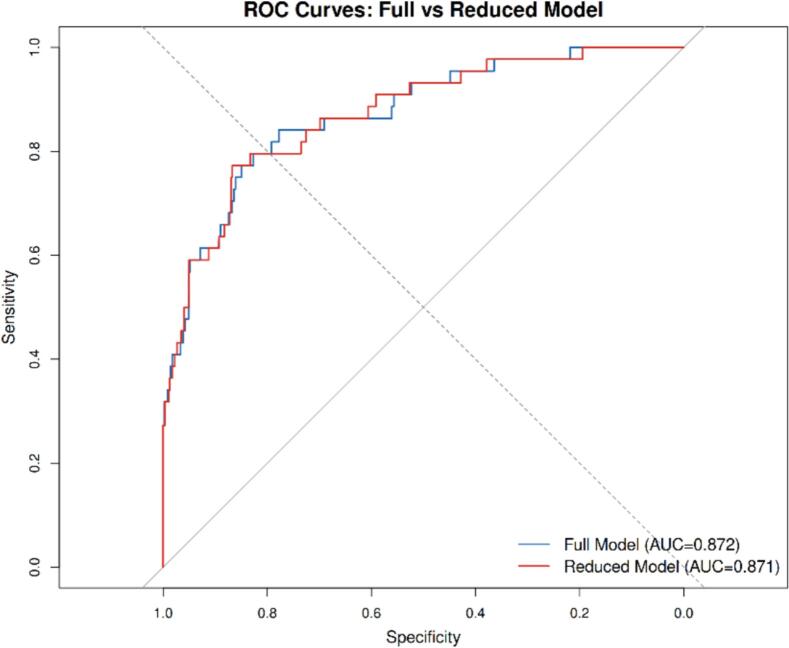 Figure 5
Peer Reviews
No public reviews on file for this paper yet. If you reviewed it on a platform where reviews are public (OpenReview, ICLR, NeurIPS, ICML), you can paste yours below so the community can read it here.
Videos
No videos yet. Explain this paper in a talk, walkthrough, or lecture? Add one.
Taxonomy
TopicsAortic Disease and Treatment Approaches · Aortic aneurysm repair treatments · Cardiovascular Health and Disease Prevention