Cement Remnants Thickness After Polishing With Tungsten, Diamond, and Arkansas Bur Using Composite Customized Lingual Brackets
Javier Flores‐Fraile, Alba Belanche Monterde, Francesca Gorassini, Álvaro Zubizarreta‐Macho, Artak Heboyan, Cosimo Galletti

TL;DR
This study compares how well different polishing tools remove leftover adhesive from lingual orthodontic brackets, finding that tungsten carbide burs are most effective.
Contribution
The study provides empirical evidence on the effectiveness of different burs for polishing adhesive remnants in lingual orthodontics.
Findings
Tungsten carbide burs removed significantly more adhesive than Arkansas and diamond burs at both low and high speeds.
Digital scans showed statistically significant differences in cement thickness reduction between tungsten carbide and the other bur types.
Arkansas and diamond burs showed similar performance with no significant difference between them.
Abstract
There is no current evidence in the literature that clearly guides clinicians in selecting the most effective polishing protocol in lingual orthodontics. This study aimed to compare the reduction of adhesive remnants after polishing customized lingual composite brackets using tungsten carbide, fine diamond, and Arkansas burs. A total of 504 extracted teeth were included and randomly assigned to three groups according to bur type (n = 168). Brackets were bonded and debonded following a standardized protocol, and digital scans were obtained before and after polishing. Each bur was tested at both low speed (contra‐angle) and high speed (turbine). Tungsten carbide burs produced the greatest reduction in cement thickness under both rotary conditions. At low speed, the mean Pre–Post thickness differences were 0.64 mm (TUN), 0.31 mm (ARK), and 0.37 mm (DIA). At high speed, differences were…
Genes, proteins, chemicals, diseases, species, mutations and cell lines named across the full text — each resolved to its canonical identifier and authoritative record.
Click any figure to enlarge with its caption.
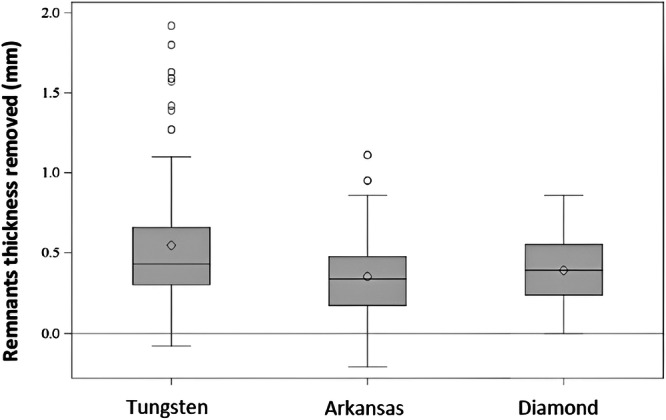 Figure 1
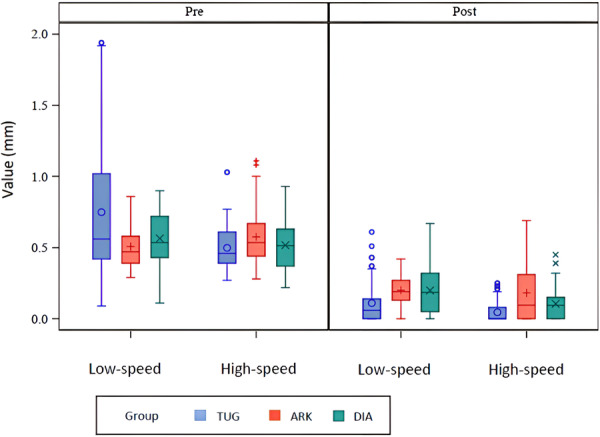 Figure 2
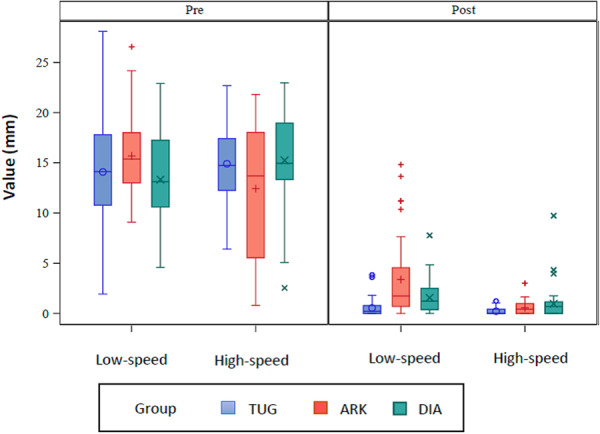 Figure 3
Peer Reviews
No public reviews on file for this paper yet. If you reviewed it on a platform where reviews are public (OpenReview, ICLR, NeurIPS, ICML), you can paste yours below so the community can read it here.
Videos
No videos yet. Explain this paper in a talk, walkthrough, or lecture? Add one.
Taxonomy
TopicsDental materials and restorations · Orthodontics and Dentofacial Orthopedics · Dental Implant Techniques and Outcomes