The nascent RNA labelling compound 5-ethynyl uridine (EU) integrates into DNA in some animals
Malin A. Kjosavik, Katherine L. P. Downham, Ruth Styfhals, Leonie Adelmann, Marios Chatzigeorgiou, Florian Raible, Pawel Burkhardt, Fergal O’Farrell, Patrick R. H. Steinmetz, Kathrin Garschall

TL;DR
This study shows that the RNA labeling compound EU can mistakenly label DNA in some animals, which could affect the accuracy of RNA studies.
Contribution
The study reveals that EU, commonly used to label RNA, integrates into DNA in certain animal species, challenging its specificity.
Findings
EU predominantly labels RNA in HEK293T cells, Drosophila, and Mnemiopsis leidyi.
EU integrates into DNA in Nematostella, Exaiptasia, and Platynereis.
Inhibiting RNR in Nematostella prevents EU incorporation into DNA.
Abstract
The detection of de novo synthesized mRNA transcripts is crucial for understanding the regulation of eukaryotic transcription. Using nucleoside or nucleotide analogues to label nascent RNA is potentially jeopardized by the ubiquitous presence of ribonucleotide reductase enzymes (RNRs) that can convert ribonucleotides into 2’-deoxyribonucleotides, the building blocks of DNA. Despite this challenge, the uridine analogue 5-ethynyl uridine (EU) has been commercialized and routinely used as specific label for nascent RNAs. Here, we employ confocal imaging, flow cytometry and biochemistry methods to study the specificity of EU to label RNA in six different animal species. We demonstrate that EU integrates as expected predominantly into RNA of human embryonic kidney cell line (HEK293T), the Drosophila wing disc and the comb jelly Mnemiopsis leidyi. In contrast, we found that EU predominantly…
Genes, proteins, chemicals, diseases, species, mutations and cell lines named across the full text — each resolved to its canonical identifier and authoritative record.
Click any figure to enlarge with its caption.
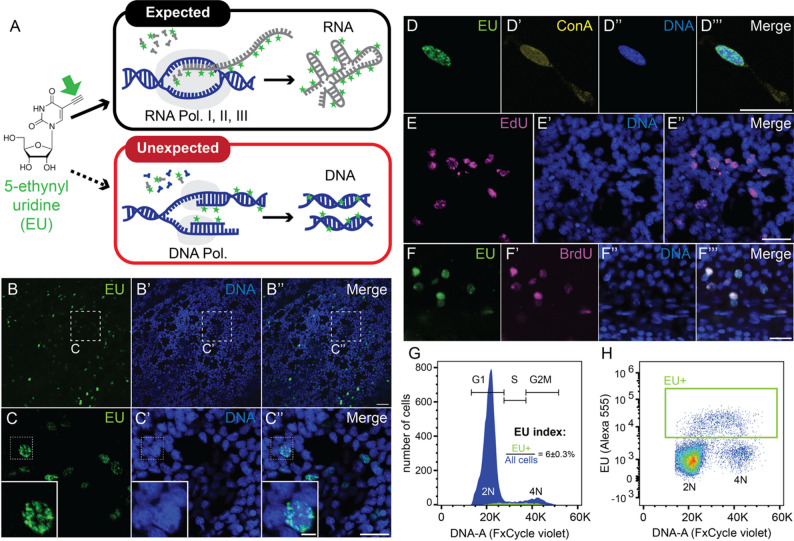 Figure 1
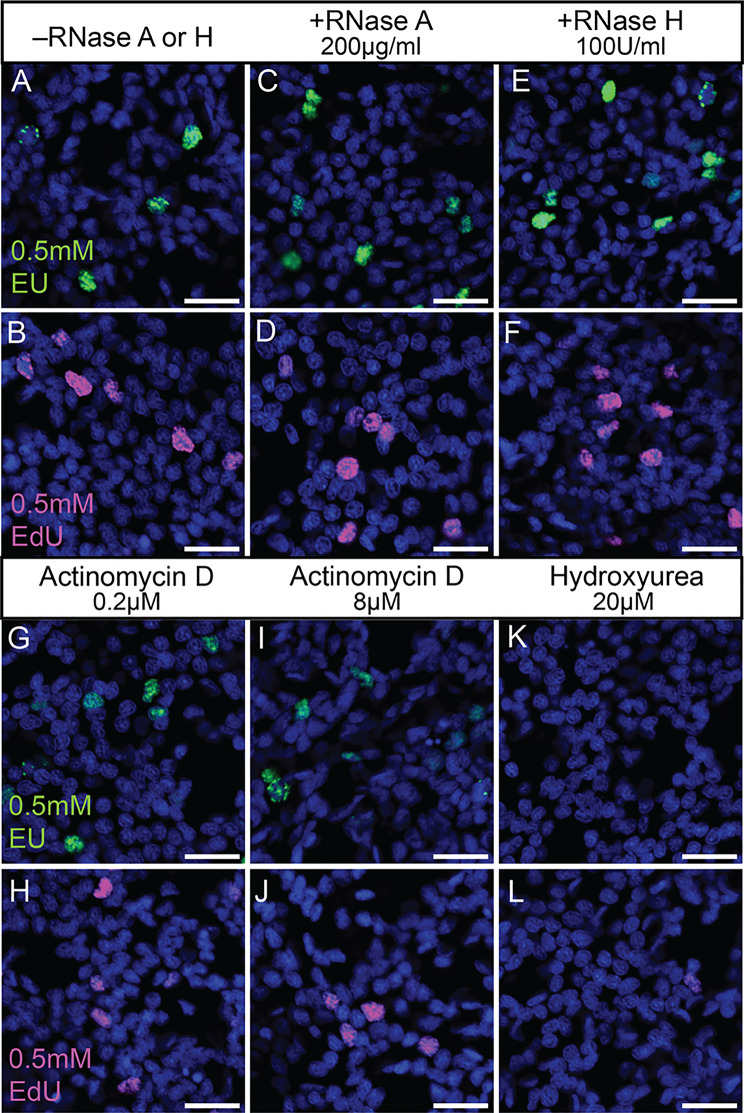 Figure 2
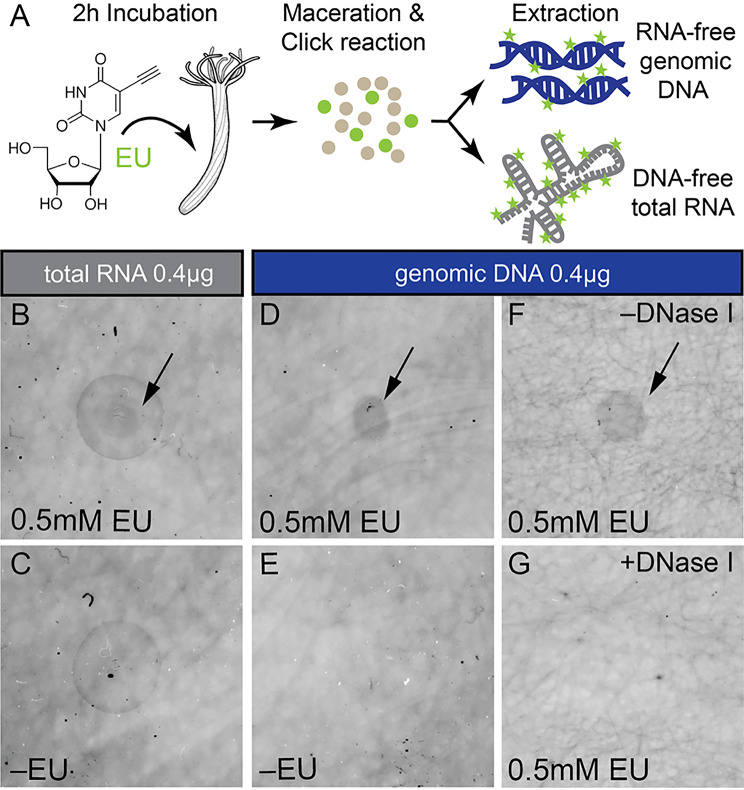 Figure 3
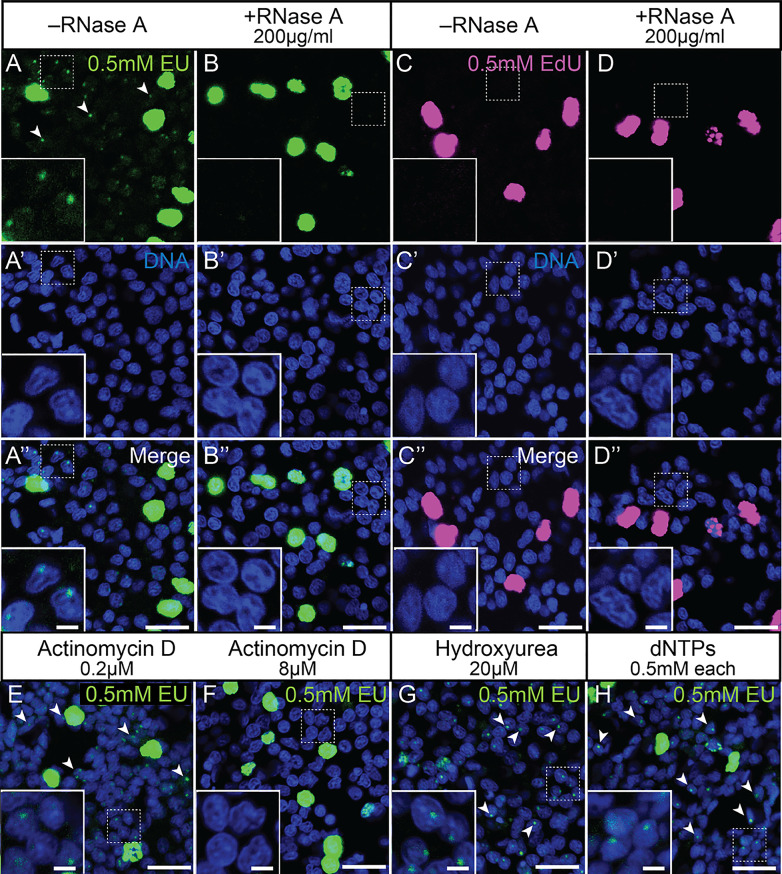 Figure 4
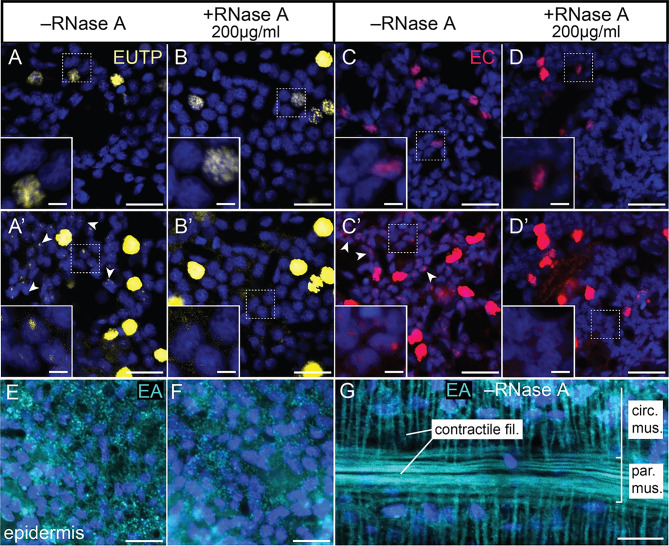 Figure 5
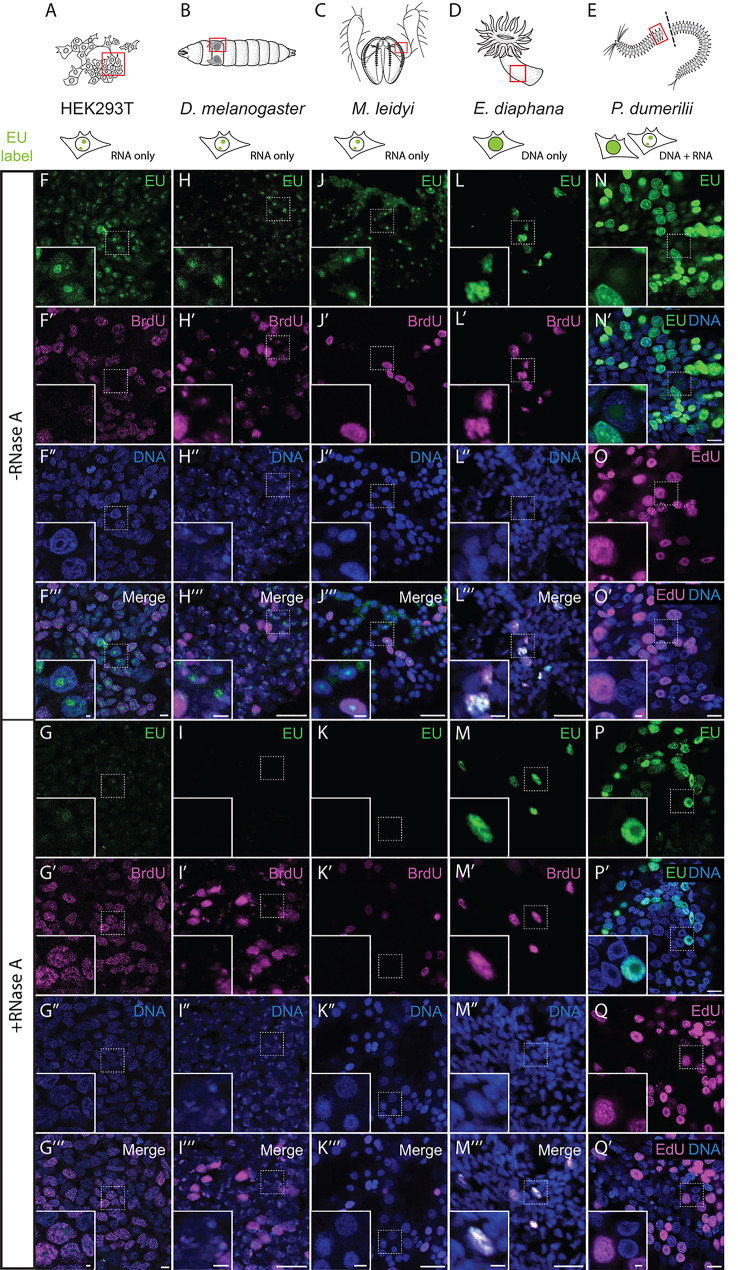 Figure 6
Peer Reviews
No public reviews on file for this paper yet. If you reviewed it on a platform where reviews are public (OpenReview, ICLR, NeurIPS, ICML), you can paste yours below so the community can read it here.
Videos
No videos yet. Explain this paper in a talk, walkthrough, or lecture? Add one.
Taxonomy
TopicsClick Chemistry and Applications · RNA modifications and cancer · DNA and Nucleic Acid Chemistry