Do the redefined EUCAST susceptibility categories warrant adjustment of paediatric antibiotic dosages? Pragmatic physiologically based pharmacokinetic modelling of four commonly used agents
Marika A de Hoop-Sommen, Jolien J M Freriksen, Joyce E M van der Heijden, Jens Jacobs, Yvette Oosterlaan, Chantal M Staring, Shannon L van der Zeeuw, Tjitske M van der Zanden, Jan-Tom van der Bruggen, Marjolijn S W Quaak, Clementien Vermont, Tom F W Wolfs, Roger J M Brüggemann

TL;DR
This study uses pharmacokinetic modeling to determine if pediatric antibiotic doses should be increased based on new EUCAST guidelines.
Contribution
The study evaluates the need for pediatric dose adjustments using PBPK modeling for four antibiotics under new EUCAST susceptibility categories.
Findings
Current pediatric doses result in higher antibiotic exposure than adult EUCAST 'I' doses.
Pediatric PTA varies by drug-microorganism combination and age.
No need to increase recommended pediatric doses for the tested antibiotics.
Abstract
With the redefinition of the EUCAST ‘I’ susceptibility category, from ‘intermediate’ to ‘susceptible, increased exposure’, the focus is now to use higher doses to treat infections of this category. These higher dosages in adults provided by EUCAST are fixed, yet it is uncertain whether a similar increase should apply to paediatric doses. We aimed to compare antibiotic exposure in adults and children, using pragmatic physiologically based pharmacokinetic (PBPK) modelling and simulation to evaluate the need for dose increases in children for the ‘I’ susceptibility category micro-organisms. For amoxicillin, ceftazidime, cefuroxime and ciprofloxacin, we used existing PBPK models and verified them with published adult and paediatric pharmacokinetic data. Then, the adult EUCAST category ‘I’ doses and a wide paediatric dosage range was simulated. We compared AUC values as a surrogate for…
Genes, proteins, chemicals, diseases, species, mutations and cell lines named across the full text — each resolved to its canonical identifier and authoritative record.
Click any figure to enlarge with its caption.
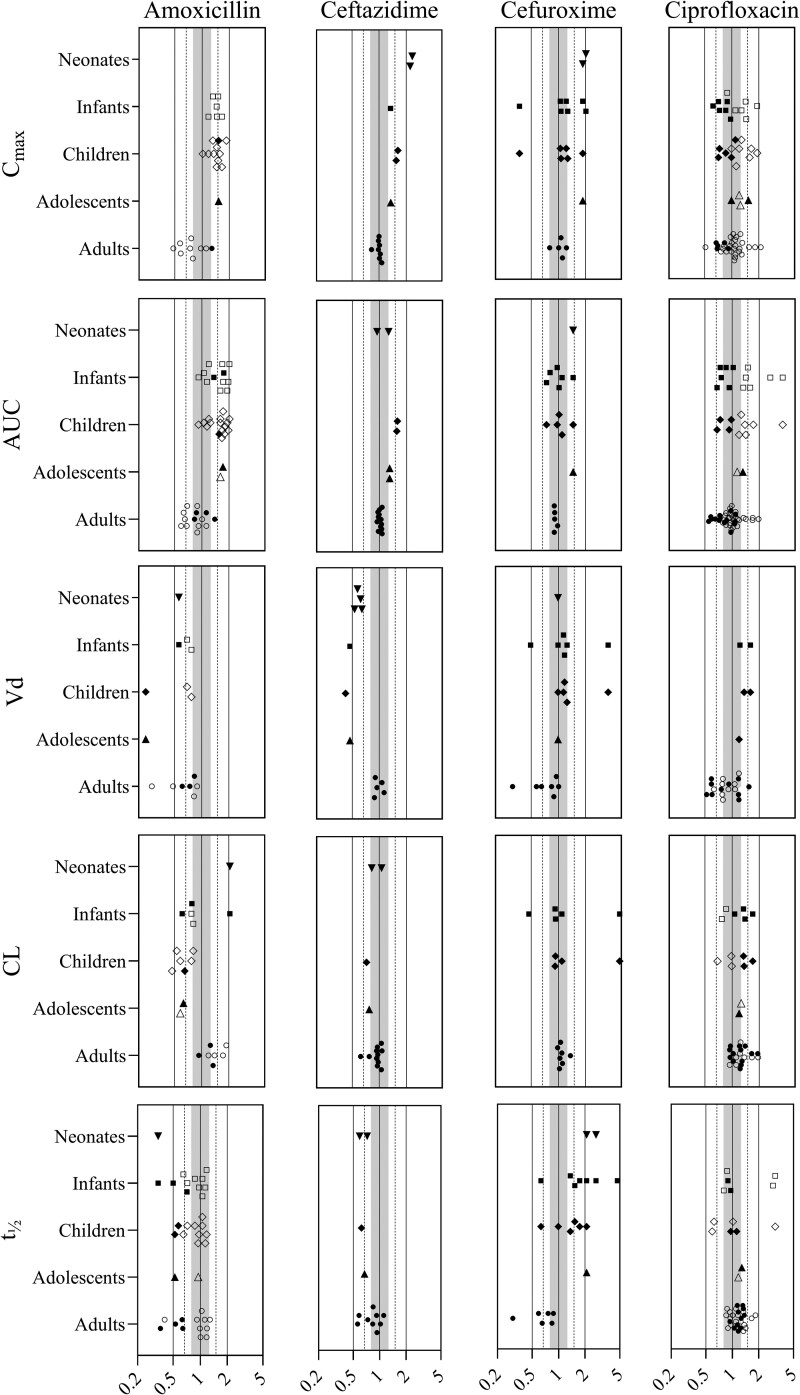 Figure 1
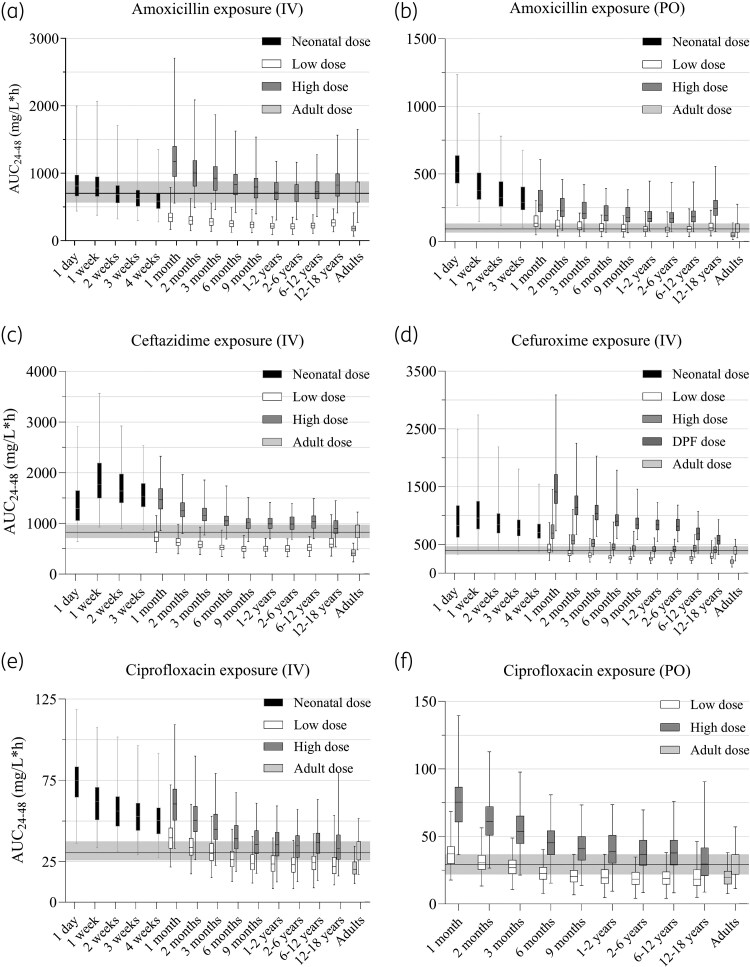 Figure 2
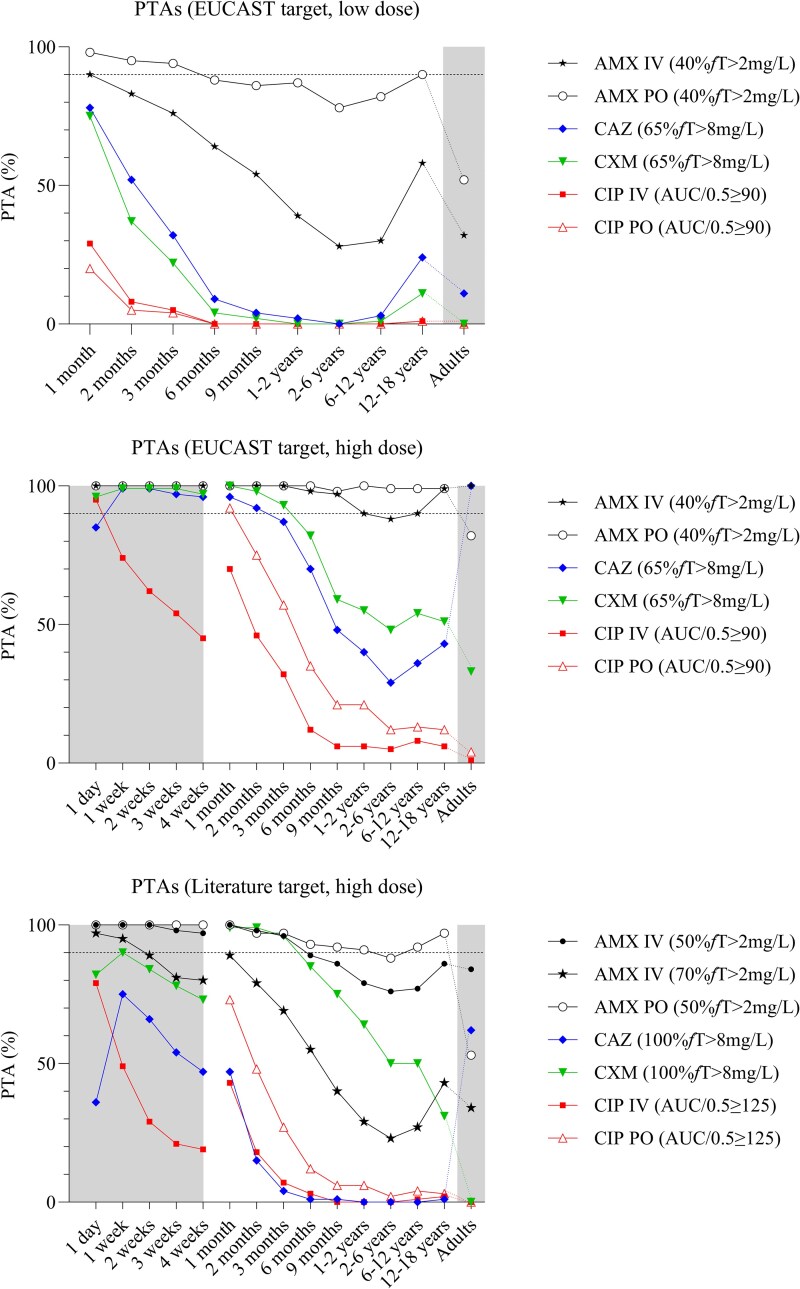 Figure 3
Peer Reviews
No public reviews on file for this paper yet. If you reviewed it on a platform where reviews are public (OpenReview, ICLR, NeurIPS, ICML), you can paste yours below so the community can read it here.
Videos
No videos yet. Explain this paper in a talk, walkthrough, or lecture? Add one.
Taxonomy
TopicsAntibiotics Pharmacokinetics and Efficacy · Antibiotic Use and Resistance · Antibiotic Resistance in Bacteria