Barriers and facilitators to advance care planning for people with intellectual disabilities: a cross-sectional survey study of professional caregiver perspectives
Elisabeth Lucia Zeilinger, Lena Simeoni, Theresa Wagner, Tamina-Laetitia Vielgrader, Amelie Fuchs, Tobias Fragner, Igor Grabovac, Eva Katharina Masel, Matthias Unseld

TL;DR
This study explores how caregivers in Austria perceive advance care planning for people with intellectual disabilities, finding that training and communication tools can help improve future care discussions.
Contribution
The study provides insights into professional caregivers' perspectives on barriers and facilitators to ACP for people with ID in Austria, emphasizing the need for training and systemic support.
Findings
Only 33.6% of caregivers reported engaging in ACP discussions with people with ID.
Barriers include communication challenges, emotional discomfort, and structural constraints.
Most caregivers (83.2%) expressed interest in ACP training to improve implementation.
Abstract
Advance care planning (ACP) is a critical process for ensuring person-centred end-of-life care, yet it remains underutilized among people with intellectual disabilities (ID). Understanding caregivers’ perspectives is essential to identify barriers and facilitators to ACP implementation and improve practice. This study aimed to examine how professional caregivers in Austria perceive and experience ACP for people with ID, including its current use, barriers, facilitators, and strategies to improve uptake. A cross-sectional survey was conducted using a structured online form comprising multiple-choice and open-ended questions. Data were collected from 125 professional caregivers across Austria who were primary caregivers of at least one adult with ID and proficient in German. Quantitative data were analysed descriptively, while qualitative responses to open-ended questions were subjected…
Genes, proteins, chemicals, diseases, species, mutations and cell lines named across the full text — each resolved to its canonical identifier and authoritative record.
Click any figure to enlarge with its caption.
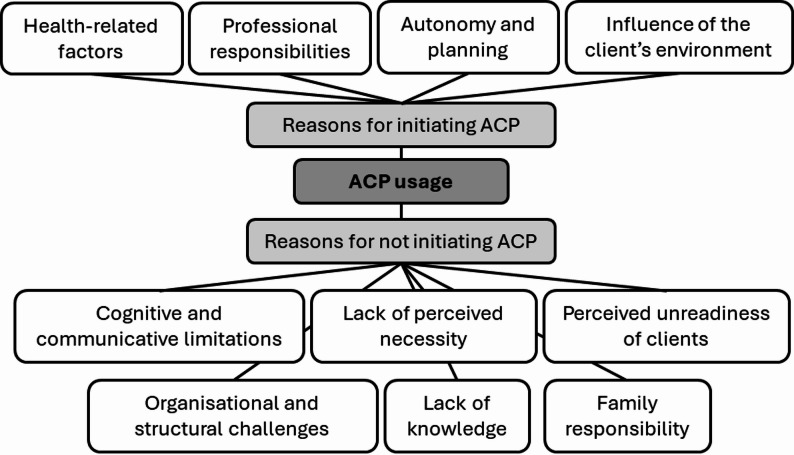 Figure 1
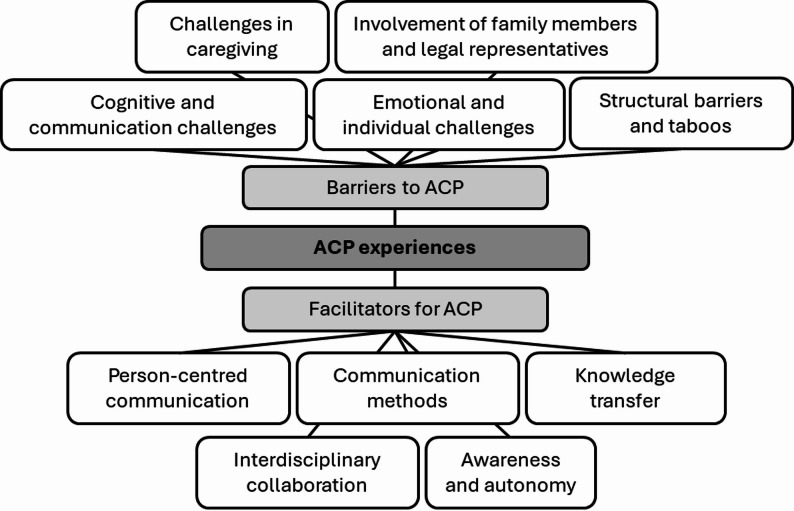 Figure 2
Peer Reviews
No public reviews on file for this paper yet. If you reviewed it on a platform where reviews are public (OpenReview, ICLR, NeurIPS, ICML), you can paste yours below so the community can read it here.
Videos
No videos yet. Explain this paper in a talk, walkthrough, or lecture? Add one.
Taxonomy
TopicsDown syndrome and intellectual disability research · Healthcare innovation and challenges · Family and Disability Support Research