Molecular convergence of luminal androgen receptor and molecular apocrine defines a distinct entity in ER-negative breast tumors
Adrien Borgel, Etienne Camenen, Catherine Miquel, Philippe Bertheau, Luis Teixeira, Jacqueline Lehmann-Che

TL;DR
This study shows that two subtypes of ER-negative breast cancer are actually one molecular entity and introduces a four-gene test to identify them.
Contribution
The paper identifies a unified molecular entity in ER-negative breast cancer and validates a four-gene signature for clinical use.
Findings
Luminal Androgen Receptor and Molecular Apocrine tumors share androgen and PI3K/AKT/mTOR signaling pathways.
A four-gene signature (AR, FOXA1, SPDEF, TFF3) accurately identifies overlapping tumors across datasets and sample types.
Discordant tumors show enrichment in immune and stromal signals, highlighting biological differences.
Abstract
Estrogen receptor–negative breast cancers are clinically heterogeneous. Two subtypes, Luminal Androgen Receptor and Molecular Apocrine Breast Cancers, are both defined by androgen signaling but identified through distinct transcriptomic classifiers. Their relationship remains unclear despite overlapping features. We analyzed transcriptomic and genomic data from public and institutional cohorts using two classification systems. Gene set enrichment and immune deconvolution analyses were performed to characterize differences between overlapping and discordant tumors. A four-gene signature was developed and validated using RNA sequencing and RT-qPCR on both fresh-frozen and formalin-fixed samples. Substantial overlap was observed between the two subtypes, with shared activation of androgen and PI3K/AKT/mTOR signaling pathways. Discordant tumors were enriched in immune and stromal signals.…
Genes, proteins, chemicals, diseases, species, mutations and cell lines named across the full text — each resolved to its canonical identifier and authoritative record.
Click any figure to enlarge with its caption.
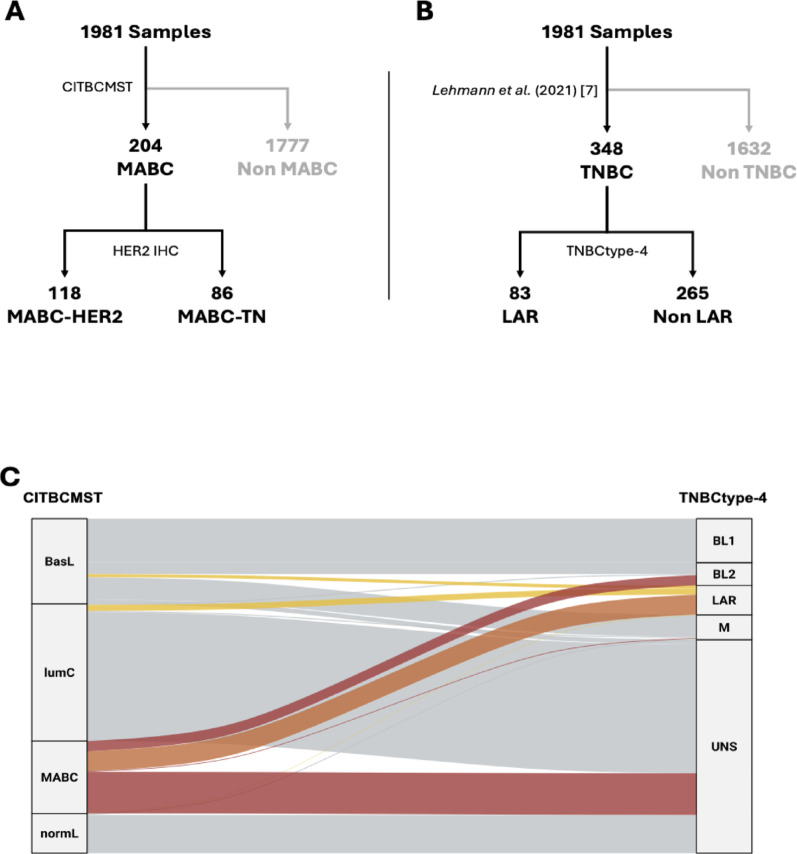 Figure 1
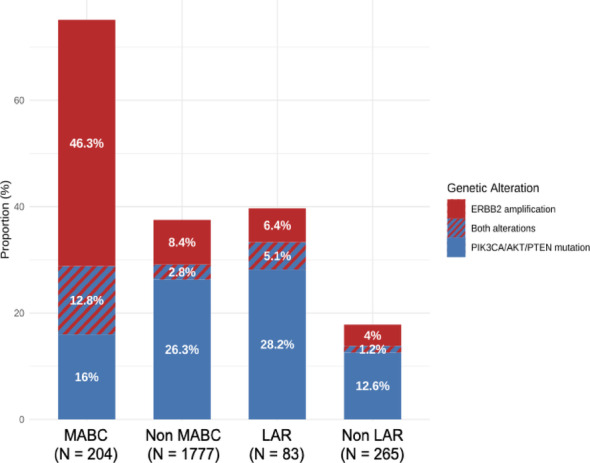 Figure 2
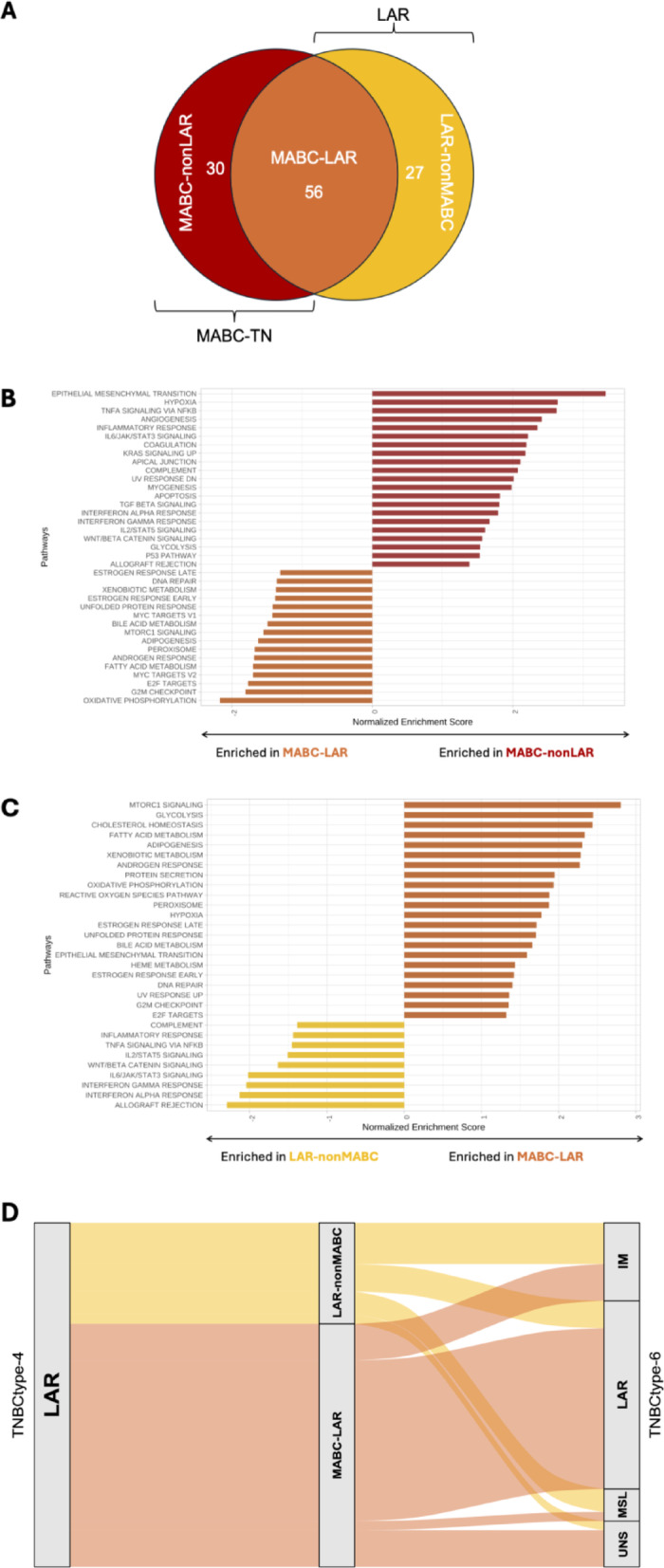 Figure 3
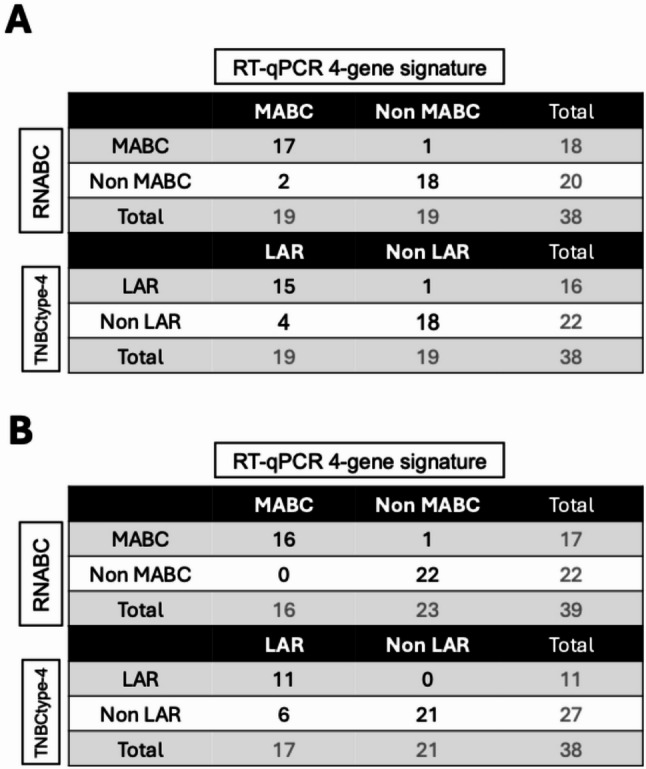 Figure 4
Peer Reviews
No public reviews on file for this paper yet. If you reviewed it on a platform where reviews are public (OpenReview, ICLR, NeurIPS, ICML), you can paste yours below so the community can read it here.
Videos
No videos yet. Explain this paper in a talk, walkthrough, or lecture? Add one.
Taxonomy
TopicsBreast Cancer Treatment Studies · Breast Lesions and Carcinomas · Estrogen and related hormone effects