Patient-specific anatomical alignment relative to the contralateral collodiaphyseal angle as an independent predictor of screw cut-out after proximal femoral nailing
Ali Can Koluman, Basar Burak Cakmur, Altug Duramaz, Cemal Kural, Nezih Ziroglu

TL;DR
This study shows that patient-specific anatomical alignment, in addition to traditional measures, can predict screw cut-out after hip fracture surgery.
Contribution
The study introduces the contralateral collodiaphyseal angle deviation as a novel independent predictor of screw cut-out.
Findings
Screw cut-out occurred in 15.8% of patients and was linked to larger TAD, greater |Δ angle|, and poor reduction quality.
In multivariable analysis, TAD, |Δ angle|, and reduction quality independently predicted screw cut-out.
Deviations ≥9° from native CCD alignment increased mechanical failure risk and delayed recovery.
Abstract
Screw cut-out remains a major mechanical complication after proximal femoral nailing (PFN) for intertrochanteric fractures. Traditional predictors such as tip–apex distance (TAD) and reduction quality do not account for individual femoral anatomy. This study aimed to determine whether deviation from the contralateral collodiaphyseal (CCD) angle (|Δ angle|) independently predicts screw cut-out after PFN. A total of 354 patients (mean age 77.6 ± 12.0 years; 58% female) treated with PFN between 2015 and 2020 were retrospectively analyzed. Radiographic parameters included TAD and the absolute difference between postoperative and contralateral collodiaphyseal (CCD) angles (|Δ angle|), representing patient-specific alignment. Functional outcomes were assessed using the Harris Hip Score, Barthel Index, and time to full weight bearing. Univariate and multivariable logistic regression analyses…
Genes, proteins, chemicals, diseases, species, mutations and cell lines named across the full text — each resolved to its canonical identifier and authoritative record.
Click any figure to enlarge with its caption.
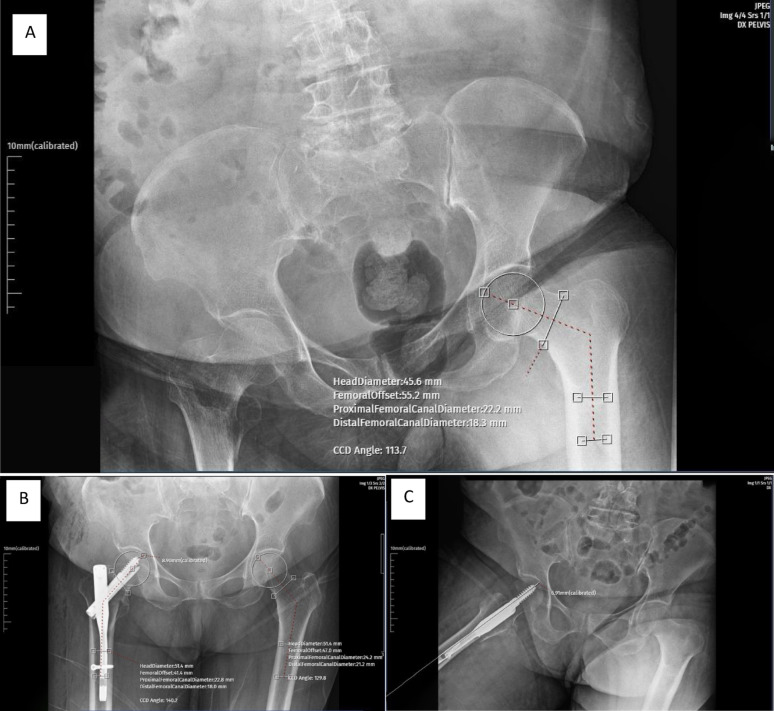 Figure 1
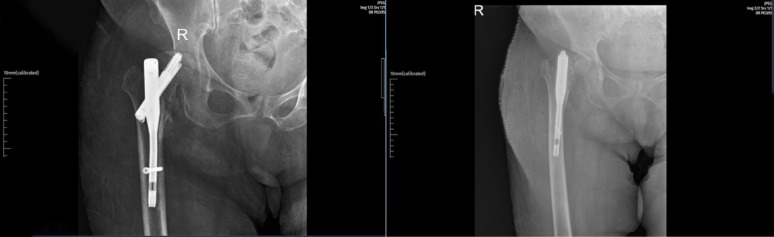 Figure 2
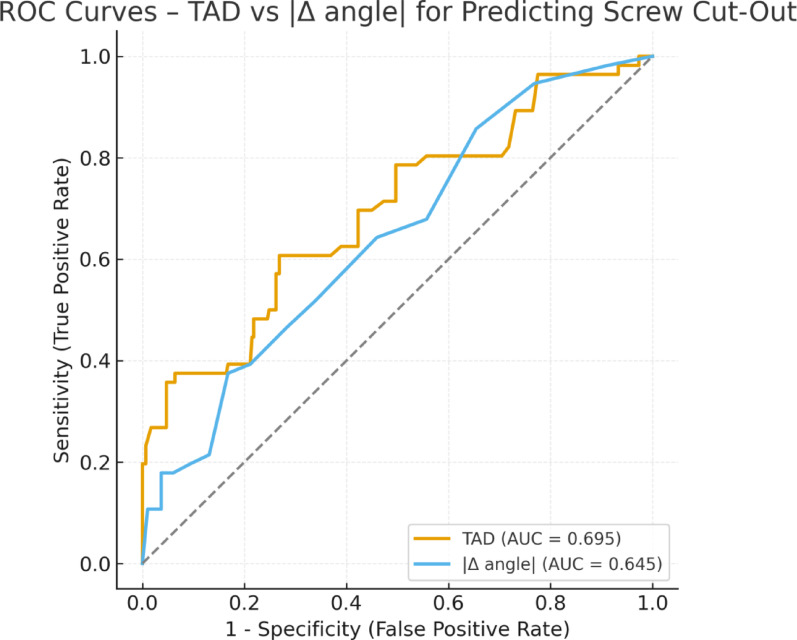 Figure 3
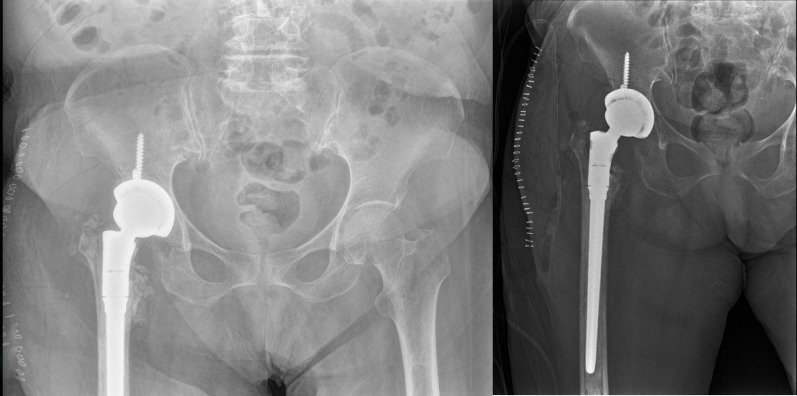 Figure 4
Peer Reviews
No public reviews on file for this paper yet. If you reviewed it on a platform where reviews are public (OpenReview, ICLR, NeurIPS, ICML), you can paste yours below so the community can read it here.
Videos
No videos yet. Explain this paper in a talk, walkthrough, or lecture? Add one.
Taxonomy
TopicsHip and Femur Fractures · Bone fractures and treatments · Bone health and osteoporosis research