A laboratory task to assess epistemic mistrust: behavioral evidence for mediation between childhood trauma and borderline personality features in young adults
Elizabeth Li, Chloe Campbell, Linda C. Mayes, Georgia McRedmond, Patrick Luyten

TL;DR
This study introduces a new lab task to measure epistemic mistrust and finds it links childhood trauma to borderline personality traits in young adults.
Contribution
The novel BART-ET task provides behavioral evidence for epistemic mistrust as a mediator between trauma and borderline features.
Findings
Higher borderline personality traits correlate with greater epistemic mistrust and credulity but not trust.
Childhood trauma is linked to borderline features and epistemic mistrust, independent of general distress.
The BART-ET shows convergent validity with self-report measures of epistemic mistrust.
Abstract
Disruptions in epistemic trust have been recognised as key sequelae of trauma and as markers of vulnerability to borderline personality pathology. However, prior research has relied primarily on self-reports and lacks behavioural measures of epistemic stance. The present pre-registered studies introduce a novel behavioural task—the Balloon Analogue Risk Task for Epistemic Trust (BART-ET)—and examine its associations with borderline personality features, trauma history, and psychological distress. Two cross-sectional studies were conducted with a combined sample of 273 young adults aged 18–25 (Study 1: N = 120; Study 2: N = 153). Participants completed self-report measures of borderline personality features (PAI-BOR) and epistemic trust, mistrust, and credulity (ETMCQ). Study 2 additionally included the Childhood Trauma Questionnaire (CTQ) and the Brief Symptom Inventory (BSI-GSI). All…
Genes, proteins, chemicals, diseases, species, mutations and cell lines named across the full text — each resolved to its canonical identifier and authoritative record.
Click any figure to enlarge with its caption.
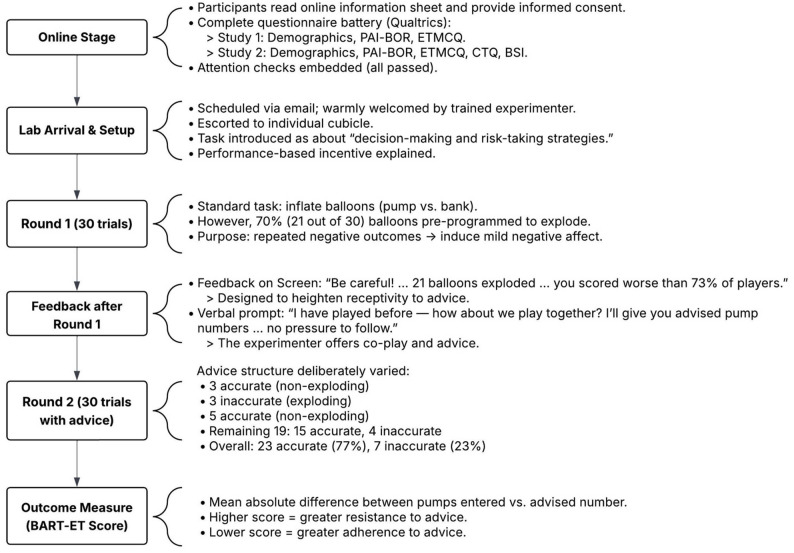 Figure 1
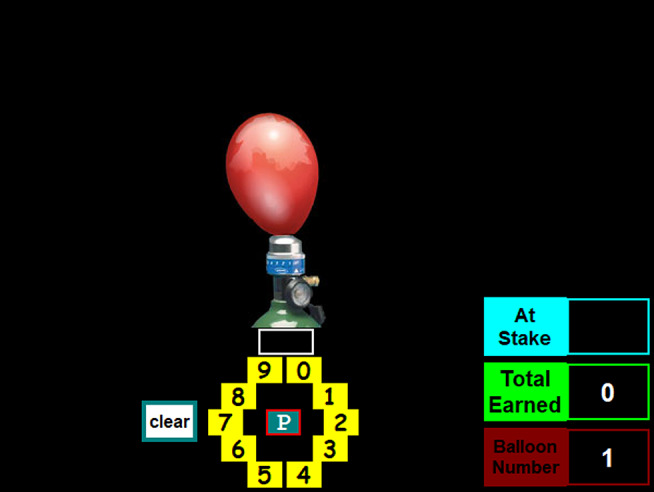 Figure 1
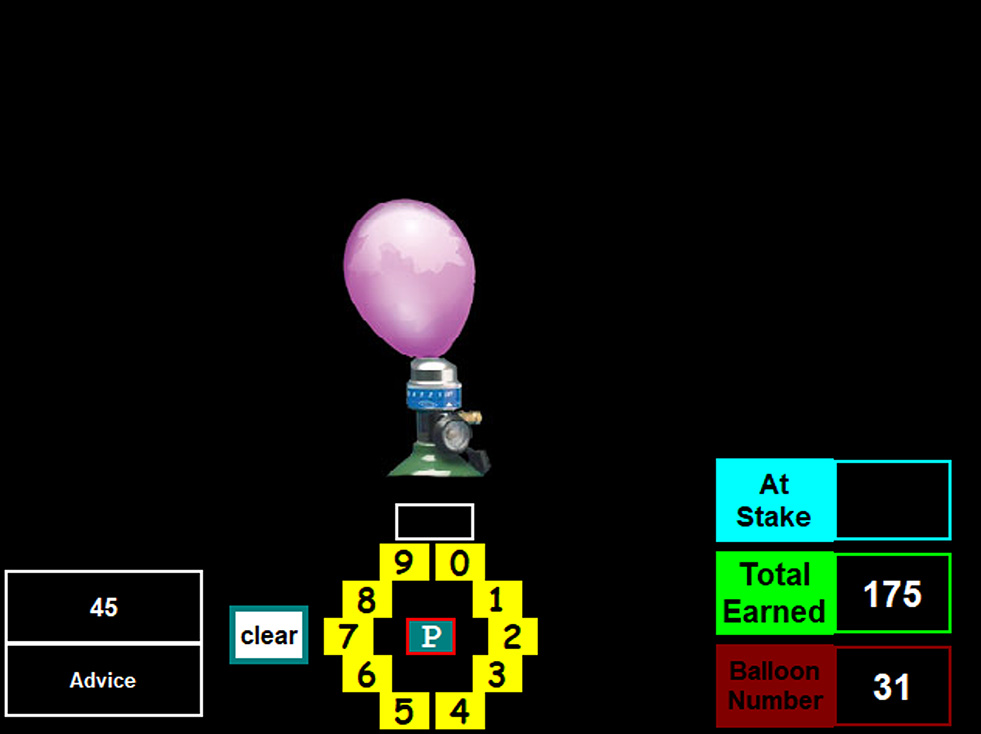 Figure 1
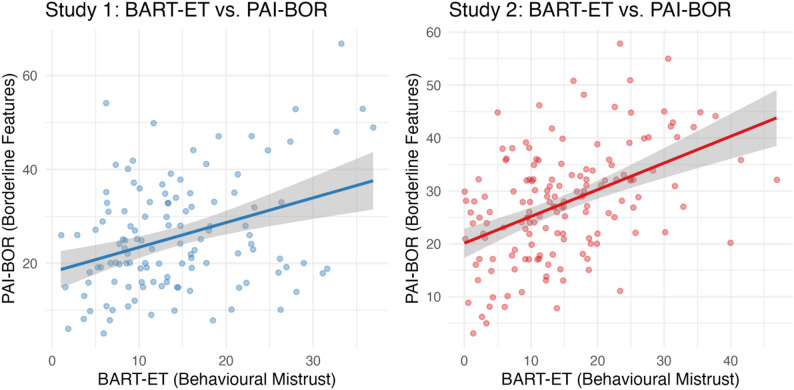 Figure 2
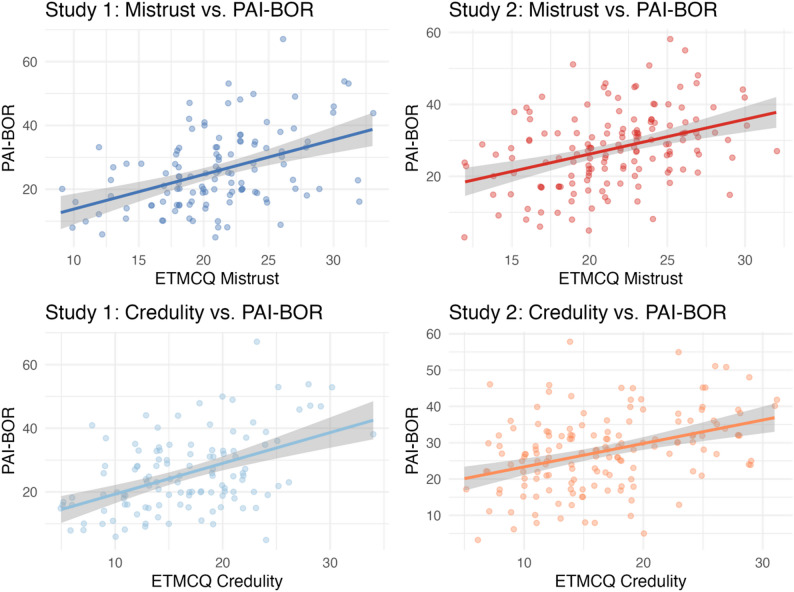 Figure 2
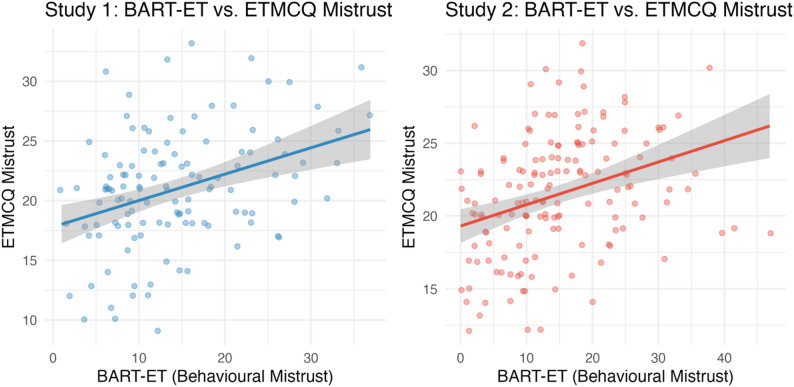 Figure 2
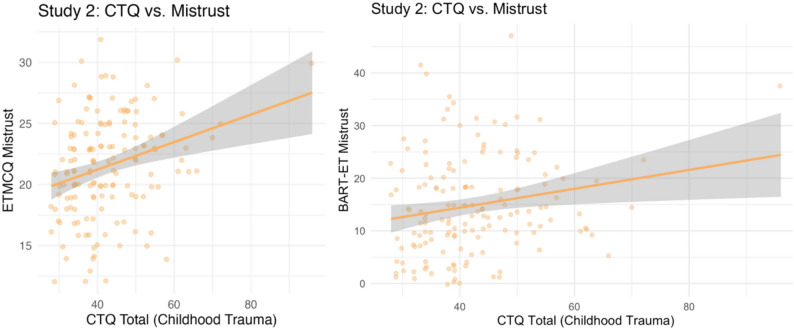 Figure 2
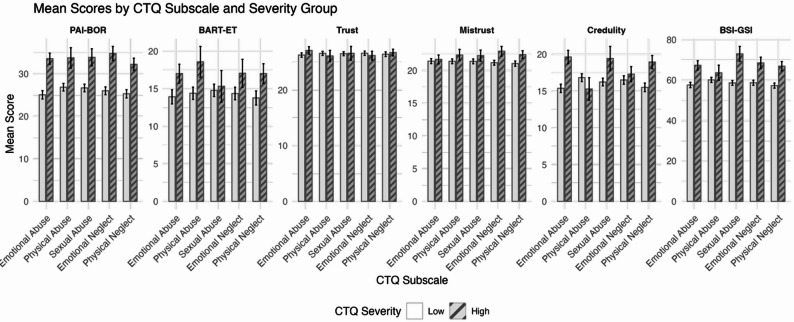 Figure 3
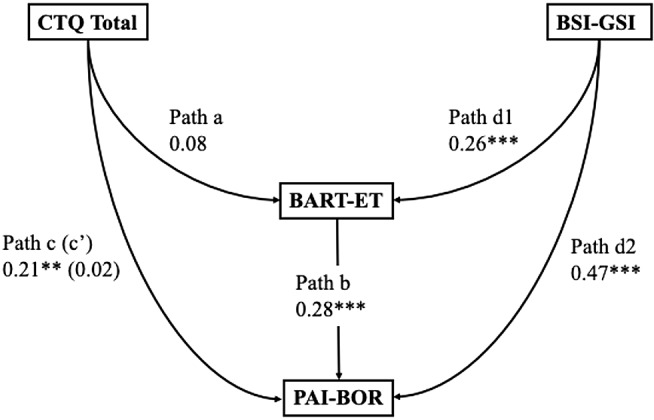 Figure 4
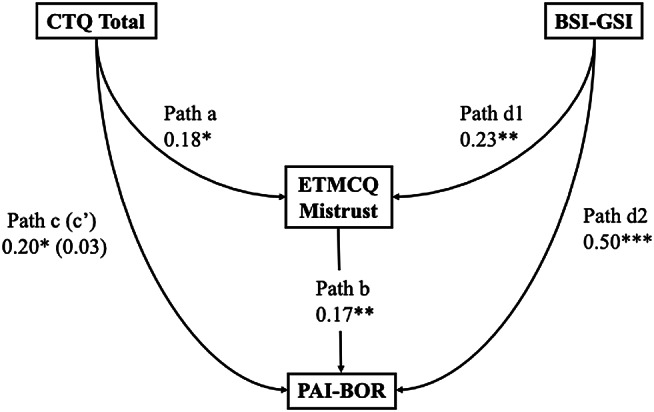 Figure 4
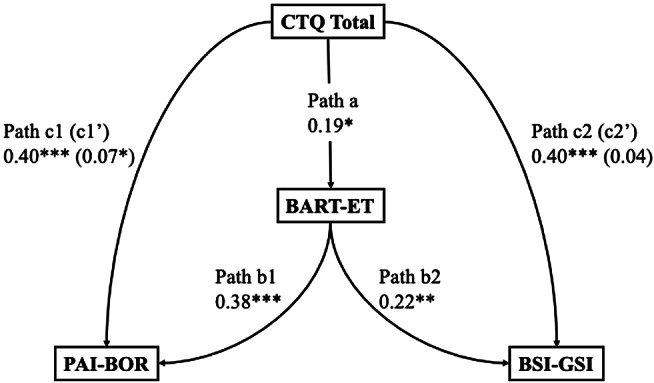 Figure 4
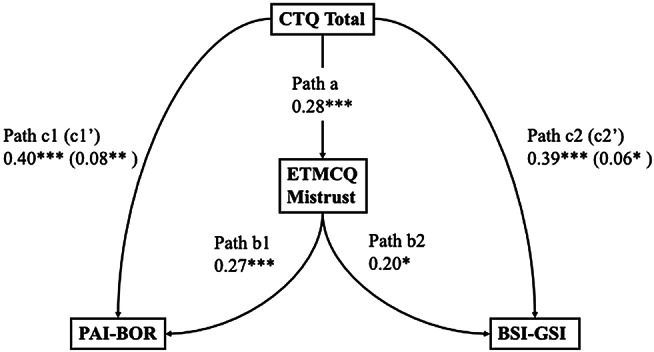 Figure 4
Peer Reviews
No public reviews on file for this paper yet. If you reviewed it on a platform where reviews are public (OpenReview, ICLR, NeurIPS, ICML), you can paste yours below so the community can read it here.
Videos
No videos yet. Explain this paper in a talk, walkthrough, or lecture? Add one.
Taxonomy
TopicsAnxiety, Depression, Psychometrics, Treatment, Cognitive Processes · Posttraumatic Stress Disorder Research · Mental Health Research Topics