Identification of receptor-binding domains of Bacteroidales antibacterial pore-forming toxins
Sofia Borgini, Edwin Pasveer, Chloé Petre, Bogdan I. Iorga, Didier Vertommen, Han Remaut, Jean-François Collet, Frédéric Lauber

TL;DR
This study identifies the part of a bacterial toxin that allows it to specifically target and kill other bacteria, which could lead to new antibacterial applications.
Contribution
The study reveals that the C-terminal domain of BSAP-1 is responsible for receptor recognition and specificity in Bacteroidales antibacterial toxins.
Findings
The C-terminal domain (CTD) of BSAP-1 is essential for receptor binding and bactericidal activity.
Grafting the CTD onto unrelated proteins allows them to interact with the BSAP-1 receptor.
Electrostatic interactions drive the BSAP-1–receptor interaction, as revealed by structural and mutational analysis.
Abstract
Bacteroidales are abundant Gram-negative bacteria present in the gut microbiota of most animals, including humans, where they carry out vital functions for host health. To thrive in this competitive environment, Bacteroidales use sophisticated weapons to outmatch competitors. Among these, Bacteroidales secreted antimicrobial proteins (BSAPs) represent a novel class of bactericidal pore-forming toxins that are highly specific to their receptor, typically targeting only a single membrane protein or lipopolysaccharide. The molecular determinants conferring this high selectivity remain unknown. In this study, we therefore investigated the model protein BSAP-1 and determined which of its domains is involved in providing receptor specificity. We demonstrate that receptor recognition is entirely driven by the C-terminal domain (CTD) of BSAP-1 using a combination of in vivo competition assays,…
Genes, proteins, chemicals, diseases, species, mutations and cell lines named across the full text — each resolved to its canonical identifier and authoritative record.
Click any figure to enlarge with its caption.
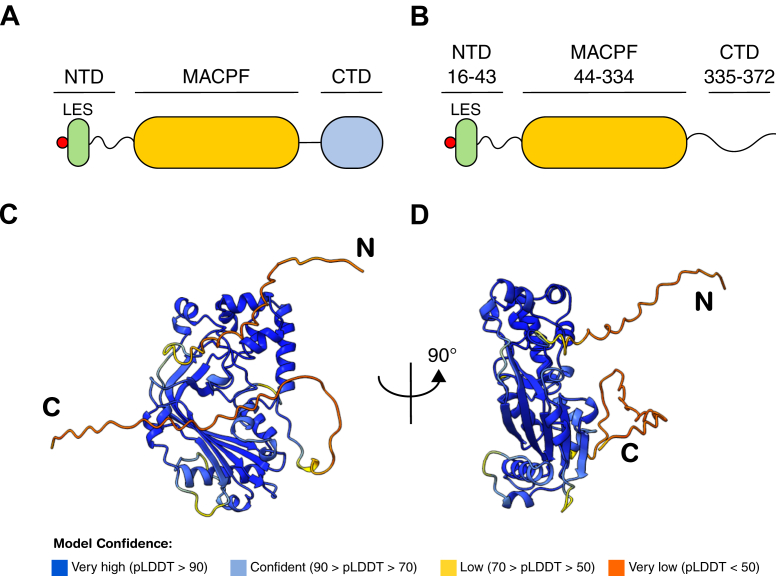 Figure 1
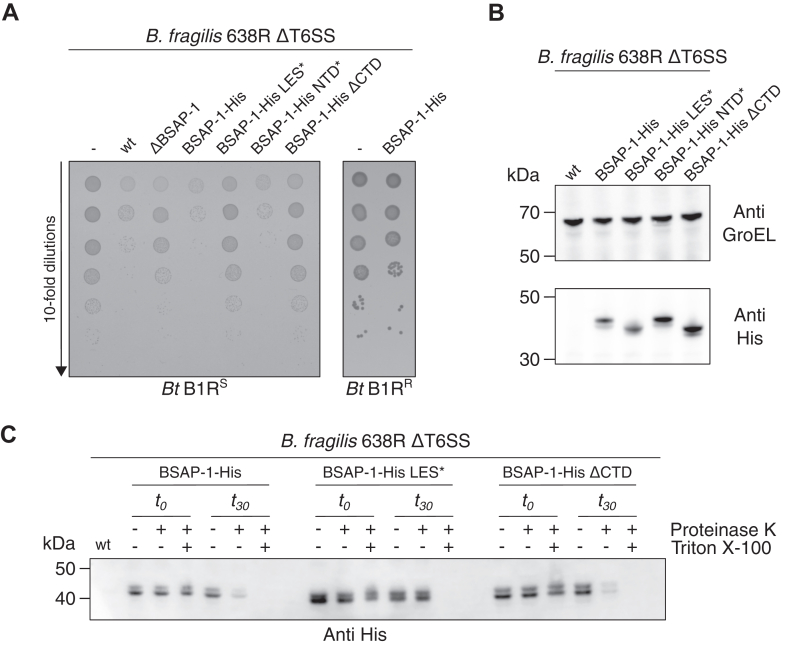 Figure 2
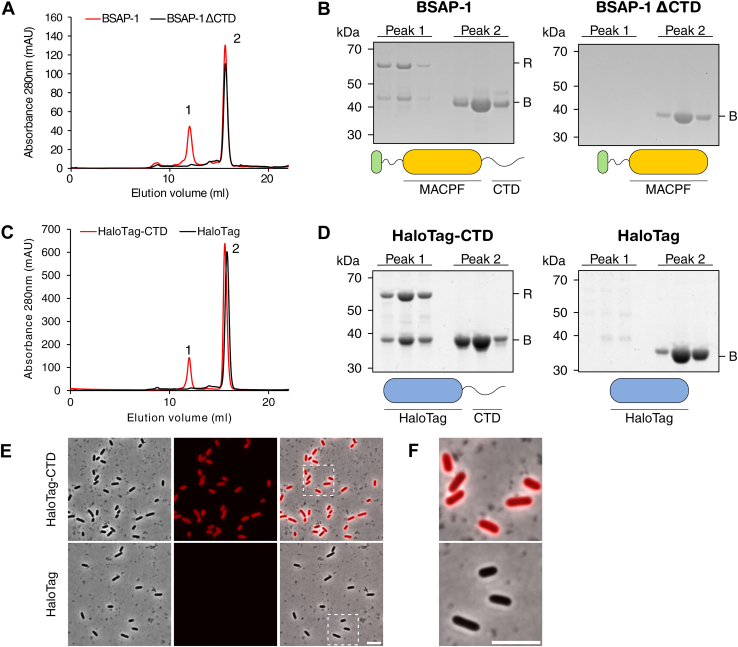 Figure 3
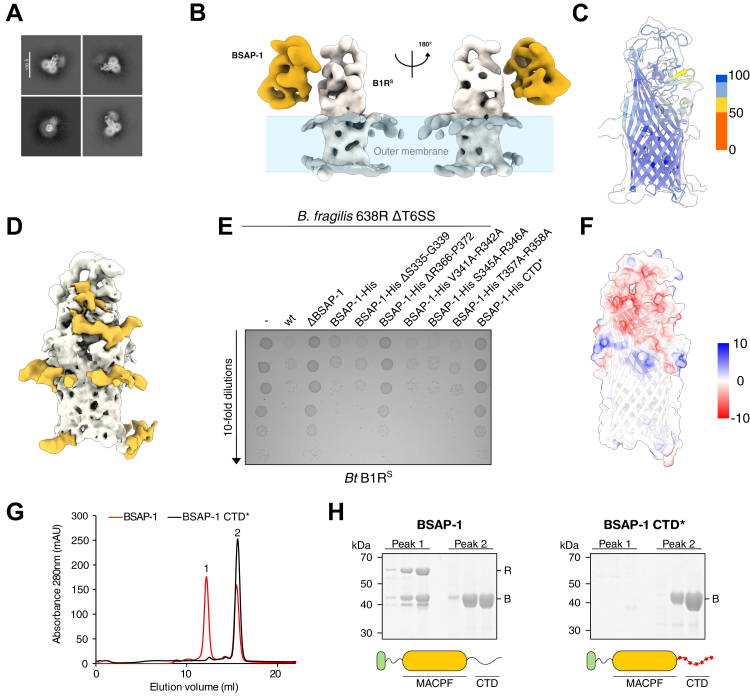 Figure 4
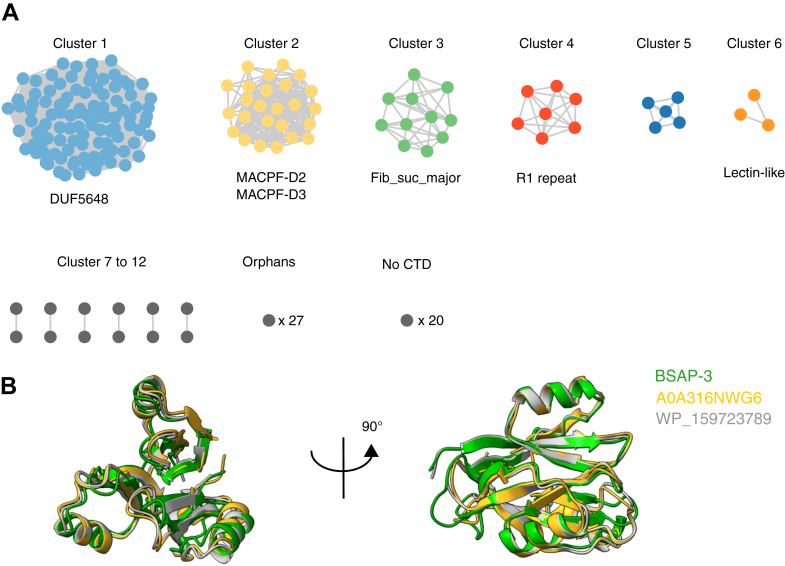 Figure 5
Peer Reviews
No public reviews on file for this paper yet. If you reviewed it on a platform where reviews are public (OpenReview, ICLR, NeurIPS, ICML), you can paste yours below so the community can read it here.
Videos
No videos yet. Explain this paper in a talk, walkthrough, or lecture? Add one.
Taxonomy
TopicsBacterial Genetics and Biotechnology · Streptococcal Infections and Treatments · Antimicrobial Peptides and Activities