Characterization using ultra-deep sequencing of the intra-host distribution of the mutations associated with H. pylori antibiotic resistance
Laura Chaufour, Alexandra Herve, Birama Ndiaye, Lucie Karayan-Tapon, Médéric Briand, Frédérique Lartigue, Christophe Burucoa, Maxime Pichon

TL;DR
This study uses ultra-deep sequencing to show that Helicobacter pylori populations in the same person's stomach are genetically diverse, suggesting the need for multiple biopsies to accurately test antibiotic resistance.
Contribution
The study is the first to use in-house high-throughput sequencing on clinical H. pylori biopsies to reveal intra-host genetic heterogeneity.
Findings
Antral diversification is higher than fundic for rpoB and rdxA genes.
Fundic diversification is higher than antral for 23S rRNA, rdxA, and rpoB genes.
Minority variants in H. pylori justify taking at least two biopsies for accurate antibiotic resistance testing.
Abstract
Helicobacter pylori is a slow-growing, gram-negative strictly pathogenic bacterium, which colonizes the stomachs of half the global population and is responsible for gastritis, peptic ulcer and even adenocarcinoma, Treatment of choice for eradication is a combination of PPIs and multiple antibiotic therapy. Recently, therapeutic failures began to be attributable to increased antibiotic resistance due to mutations in identified genes (rpoB, 16S rRNA coding gene, gyrA, 23S rRNA coding gene, pbp1A, frxA, rdxA). This study aimed to determine, using ultra-deep sequencing, the distribution of mutations in patient s hospitalized or undergoing screening for H. pylori. Gastric biopsies were obtained from two different anatomical regions (antrum/fundus) in 18 patients’ samples from 1998 to 2021, in four French hospitals. Following automated extraction, DNA of H. pylori was amplified using…
Genes, proteins, chemicals, diseases, species, mutations and cell lines named across the full text — each resolved to its canonical identifier and authoritative record.
Click any figure to enlarge with its caption.
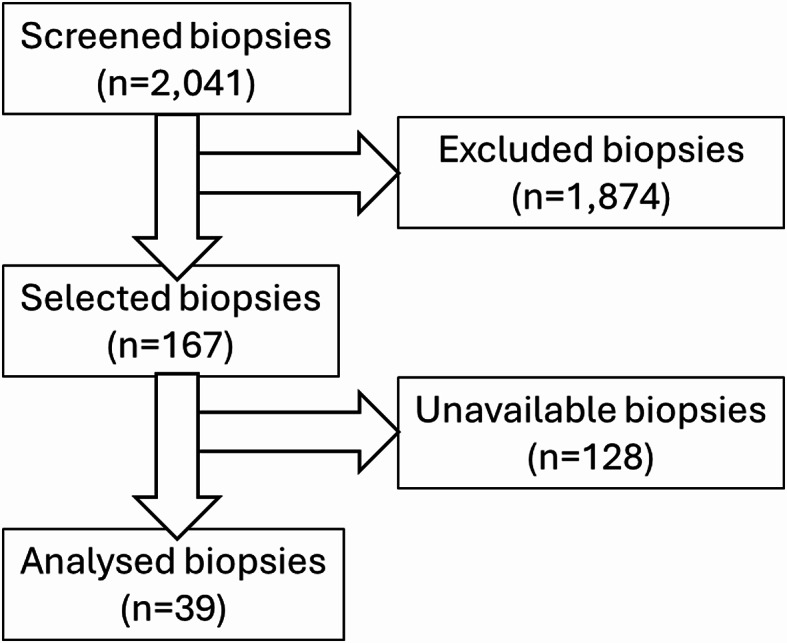 Figure 1
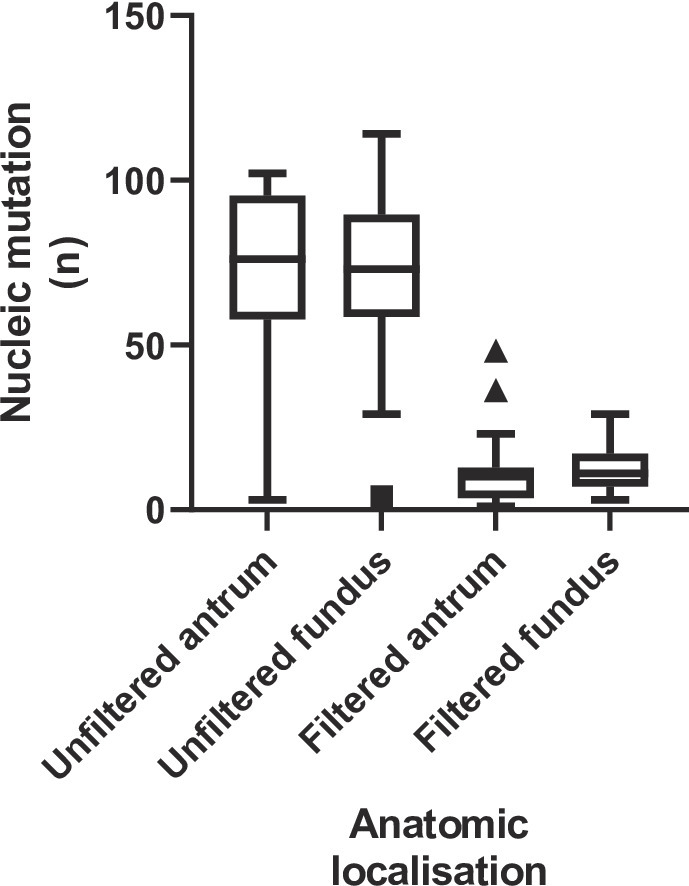 Figure 2
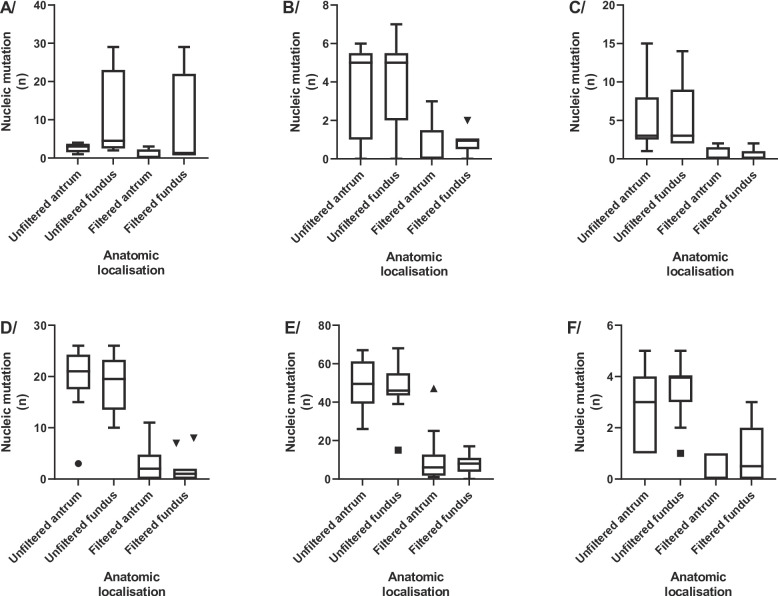 Figure 3
Peer Reviews
No public reviews on file for this paper yet. If you reviewed it on a platform where reviews are public (OpenReview, ICLR, NeurIPS, ICML), you can paste yours below so the community can read it here.
Videos
No videos yet. Explain this paper in a talk, walkthrough, or lecture? Add one.
Taxonomy
TopicsHelicobacter pylori-related gastroenterology studies · Clostridium difficile and Clostridium perfringens research · Probiotics and Fermented Foods