Field implementation of the sterile insect technique against Aedes aegypti in Recife, Brazil: operational challenges and impact of release frequency on vector dynamics
Aline Taiane Macedo, Danilo O. Carvalho, Maylen Gomez, Bianca Pires, Mirian Brito, Nilton Sousa, Aricia R. P. da Cruz, Helen Jamil Khoury, Jair F. Virginio

TL;DR
This study tested the sterile insect technique in Brazil to suppress Aedes aegypti mosquitoes, finding that more frequent releases led to better results.
Contribution
The study demonstrates that increasing release frequency improves suppression of Aedes aegypti in urban settings.
Findings
SIT 2× reduced egg/trap/day by 39%, hatch rate by 33%, and female abundance by 51%.
Sterilization was effective with 35 Gy for pupae and 65 Gy for adults.
Handling and transport reduced flight ability by up to 35 percentage points.
Abstract
The sterile insect technique (SIT) is an environmentally friendly tool for suppressing Aedes aegypti populations. While promising in controlled settings, its application in large urban environments presents logistical and biological challenges. This trial focused on releasing sterile males, sent from a long-distance production facility to suppress the local mosquito population. Sterile males of Ae. aegypti were mass-reared, irradiated, and transported 712.2 km from a central facility to Recife, Brazil. Releases were performed once (SIT 1 ×) or twice per week (SIT 2 ×). Entomological indices—including eggs/trap per day (ETD), hatch rate, induced sterility, and adult female abundance—were monitored through ovitraps and BG-Sentinel traps. Data were analyzed using generalized linear mixed models (GLMMs) and Bayesian time-series modeling (CausalImpact). Dose–response experiments…
Genes, proteins, chemicals, diseases, species, mutations and cell lines named across the full text — each resolved to its canonical identifier and authoritative record.
Click any figure to enlarge with its caption.
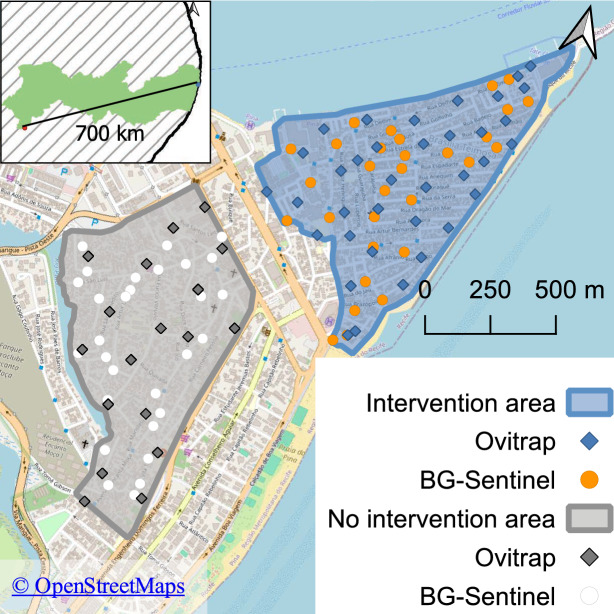 Figure 1
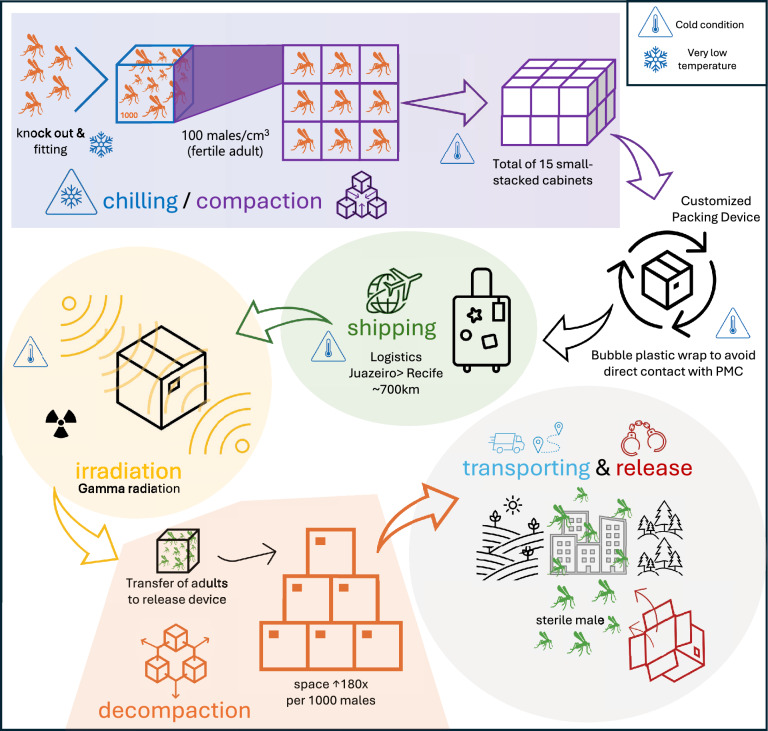 Figure 2
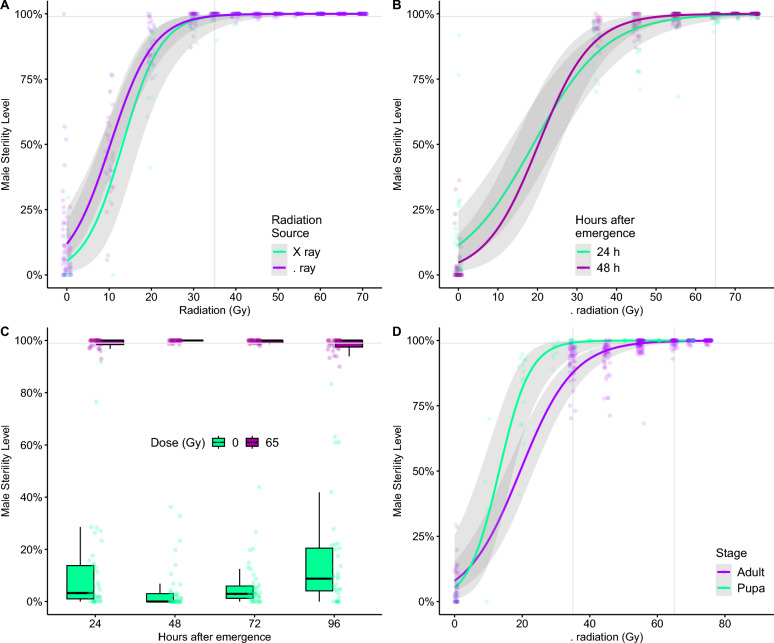 Figure 3
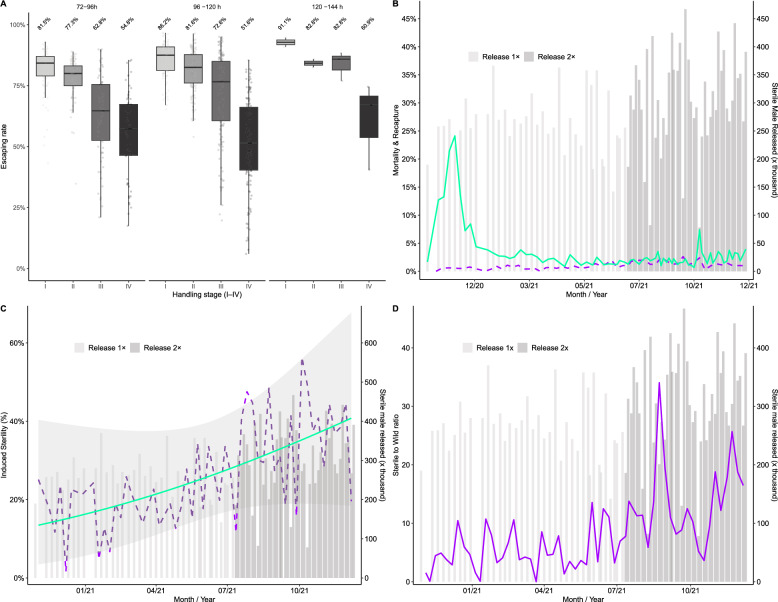 Figure 4
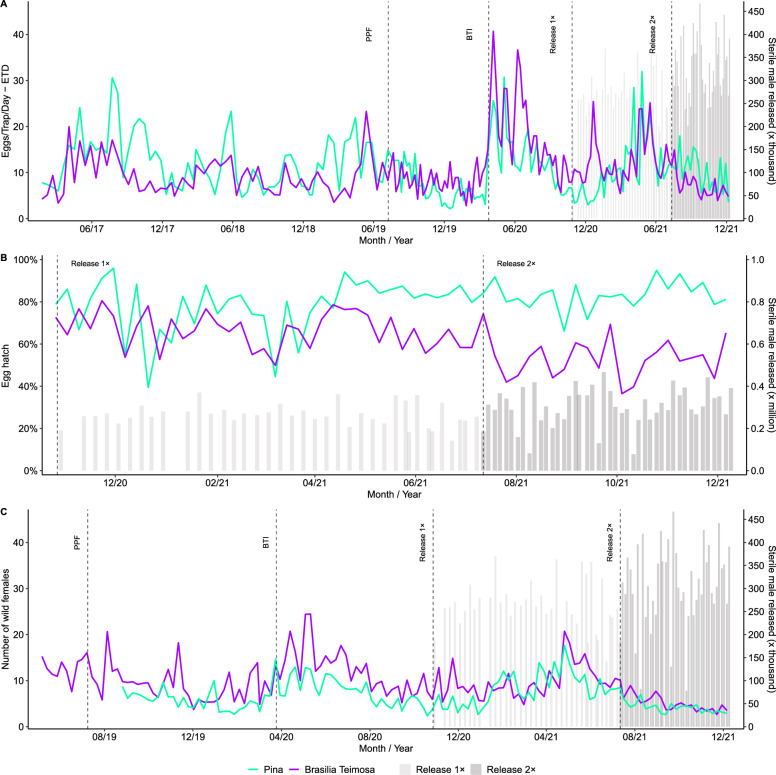 Figure 5
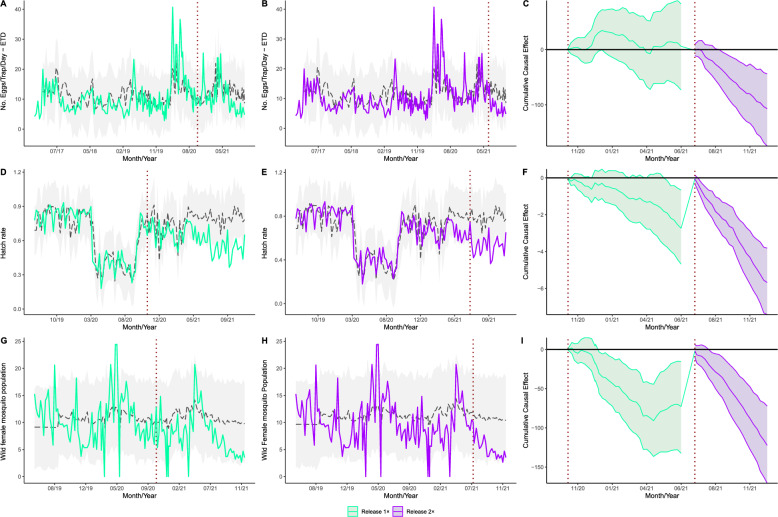 Figure 6
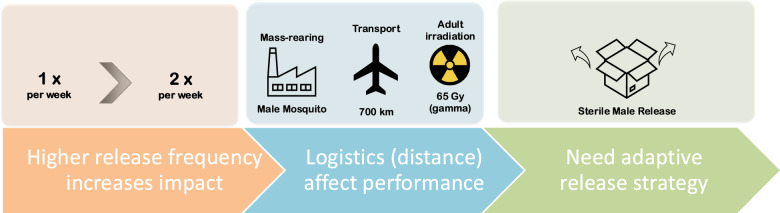 Figure 7
Peer Reviews
No public reviews on file for this paper yet. If you reviewed it on a platform where reviews are public (OpenReview, ICLR, NeurIPS, ICML), you can paste yours below so the community can read it here.
Videos
No videos yet. Explain this paper in a talk, walkthrough, or lecture? Add one.
Taxonomy
TopicsInsect symbiosis and bacterial influences · Mosquito-borne diseases and control · Malaria Research and Control