Balancing ethical and practical dilemmas: feasibility of a cluster randomised internal pilot trial of Teaching Recovery Techniques with accompanied refugee children in Sweden
Sandra Gupta Löfving, Farah Alsaqa, Anna Sarkadi, Elin Inge, Anna Pérez-Aronsson, Antónia Tökés, Georgina Warner

TL;DR
This study explores the feasibility of a mental health intervention for refugee children in Sweden, highlighting practical and ethical challenges in recruitment and stigma.
Contribution
The study provides insights into adapting mental health interventions for refugee children by addressing recruitment and stigma through a pilot trial.
Findings
Low recruitment rates due to the pandemic and screening strategy changes limited the trial's feasibility.
High attendance and retention rates in the intervention arm suggest acceptability of the mental health program.
Qualitative feedback emphasized the need for strength-based approaches to reduce stigma in mental health interventions.
Abstract
Teaching Recovery Techniques (TRT) is a brief psychosocial intervention designed to reduce symptoms of post-traumatic stress among children. To strengthen the evidence base for TRT, a nationwide multisite cluster RCT of TRT with accompanied refugee children was planned in Sweden, including an internal pilot with the primary objectives of assessing screening, recruitment, attendance, and retention. Secondary objectives were to consider the feasibility of randomisation, the suitability of the questionnaires employed in the main RCT, and intervention acceptability. Accompanied refugee children aged 8 to 17 years, who arrived in Sweden within the last 5 years and screened positive for symptoms of post-traumatic stress, were allocated to the intervention or waitlist arm using non-blinded cluster randomisation. Pre- and post-measurements were conducted at baseline (T1) and after 8 weeks…
Genes, proteins, chemicals, diseases, species, mutations and cell lines named across the full text — each resolved to its canonical identifier and authoritative record.
Click any figure to enlarge with its caption.
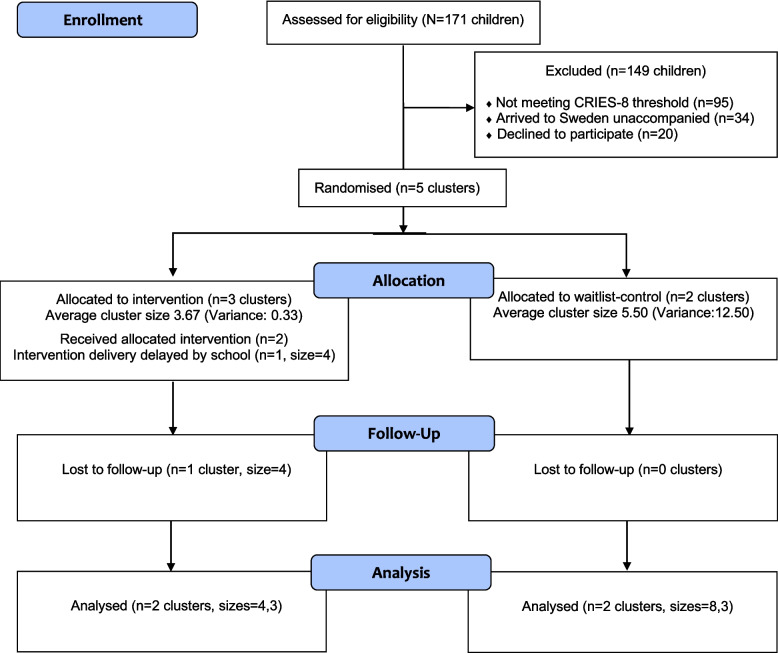 Figure 1
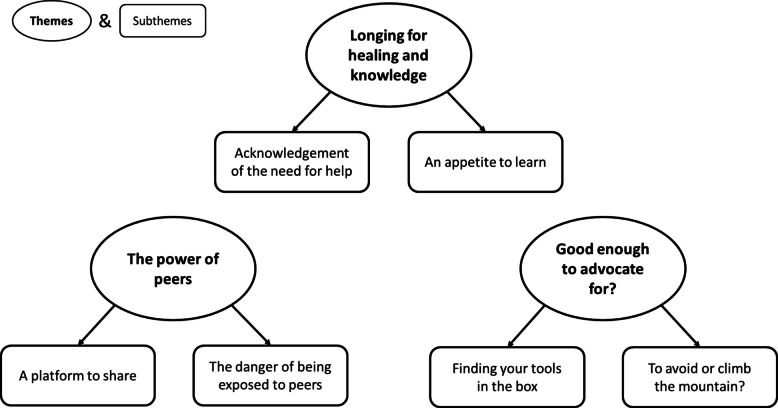 Figure 2
Peer Reviews
No public reviews on file for this paper yet. If you reviewed it on a platform where reviews are public (OpenReview, ICLR, NeurIPS, ICML), you can paste yours below so the community can read it here.
Videos
No videos yet. Explain this paper in a talk, walkthrough, or lecture? Add one.
Taxonomy
TopicsMigration, Health and Trauma · Child Abuse and Trauma · Posttraumatic Stress Disorder Research