Enhanced extracellular respiration of engineered Bacillus subtilis via anodic electro-fermentation with pH optimisation
Yu Sun, Changshuo Liu, Igor Vassilev, Antti J. Rissanen, Jin Luo, Marika Kokko

TL;DR
Scientists engineered Bacillus subtilis to improve its ability to produce 2,3-butanediol under anaerobic conditions using anodic electro-fermentation and pH control.
Contribution
This is the first study to combine metabolic engineering with pH optimization in B. subtilis for anodic electro-fermentation.
Findings
Deleting the ldh gene allowed B. subtilis to survive anaerobically via anodic respiration.
Anodic metabolism achieved a current density of 0.77 mA/cm² and produced 2,3-butanediol with high carbon selectivity.
pH control improved glucose consumption and 2,3-butanediol production efficiency.
Abstract
Leveraging alternative electron acceptors to support anaerobic metabolism in industrially relevant microorganisms holds substantial biotechnological potential, especially when coupled to anodic electro-fermentation, which provides a non-depleting electron sink to the microorganisms. Bacillus subtilis is a widely used industrial workhorse for biochemical production, valued for its genetic tractability and environmental stress tolerance. However, the anaerobic, anodic metabolism of B. subtilis has been constrained by limited redox flexibility. Here, deletion of ldh (lactate dehydrogenase) to restrict fermentative NAD⁺ regeneration enabled engineered B. subtilis to survive anaerobically via anodic respiration, partially oxidising glucose while steering the metabolism toward 2,3-butanediol. The anodic metabolism showed enhanced extracellular electron transfer mediated by ferricyanide, with…
Genes, proteins, chemicals, diseases, species, mutations and cell lines named across the full text — each resolved to its canonical identifier and authoritative record.
Click any figure to enlarge with its caption.
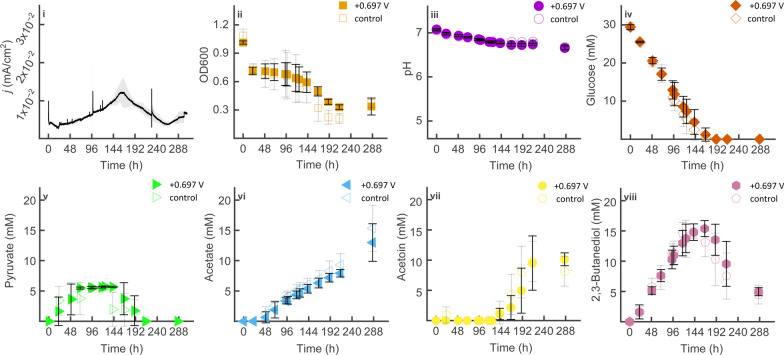 Figure 1
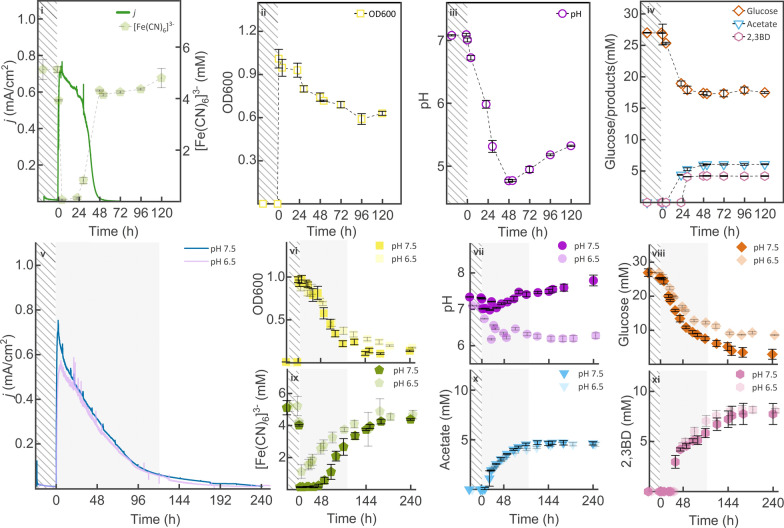 Figure 2
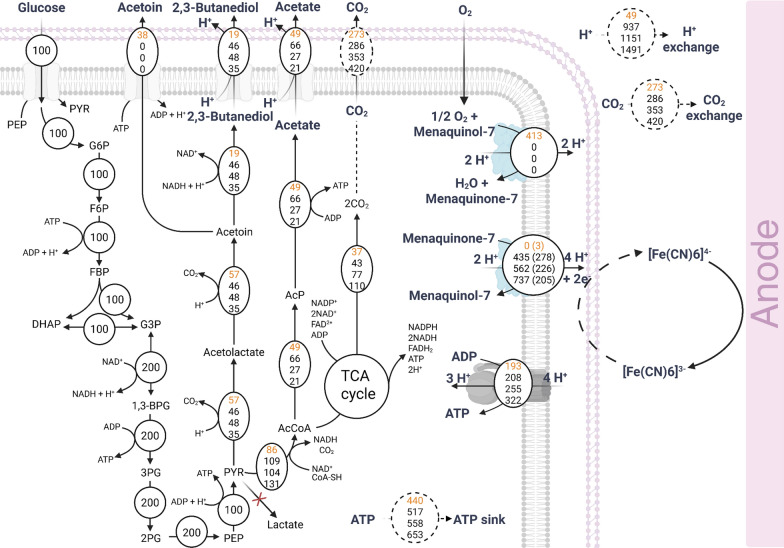 Figure 3
Peer Reviews
No public reviews on file for this paper yet. If you reviewed it on a platform where reviews are public (OpenReview, ICLR, NeurIPS, ICML), you can paste yours below so the community can read it here.
Videos
No videos yet. Explain this paper in a talk, walkthrough, or lecture? Add one.
Taxonomy
TopicsMicrobial Fuel Cells and Bioremediation · Bacterial Genetics and Biotechnology · Microbial Inactivation Methods