How do substance and polysubstance use trajectories differ by sexual attraction from ages 17 to 24? A community-based longitudinal cohort study in Switzerland
Clarissa Janousch, Florian Vock, Babette L Winter, Tabea Hässler, Lukas Eggenberger, Laura Bechtiger, Michelle Loher, Tina Maria Binz, Markus R Baumgartner, Denis Ribeaud, Manuel Eisner, Boris B Quednow, Lilly Shanahan

TL;DR
This study explores how substance use patterns differ between sexual minority and heterosexual youth in Switzerland from ages 17 to 24.
Contribution
The study provides new insights into how substance use trajectories vary by sexual attraction and sex in a European population-based cohort.
Findings
Sexual minority youth showed higher substance use than heterosexual youth, with distinct patterns emerging by age and sex.
Substance use among sexual minority males increased sharply by age 24, surpassing other groups in polysubstance use.
Peer substance use and low self-control were significant predictors of substance use outcomes.
Abstract
Longitudinal, population-based studies of how youth substance use (SU) varies by sexual attraction, sex and their interaction remain scarce, especially in Europe. This study examines poly-SU (PSU) trajectories at 17, 20 and 24; disparities between sexual minority (SM) youth and heterosexual (HET) youth regarding these trajectories; and their correlates. We obtained data from the Zurich Project on Social Development from Childhood to Adulthood. SU was self-reported by n=1384 participants at 17, 20 and 24, and hair-tested at 20 and 24. Regression models included SM status, sex, their interaction, sociodemographic variables and psychosocial variables. This population-based longitudinal cohort analysis used linear mixed-effect models to examine developmental trajectories. The proportion of SM youth increased from 11.3% at 17 to 23.4% at 24. At 20 and 24, SM were more likely than HET youth…
Genes, proteins, chemicals, diseases, species, mutations and cell lines named across the full text — each resolved to its canonical identifier and authoritative record.
Click any figure to enlarge with its caption.
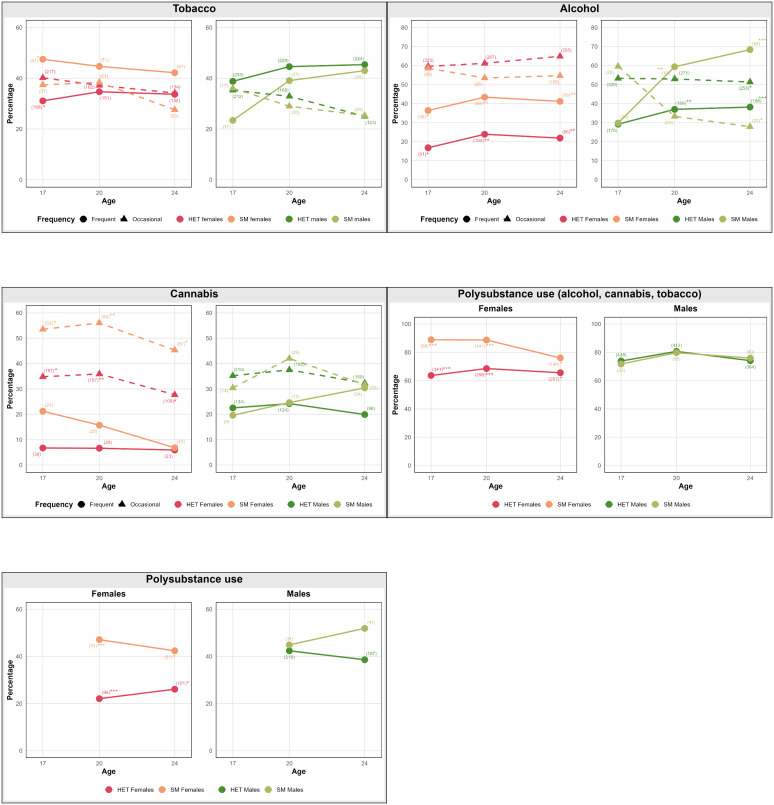 Figure 1
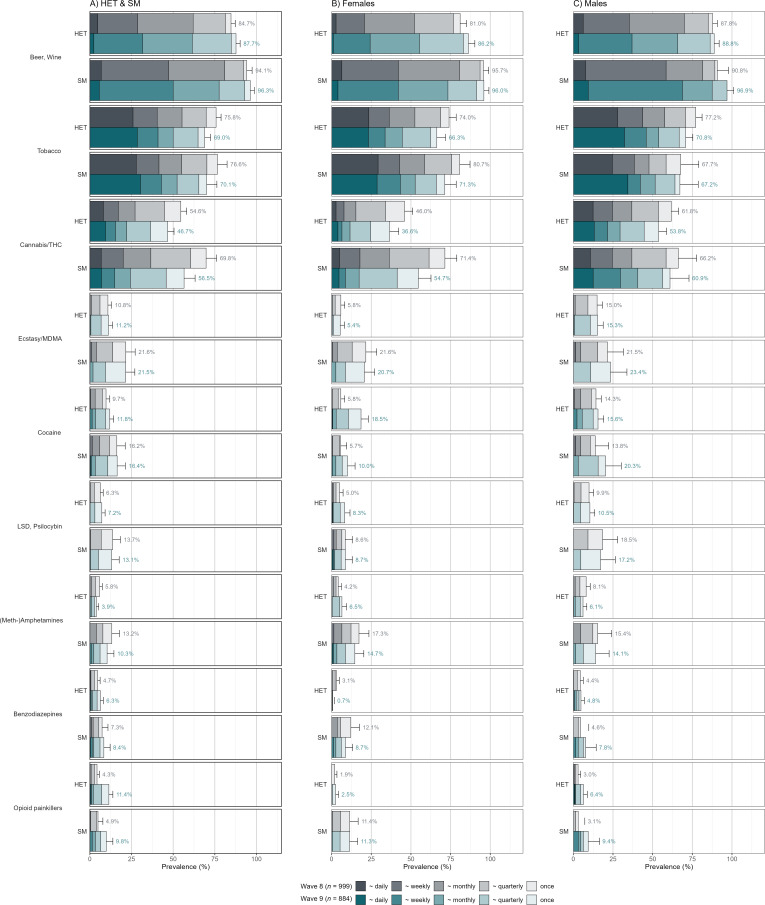 Figure 2
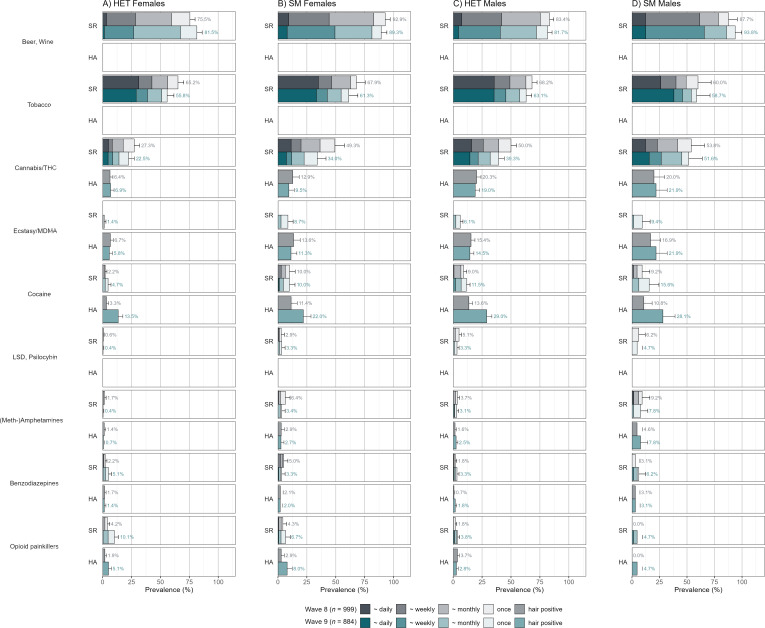 Figure 3
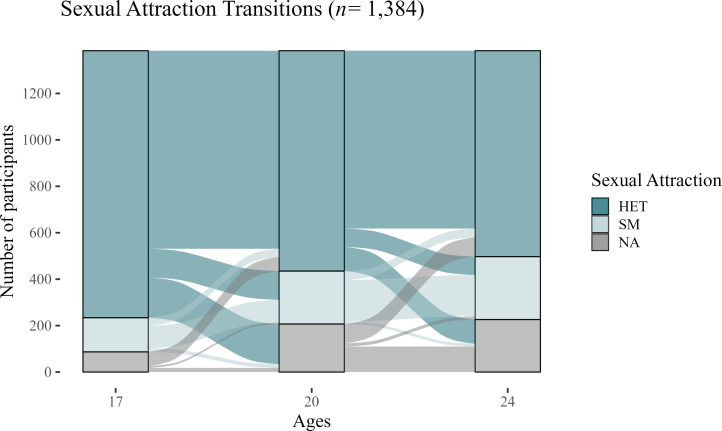 Figure 4
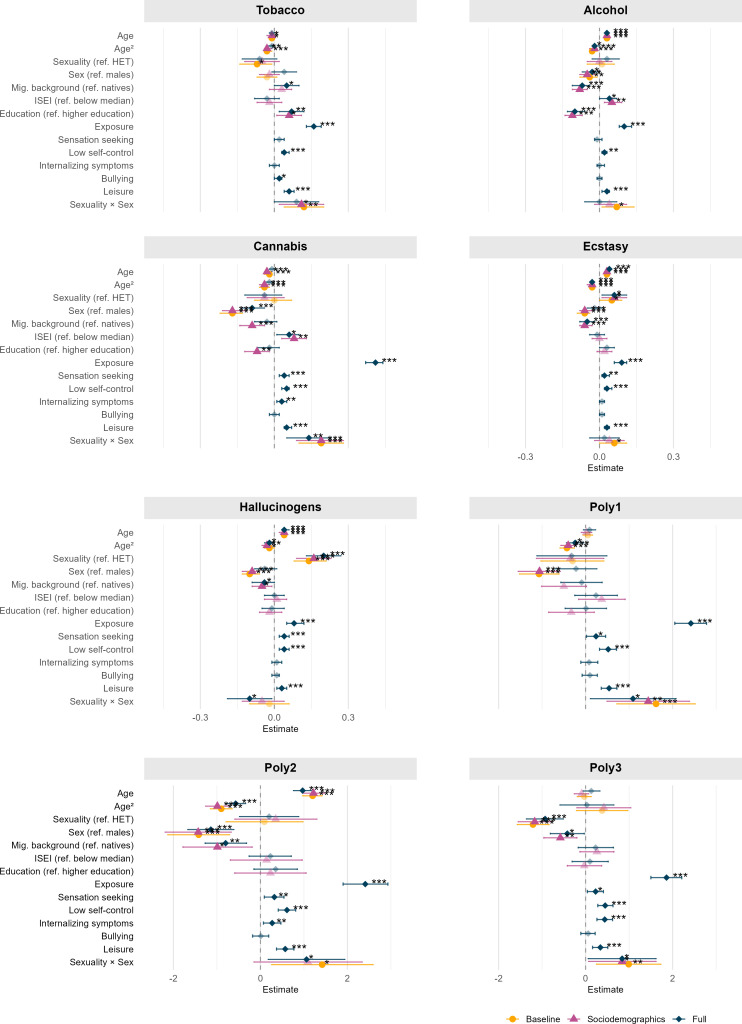 Figure 5
Peer Reviews
No public reviews on file for this paper yet. If you reviewed it on a platform where reviews are public (OpenReview, ICLR, NeurIPS, ICML), you can paste yours below so the community can read it here.
Videos
No videos yet. Explain this paper in a talk, walkthrough, or lecture? Add one.
Taxonomy
TopicsLGBTQ Health, Identity, and Policy · Substance Abuse Treatment and Outcomes · Adolescent Sexual and Reproductive Health