Yeast‐Based Biotechnology for Civilian Security
Justyna Ruchała, Roksolana Vasylyshyn, Maciej Wnuk

TL;DR
Yeast biotechnology offers low-cost and sustainable solutions for detecting and neutralizing chemical and biological threats, with applications in security and environmental protection.
Contribution
The paper highlights novel yeast-based platforms for biosensing, bioremediation, and vaccine development to address hybrid biological and chemical threats.
Findings
Recombinant yeast cells can detect heavy metals, organic pollutants, and endocrine-disrupting compounds.
Yeast-based systems enable detoxification of mycotoxins and support vaccine development using RNA and antigen-display systems.
Yeast biotechnology provides scalable and sustainable solutions for biosecurity and environmental protection.
Abstract
Yeasts are remarkably versatile microorganisms whose applications reach far beyond their traditional roles in fermentation. In recent years, they have also emerged as valuable tools in areas related to biosecurity and civilian protection. This paper explores how both conventional and non‐conventional yeast can contribute to the detection, neutralisation, and prevention of biological and chemical threats. We review the use of recombinant yeast cells in biosensors for heavy metals, organic pollutants and endocrine‐disrupting compounds, as well as their role in bioremediation and toxin removal. Special attention is given to the development of yeast‐based vaccine platforms, including RNA and antigen‐display systems using Saccharomyces cerevisiae and Komagataella phaffii. These technologies illustrate how yeast can bridge biotechnology and security, offering low‐cost, scalable and…
Genes, proteins, chemicals, diseases, species, mutations and cell lines named across the full text — each resolved to its canonical identifier and authoritative record.
Click any figure to enlarge with its caption.
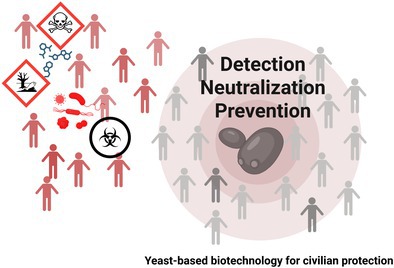 Figure 1
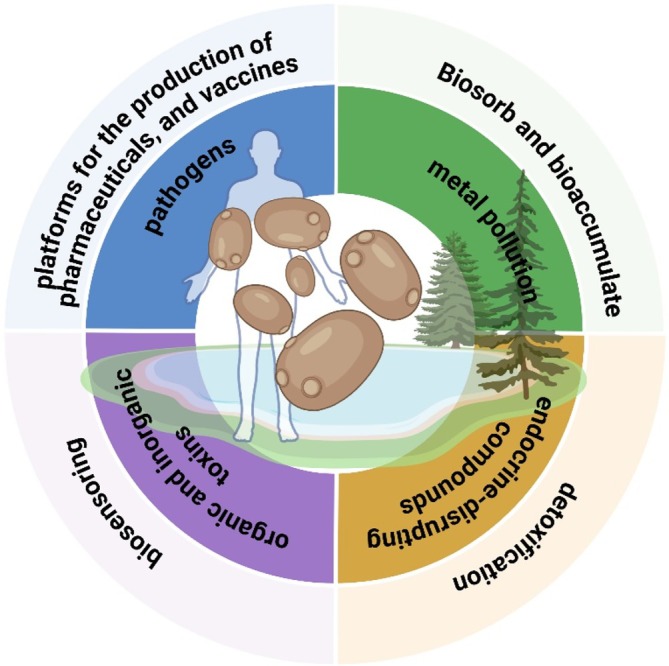 Figure 2
Peer Reviews
No public reviews on file for this paper yet. If you reviewed it on a platform where reviews are public (OpenReview, ICLR, NeurIPS, ICML), you can paste yours below so the community can read it here.
Videos
No videos yet. Explain this paper in a talk, walkthrough, or lecture? Add one.
Taxonomy
TopicsFungal and yeast genetics research · bioluminescence and chemiluminescence research · Microbial Metabolic Engineering and Bioproduction