In vivo AGO-APP for cell-type- and compartment-specific miRNA profiling in the mouse brain
Surbhi Kapoor, Andrea Erni, Francesca Vincenzi, Beatrice Tessier, Vasika Venugopal, Gunter Meister, Alexandre Favereaux, Harold Cremer, Christophe Beclin

TL;DR
Researchers developed two transgenic mouse lines to study microRNA (miRNA) profiles in specific brain cells and compartments, revealing distinct miRNA patterns in different cell types and synaptic regions.
Contribution
The creation of two transgenic mouse lines enables in vivo cell-type- and compartment-specific miRNA profiling using AGO-APP, offering a novel approach for studying miRNA function in the brain.
Findings
OB interneurons and cortical excitatory neurons have distinct miRNA signatures, including enrichment of miR-200 family and miR-183/96/182 cluster in OB interneurons.
PSD95-T6B fusion identifies postsynapse-enriched miRNAs that target synaptic function-related mRNAs.
Abstract
AGO-APP through the expression of the T6B peptide permits the isolation of Ago-bound microRNAs (miRNAs). Here, we present the generation and characterization of two transgenic mouse lines that enable AGO-APP to be performed in vivo. First, we generated mice for CRE-dependent T6B expression throughout the cell. Using this line, we performed AGO affinity purification (AGO-APP) in olfactory bulb (OB) inhibitory interneurons and cerebral cortex excitatory neurons. Bioinformatic analysis validated the high reproducibility of the approach. It also demonstrated that, despite global miRNome conservation between the two cell types, a set of miRNAs, including the miR-200 family and the miR-183/96/182 cluster, is massively enriched in OB interneurons, which aligns with previous observations. In the second mouse line, T6B is fused to the postsynaptic protein PSD95. Isolation of T6B-PSD95 fractions…
Genes, proteins, chemicals, diseases, species, mutations and cell lines named across the full text — each resolved to its canonical identifier and authoritative record.
Click any figure to enlarge with its caption.
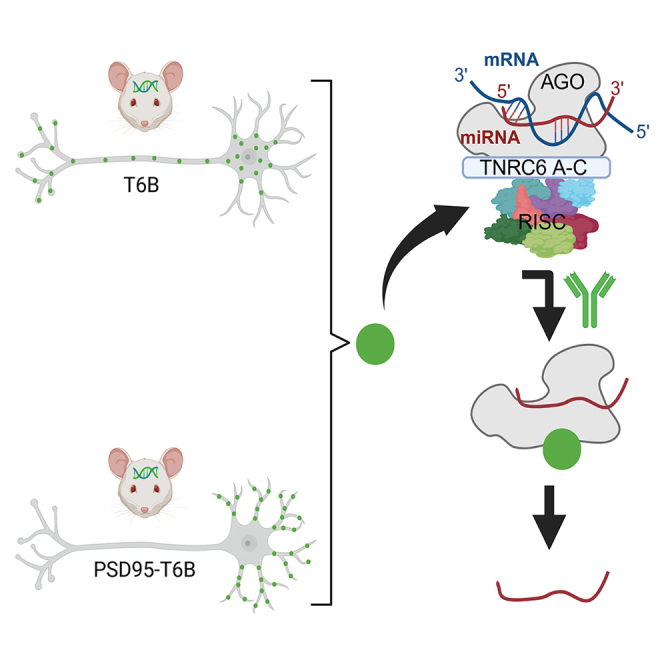 Figure 1
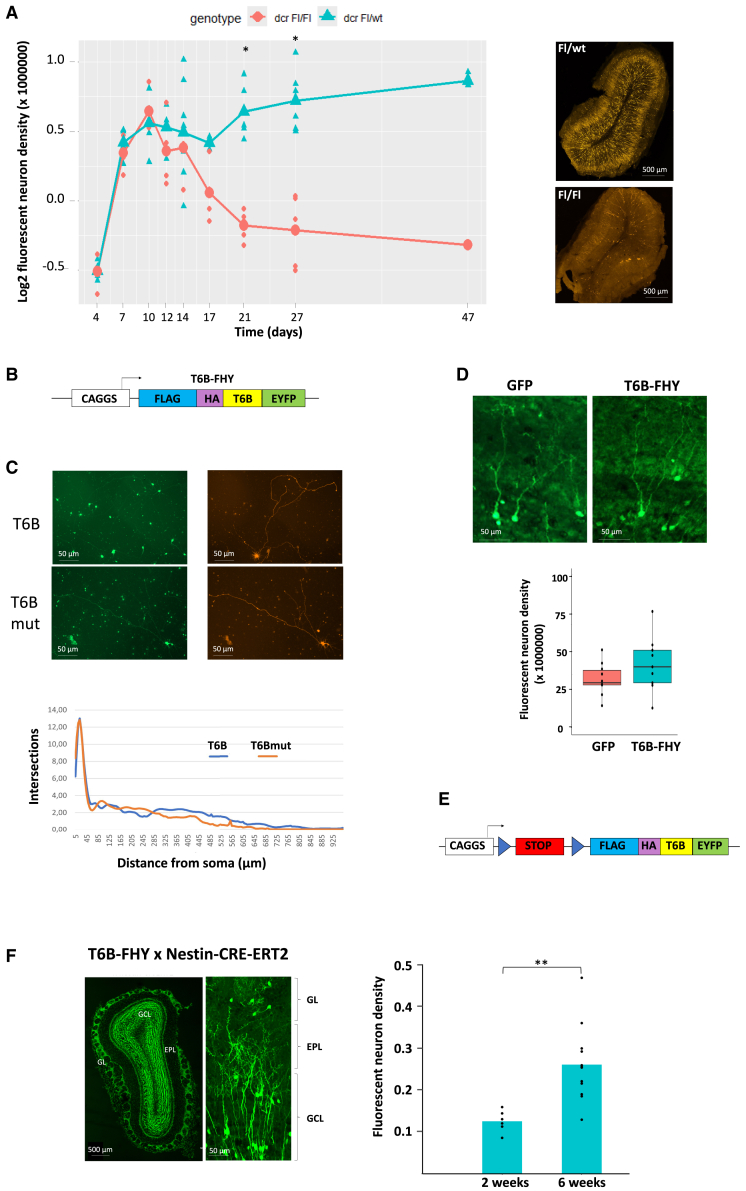 Figure 2
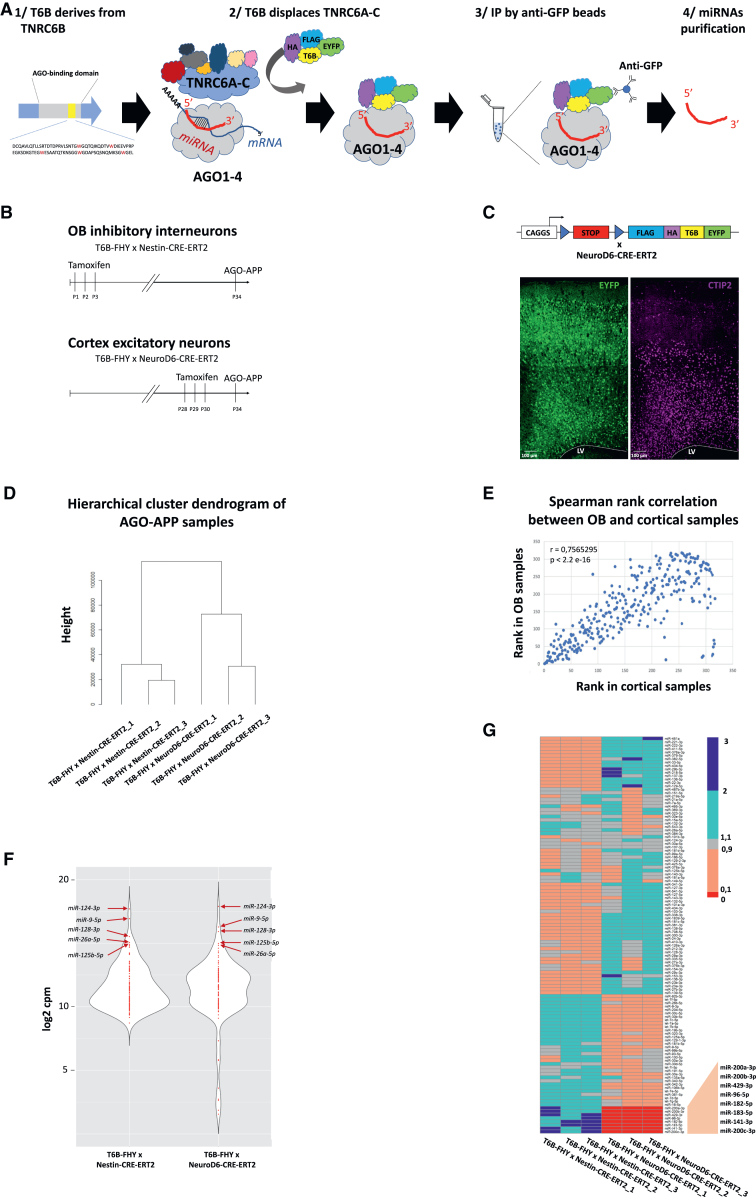 Figure 3
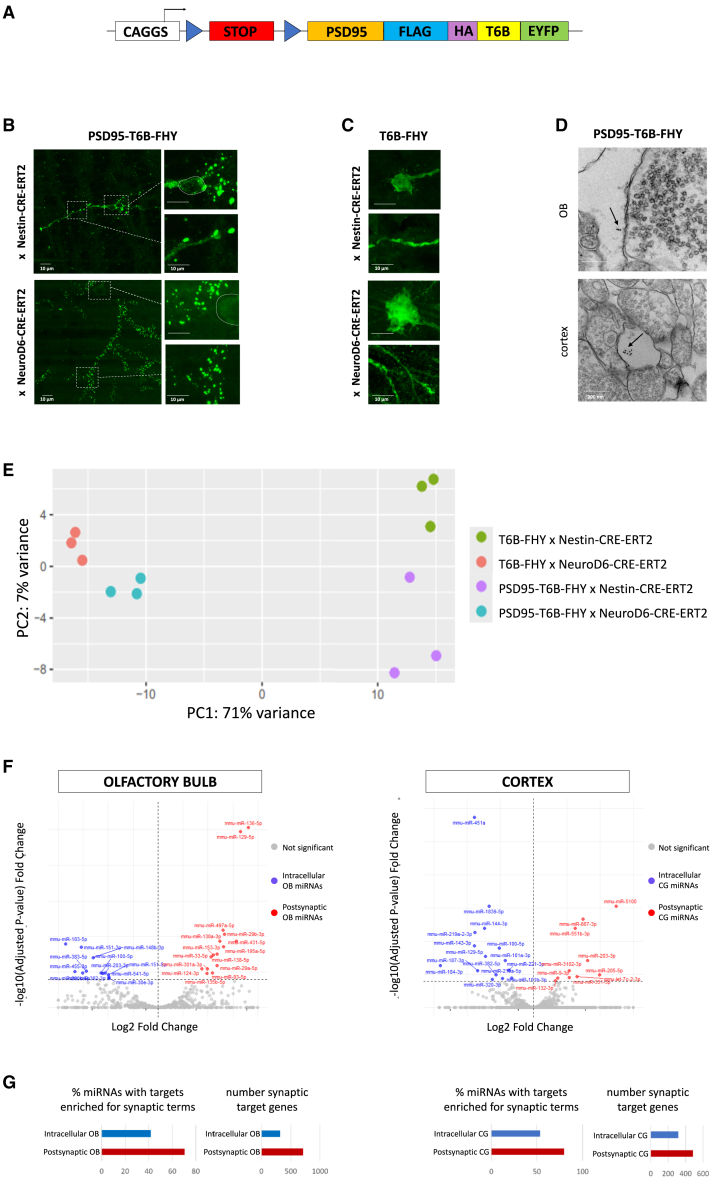 Figure 4
Peer Reviews
No public reviews on file for this paper yet. If you reviewed it on a platform where reviews are public (OpenReview, ICLR, NeurIPS, ICML), you can paste yours below so the community can read it here.
Videos
No videos yet. Explain this paper in a talk, walkthrough, or lecture? Add one.
Taxonomy
TopicsMicroRNA in disease regulation · Neurogenesis and neuroplasticity mechanisms · Neuroscience and Neuropharmacology Research