Artificial intelligence-predicted ECG age gap as a biomarker: bias-adjusted correlation with mortality and cardiovascular risk factors
Myrte Barthels, Elisa Verhofstadt, Inigo Bermejo Delgado, Henri Gruwez, Laurent Pison, Noëlla Pierlet, Pieter Vandervoort

TL;DR
This study introduces a bias-corrected ECG age gap biomarker that better reflects biological aging and mortality risk.
Contribution
A novel bias-adjusted ECG age deviation (PADbc) is proposed as an age-independent biomarker for cardiovascular risk and mortality.
Findings
PADbc showed stronger associations with cardiovascular risk factors compared to uncorrected PAD.
Higher PADbc was linked to lower survival rates in Kaplan–Meier analysis.
Both PAD and PADbc showed a 1.4% increased mortality hazard per year increase.
Abstract
Artificial intelligence models can estimate a person’s age from ECG. The gap between the predicted ECG age and chronological age, predicted age deviation (PAD), has been associated with cardiovascular risk factors and mortality. However, regression bias causes PAD to correlate with chronological age itself, potentially distorting these associations. To investigate the bias introduced by age on PAD by comparing associations between PAD and a bias-corrected PAD (PADbc) with cardiovascular risk factors and survival outcomes. ECG and cardiovascular risk data from Ziekenhuis Oost-Limburg (2002–23) were linked to mortality data from the Belgian National Registry. A neural network was trained to predict age from ECGs. PADbc corresponded to the residual of PAD regressed on chronological age. Associations with risk factors were tested using χ2 and ANOVA. Survival was analysed with Kaplan–Meier…
Genes, proteins, chemicals, diseases, species, mutations and cell lines named across the full text — each resolved to its canonical identifier and authoritative record.
Click any figure to enlarge with its caption.
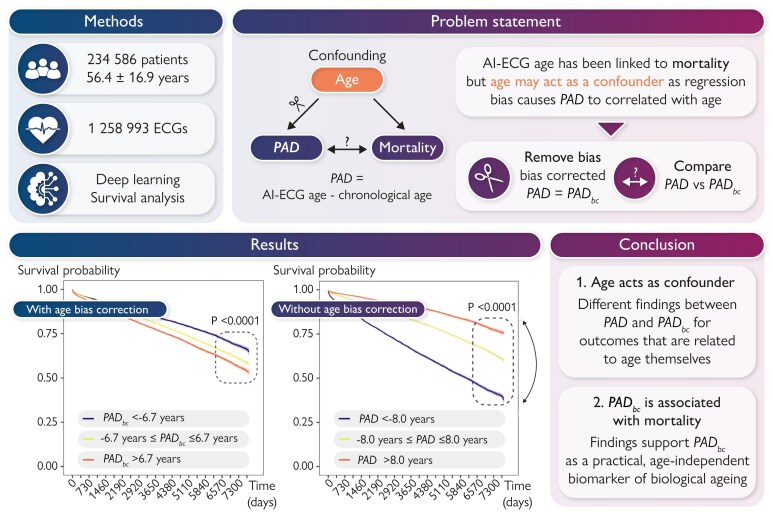 Figure 1
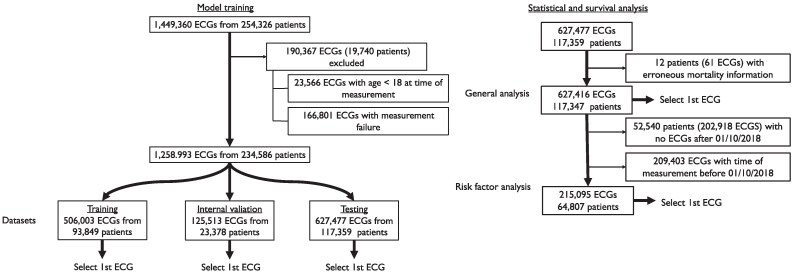 Figure 2
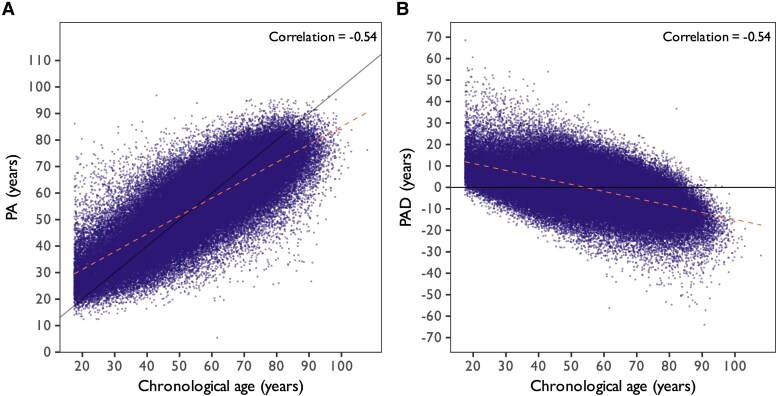 Figure 3
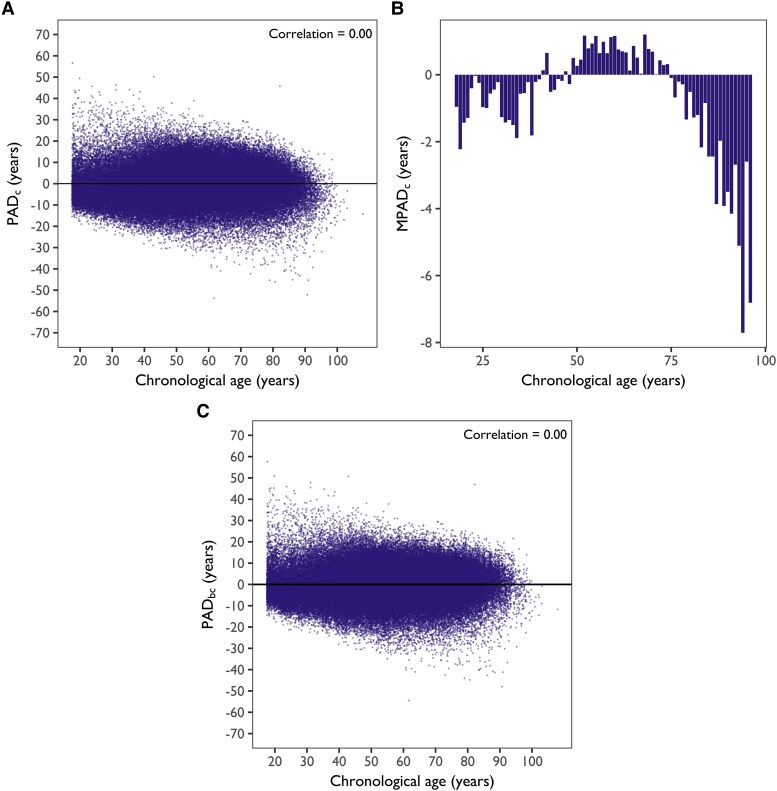 Figure 4
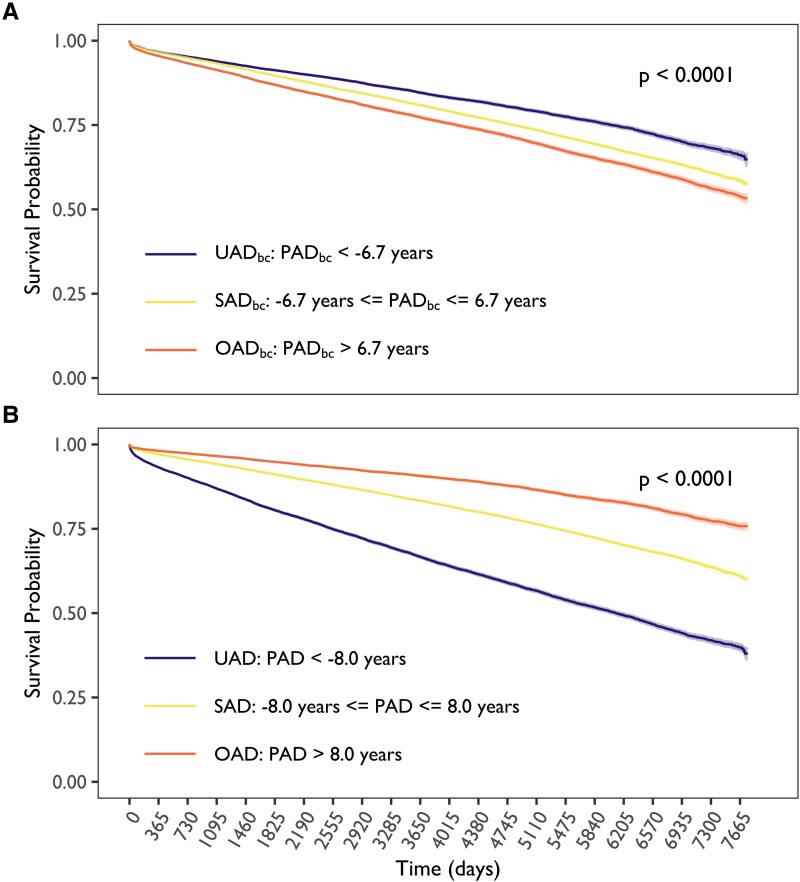 Figure 5
Peer Reviews
No public reviews on file for this paper yet. If you reviewed it on a platform where reviews are public (OpenReview, ICLR, NeurIPS, ICML), you can paste yours below so the community can read it here.
Videos
No videos yet. Explain this paper in a talk, walkthrough, or lecture? Add one.
Taxonomy
TopicsECG Monitoring and Analysis · Artificial Intelligence in Healthcare and Education · Cardiac electrophysiology and arrhythmias