Optimizing lipid-lowering therapy for acute coronary syndrome using a decision support system: insights from a cluster randomized trial
Christophe A T Stevens, Jessica Smith, Julia Brandts, Fotios Barkas, Maria Moreno Morales, Leila Janani, Gaia Kiru, Nandita Kaza, Victoria Cornelius, Neil R Poulter, Kamlesh Khunti, John William McEvoy, Alberto Zambon, Jose L Lopez-sendon, Derek Connolly, Lorna Hazell

TL;DR
A study tested if a decision support system improved cholesterol-lowering treatment after heart attacks but found no major benefits, though earlier combination therapy use showed promise.
Contribution
The study evaluated a decision support system's impact on lipid-lowering therapy in acute coronary syndrome patients through a multinational cluster-randomized trial.
Findings
Access to the DSS did not significantly improve LLT intensification or LDL-C goal attainment within 16 weeks.
A favorable trend toward earlier use of combination lipid-lowering therapy was observed in the DSS group.
LDL-C goal achievement was slightly higher in the DSS group, but not statistically significant.
Abstract
Lipid-lowering therapy (LLT) after acute coronary syndrome (ACS) typically follows stepwise intensification, delaying use of combination therapies and low-density lipoprotein cholesterol (LDL-C) goal attainment. We assessed whether access to a decision support system (DSS) altered the intensity of LLT prescribing vs. standard-of-care (SoC). Pragmatic, multinational, parallel 1:1 cluster-randomized controlled trial of ACS patients comparing mandatory access to a DSS (providing estimates of cardiovascular events and benefits from different LLT scenarios) to SoC. The primary endpoint was the proportion receiving intensified monotherapy or initiated/escalated combination LLT by Week 16 compared to pre-admission LLT; secondary endpoints included individual components of the primary endpoint, proportions at goal (LDL-C < 1.4 mmol/L), and timing of LLT escalations. 42 sites from UK, Italy,…
Genes, proteins, chemicals, diseases, species, mutations and cell lines named across the full text — each resolved to its canonical identifier and authoritative record.
Click any figure to enlarge with its caption.
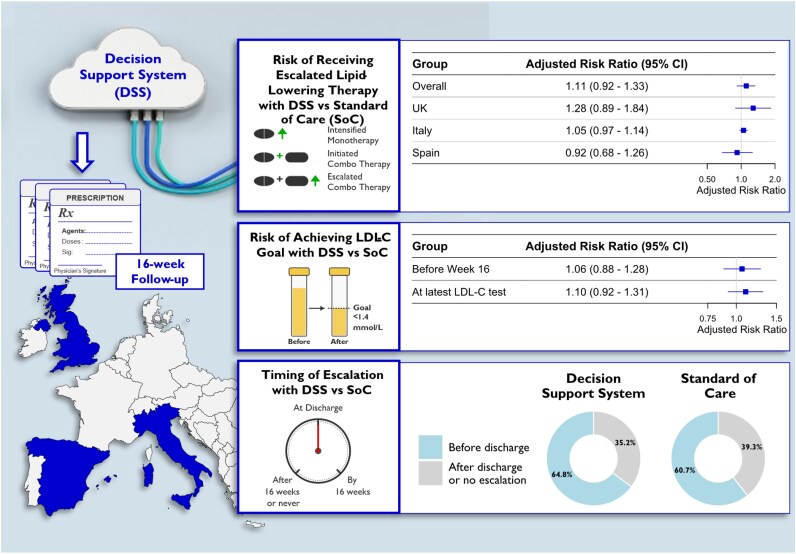 Figure 1
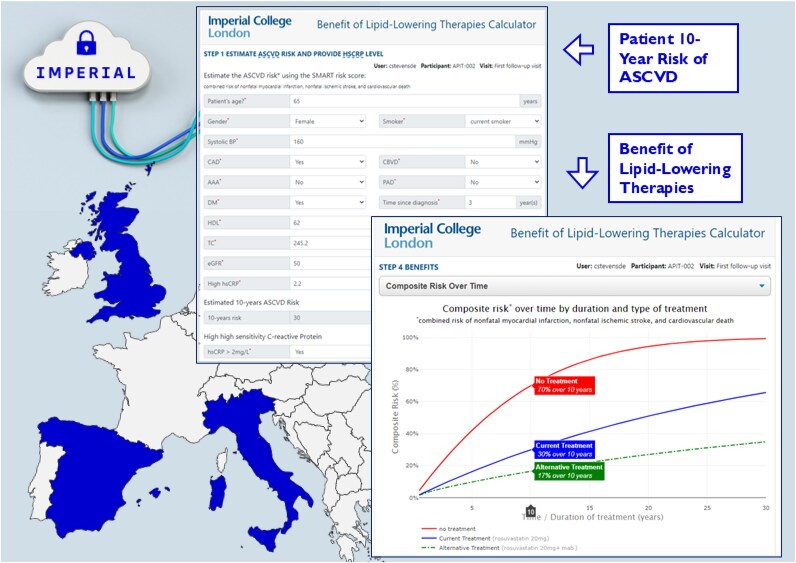 Figure 2
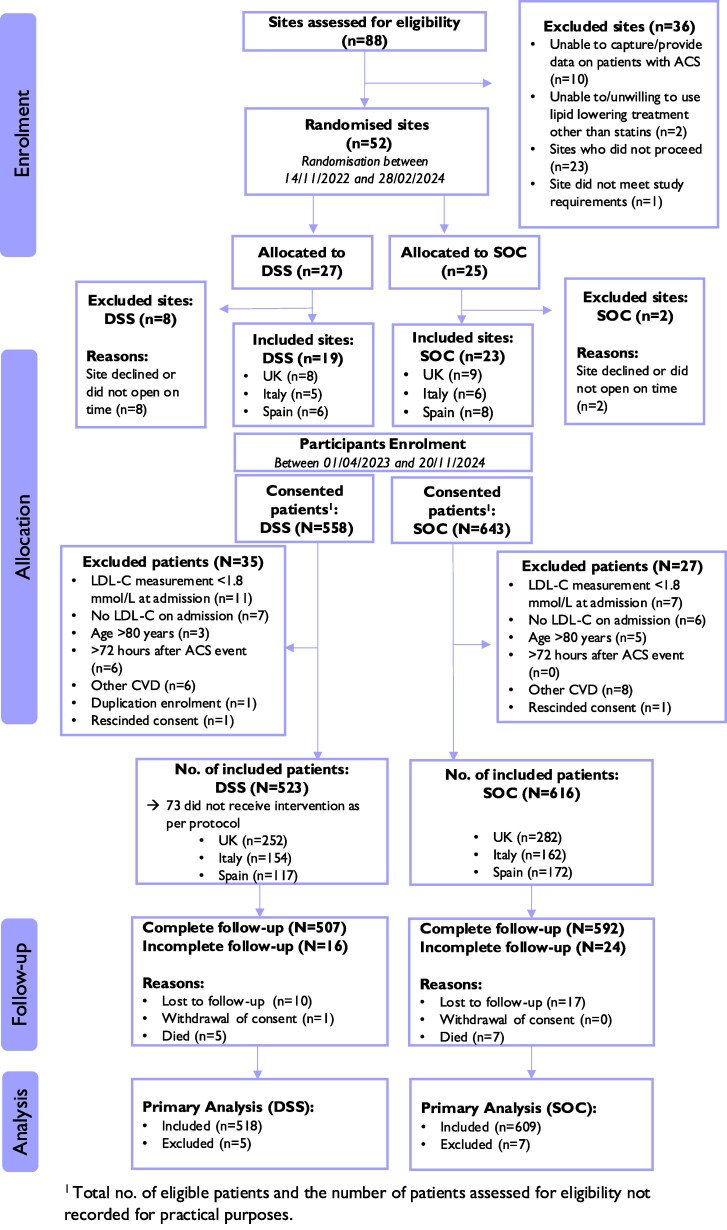 Figure 3
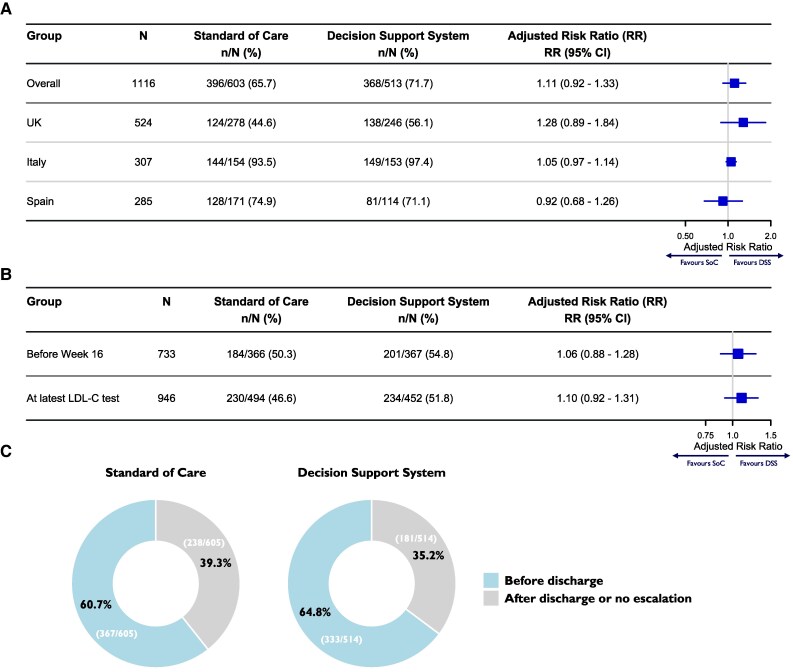 Figure 4
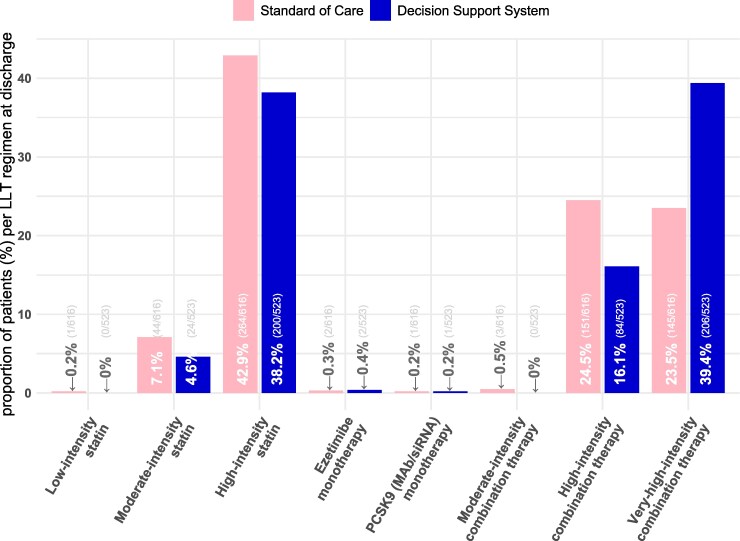 Figure 5
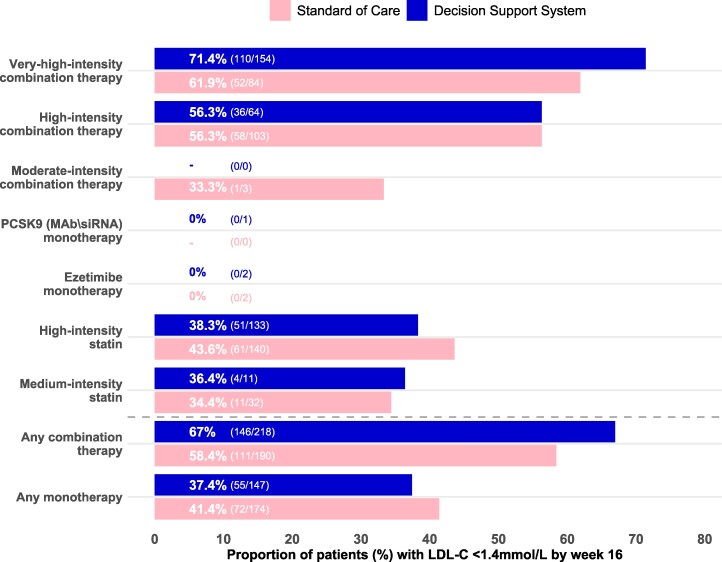 Figure 6
Peer Reviews
No public reviews on file for this paper yet. If you reviewed it on a platform where reviews are public (OpenReview, ICLR, NeurIPS, ICML), you can paste yours below so the community can read it here.
Videos
No videos yet. Explain this paper in a talk, walkthrough, or lecture? Add one.
Taxonomy
TopicsLipoproteins and Cardiovascular Health · Diabetes, Cardiovascular Risks, and Lipoproteins · HIV-related health complications and treatments