Unsupervised machine learning for identifying morphological phenotypes in abdominal aortic aneurysms using fully automated volume-segmented imaging: a multicentre cohort study
Michal Kawka, Caroline Caradu, Ruth Scicluna, Colin Bicknell, Matthew J Bown, Manj Gohel, Janet T Powell, Anna L Pouncey

TL;DR
This study uses machine learning to identify different types of abdominal aortic aneurysms based on imaging data, revealing differences in thrombus burden and sex distribution.
Contribution
The study introduces an unsupervised machine learning approach to classify aneurysm morphological phenotypes using fully automated imaging segmentation.
Findings
Two distinct morphological subtypes of aneurysms were identified with significant differences in wall thrombus burden.
There was a notable sex imbalance between the identified subtypes.
Thromboembolic events did not significantly differ between clusters, likely due to low event rates.
Abstract
Thrombo- and microembolic complications following abdominal aortic aneurysm (AAA) repair are hypothesized to be associated with wall thrombus burden. Fully automatic volume segmentation (FAVS) of imaging enables extraction of morphological features from which thrombogenic phenotypes may be identified. This was a multi-centre retrospective cohort study using FAVS to examine pre-operative imaging for elective AAA repairs (2013–23). Radiological data were matched with National Vascular Registry thromboembolic outcomes data (cerebral, bowel, renal or limb ischaemia). Principal component analysis was used for dimensionality reduction, followed by unsupervised machine learning with k-nearest neighbours clustering, with number of clusters determined using silhouette scores. Clusters were compared using multivariate logistic regression, adjusting for aortic size index, cardiovascular risk…
Genes, proteins, chemicals, diseases, species, mutations and cell lines named across the full text — each resolved to its canonical identifier and authoritative record.
Click any figure to enlarge with its caption.
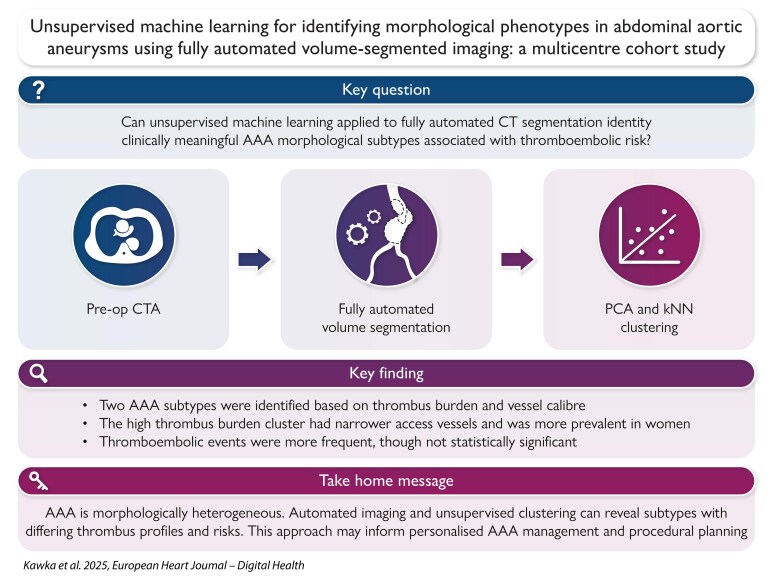 Figure 1
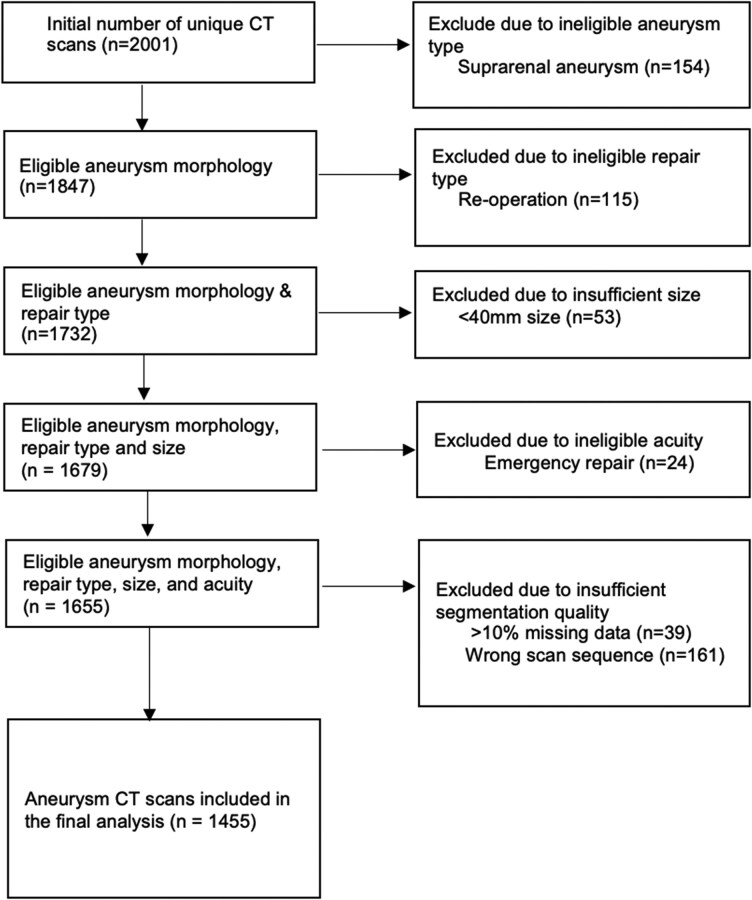 Figure 2
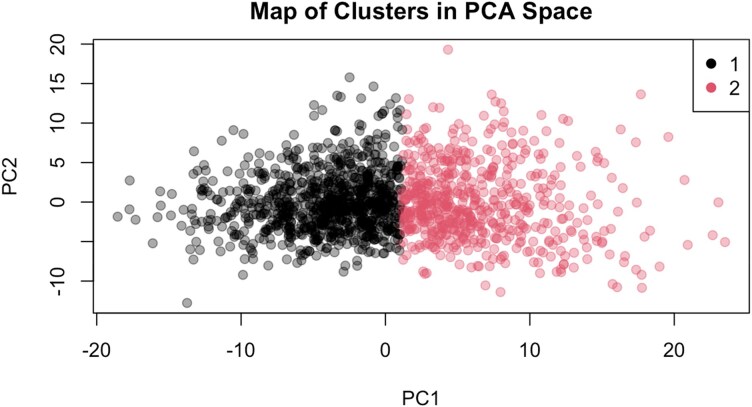 Figure 3
 Figure 4
Peer Reviews
No public reviews on file for this paper yet. If you reviewed it on a platform where reviews are public (OpenReview, ICLR, NeurIPS, ICML), you can paste yours below so the community can read it here.
Videos
No videos yet. Explain this paper in a talk, walkthrough, or lecture? Add one.
Taxonomy
TopicsAortic aneurysm repair treatments · Aortic Thrombus and Embolism · Peripheral Artery Disease Management