Ultrasound evaluation of epicardial fat and Eco-Obesity body composition assessment
Silvana di Gregorio, Eduardo Blanco, Marta Calbo, Olga Rossell, Laia Dachs, Júlia Bonet, Andrea Jover, Lidia Huanuco, Marcos Yañez, Irina Faja, Francisco de Cabo, Guillem Cuatrecasas

TL;DR
This study shows that ultrasound measurements of heart fat (EAT) are linked to obesity and metabolic risks, suggesting their use in clinical assessments.
Contribution
Validates EAT ultrasound as a non-invasive marker of cardiometabolic risk in obesity and introduces the Eco-Obesity approach.
Findings
EAT thickness correlates with BMI, waist circumference, and metabolic markers like glycemia and HOMA-IR.
Omental and peri-renal fat show strong associations with metabolic dysfunction, while pre-peritoneal fat does not.
EAT long-axis projection shows the strongest correlation with DEXA visceral fat indices.
Abstract
To validate echocardiographic epicardial adipose tissue (EAT) thickness as a non-invasive marker of cardiometabolic risk in obesity and compare Eco-Obesity ultrasound-derived measurements of epicardial, preperitoneal, omental, and peri-renal fat depots with standard body composition analysis by dual-energy X-ray absorptiometry (DEXA). In a cross-sectional study of 402 adults with obesity attending two Barcelona centers, Eco-Obesity ultrasound was performed in 114 subjects, alongside DEXA scans. Thickness of epicardial and abdominal fat depots, metabolic markers, and anthropometric indices were measured using standardized protocols. Relationships among ultrasound fat measurements, DEXA indices, anthropometric variables, and biochemical markers were analyzed by Pearson correlation coefficients; subgroup comparisons used ANOVA. Moderate (>7mm) and severe (>10mm) EAT thickness were found…
Genes, proteins, chemicals, diseases, species, mutations and cell lines named across the full text — each resolved to its canonical identifier and authoritative record.
Click any figure to enlarge with its caption.
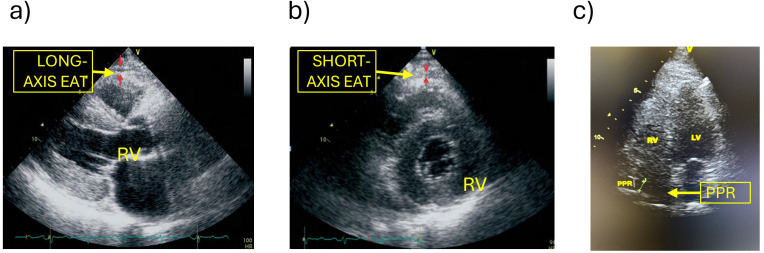 Figure 1
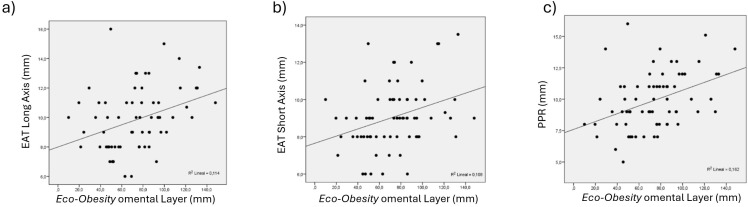 Figure 2
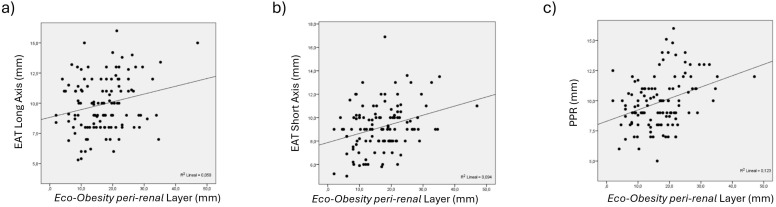 Figure 3
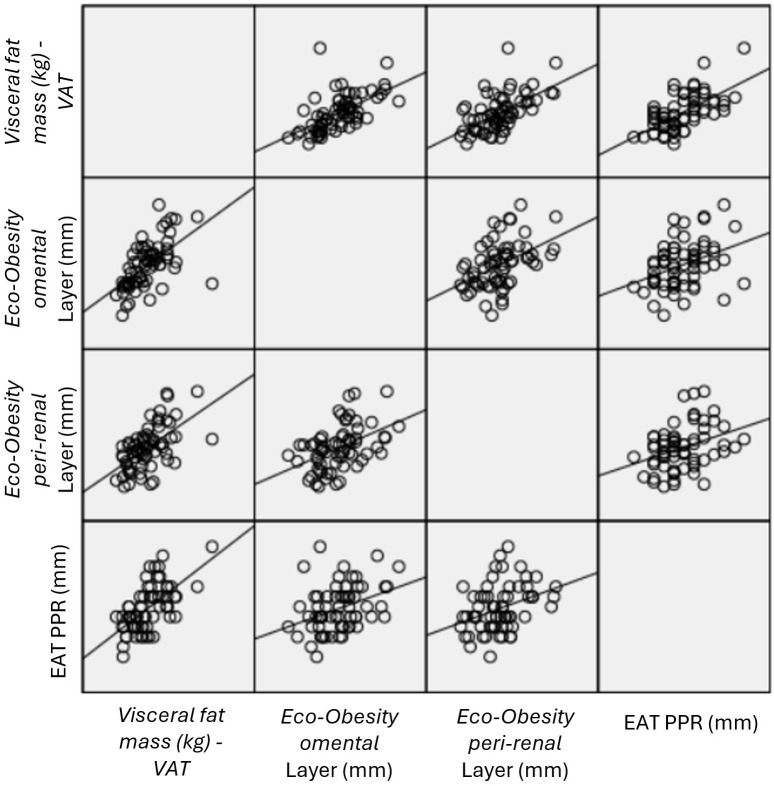 Figure 4
Peer Reviews
No public reviews on file for this paper yet. If you reviewed it on a platform where reviews are public (OpenReview, ICLR, NeurIPS, ICML), you can paste yours below so the community can read it here.
Videos
No videos yet. Explain this paper in a talk, walkthrough, or lecture? Add one.
Taxonomy
TopicsCardiovascular Disease and Adiposity · Adipokines, Inflammation, and Metabolic Diseases · Cardiovascular Function and Risk Factors